
Europe is a continent where history rises dramatically from hilltops, cliffs, and riversides, inviting travelers into a world of legends, royalty, and intrigue. Among its greatest treasures are the beautiful castles in Europe, each one telling a story shaped by centuries of power, art, and culture.
From fairytale palaces to formidable fortresses, these architectural wonders offer more than scenic beauty. They immerse visitors in the past, blending breathtaking landscapes with fascinating histories that make every journey feel timeless and unforgettable.
If you are interested in staying in a castle, here are some castle rooms you can sleep in.
It would be subjective, but more importantly, impossible to rank them in order of beauty, so the list will appear alphabetical. They are all worth visiting!
Akershus Fortress
(Oslo, Norway)

Overlooking the Oslofjord, Akershus Fortress dates back to the late 13th century and played a crucial role in protecting Norway’s capital from invasion. Over time, it evolved into a Renaissance castle and royal residence. Today, visitors can explore its historic halls, museums, and sweeping harbor views, which remain one of its most memorable highlights.
Akkerman Fortress
(Bilhorod-Dnistrovskyi, Ukraine)
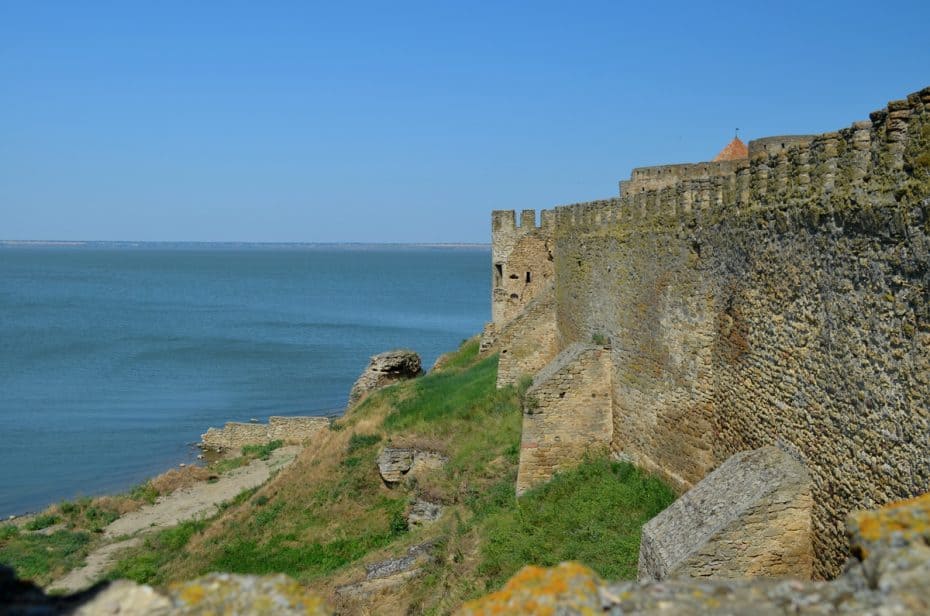
Akkerman Fortress is one of Eastern Europe’s largest medieval fortifications, dating to the 13th century. Built over ancient Greek ruins, its thick limestone walls stretch along the Dniester Estuary. The fortress once controlled key trade routes. Walking through its vast courtyards and towers offers a powerful sense of its strategic importance and enduring strength.
Alanya Castle
(Alanya, Turkey)
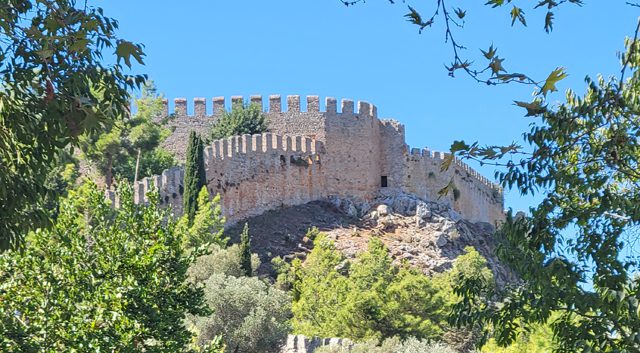
Alanya Castle sits high above the Mediterranean, forming an impressive defensive network dating largely from the 13th-century Seljuk period. Its walls extend for several kilometers across the peninsula, enclosing historic buildings and ruins. The highlight is the breathtaking coastal panorama, where turquoise waters meet rugged cliffs, creating one of Turkey’s most scenic historical settings.
Alcázar of Segovia
(Segovia, Spain)
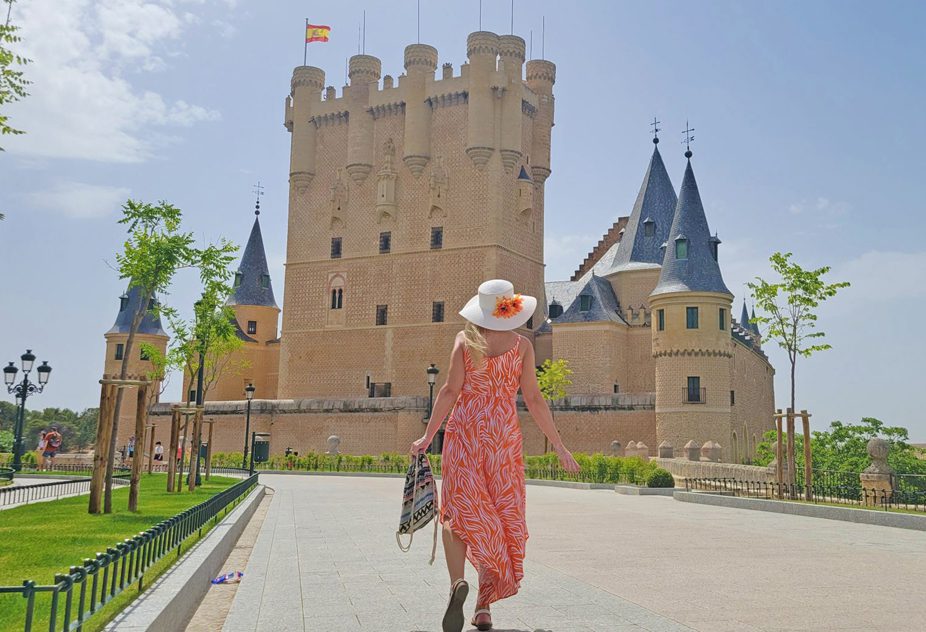
The Alcazar of Segovia is one of Spain’s most distinctive castles, with a shape resembling a ship’s bow. Originally a Roman fort, it became a royal palace in the Middle Ages. Its richly decorated interiors and dramatic towers are highlights, and it is said to have inspired famous fairytale castles seen in popular culture. Note: It is said to be one of the castles that inspired the Disney Cinderella Castle.
Alhambra
(Granada, Spain)
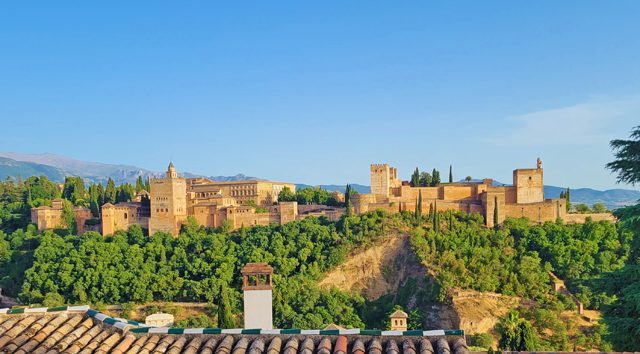
The Alhambra is a stunning palace and fortress complex that reflects the height of Moorish art and architecture in medieval Spain. Built during the 13th and 14th centuries, it features intricate carvings, peaceful courtyards, and flowing water features. The Court of the Lions stands out as a highlight, symbolizing elegance, symmetry, and refined design.
Belgrade Castle
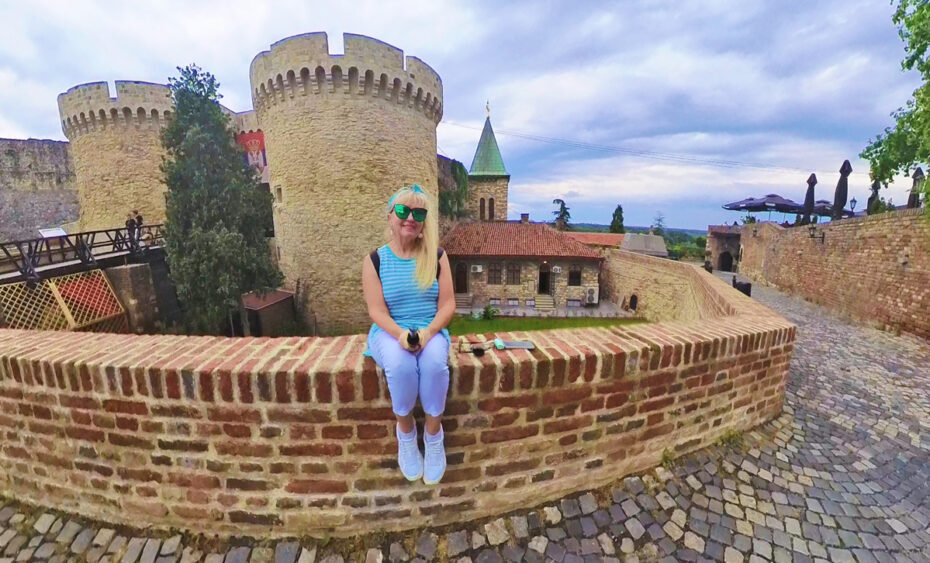
Belgrade Fortress, perched on a cliff, overlooking the confluence of the Sava and Danube rivers, is Serbia’s most important historic landmark. Its origins trace to the Celtic settlement of Singidunum in the 3rd century BCE, later expanded by the Romans. The fortress was repeatedly rebuilt by Byzantines, Hungarians, Serbs, and Ottomans, reflecting centuries of conflict. Major fortifications date from the 15th century, especially under Despot Stefan Lazarević, who made Belgrade the Serbian capital in 1403.
Architecturally, it combines medieval walls, gates, towers, bastions, and artillery defenses. Today, the fortress forms the centerpiece of Kalemegdan Park and a cultural heritage for visitors and scholars alike.
Bled Castle
(Bled, Slovenia)
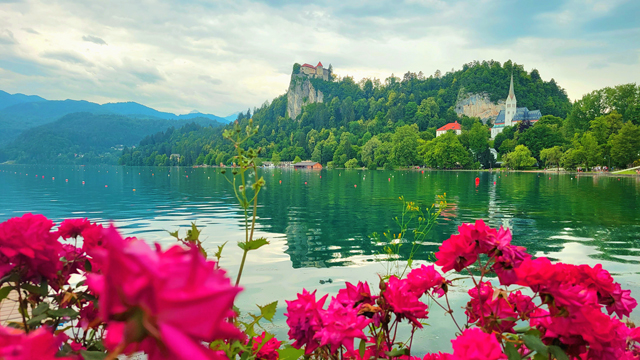
Perched dramatically atop a 430-foot (130-meter) cliff overlooking the emerald waters of Lake Bled, Bled Castle is Slovenia’s oldest castle, with written records dating back to 1011. Once a medieval fortress and noble residence, it now features a museum, wine cellar, and traditional printing workshop. The highlight is the spectacular terrace, where panoramic views of Lake Bled, its iconic island church, and the surrounding Julian Alps create one of Europe’s most unforgettable castle settings.
Bran Castle
(Bran, Romania)

Bran Castle is often associated with the Dracula legend, though its true history is rooted in medieval defense. Built in the 14th century, it guarded a key mountain pass. Its dramatic hilltop setting and Gothic appearance create a mysterious atmosphere. Visitors enjoy exploring its narrow stairways and learning about both myth and history.
Click here for Transylvania Tour.
Bratislava Castle
Bratislava, Slovakia
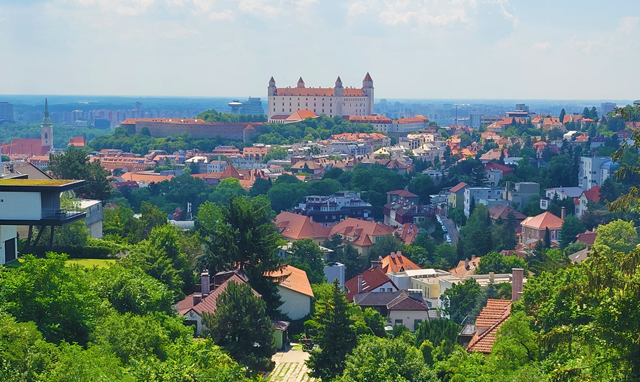
Bratislava Castle commands the skyline from its hilltop perch, watching over the Danube with timeless confidence. Rebuilt through centuries of wars, fires, and royal ambition, this striking fortress became a symbol of Slovak resilience. Its distinctive rectangular form and four corner towers create an unforgettable silhouette.
Inside, elegant halls and museum exhibitions uncover stories of Celtic settlers, Hungarian kings, and the region’s rich heritage. Baroque touches blend with medieval foundations, while sweeping terraces reveal spectacular city and river views. Every courtyard and stone passage captures the spirit of Bratislava, inviting visitors to experience history with vivid energy and lasting wonder.
Buda Castle
(Budapest, Hungary)
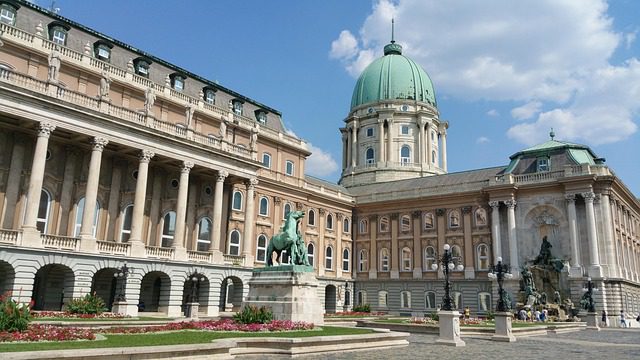
Buda Castle dominates the skyline of Budapest from its hilltop position along the Danube River. First built in the 13th century, it has been reconstructed several times and now showcases Baroque grandeur. The highlight is the panoramic terrace, offering stunning views of the Parliament building, bridges, and the vibrant city below.
Visit Buda Castle on Tour of Central Europe’s Imperial Capitals.
Carcassonne
(Carcassonne, France)

Carcassonne is a remarkable fortified city with origins dating back to Roman times. Its double walls and numerous towers were restored in the 19th century, preserving its medieval character. Walking along its ramparts is a highlight, allowing visitors to fully appreciate the scale and design of one of Europe’s most complete fortifications.
Cesky Krumlov Castle
(Cesky Krumlov, Czech Republic)
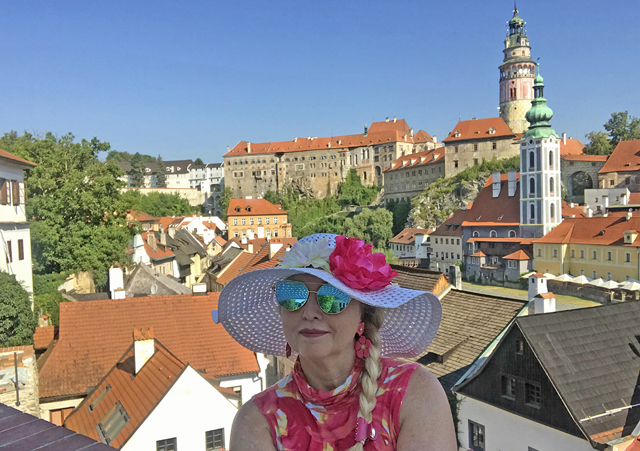
Cesky Krumlov Castle overlooks a charming town wrapped by a winding river. Dating to the 13th century, it features a mix of Gothic, Renaissance, and Baroque styles. The highlight is its colorful tower and sweeping views of red-roofed houses below, creating a picture-perfect scene that captures the essence of Central Europe.
Château d’Amboise
(Loire Valley, France)

Chateau d’Amboise played an important role as a royal residence during the French Renaissance. Overlooking the Loire River, it is closely linked to Leonardo da Vinci, who is buried nearby. The highlight is its elegant terraces, where visitors can enjoy expansive views of the surrounding countryside and reflect on its artistic legacy.
Château d’Annecy
(Annecy, France)

Once home to the Counts of Geneva, Château d’Annecy sits above a picturesque town known for its canals. The castle reflects a blend of architectural styles from different periods. Today, it houses a museum. Its highlight is the scenic view over Annecy’s rooftops and lake, offering a peaceful yet historically rich experience.
Château de Chambord
(Chambord, France)

Chateau de Chambord is a masterpiece of French Renaissance architecture, built by King Francis I as a symbol of power and prestige. Its vast structure includes hundreds of rooms and elaborate towers. The highlight is the famous double-helix staircase, often attributed to Leonardo da Vinci, as well as the stunning rooftop terraces.
Château d’Usse
(Loire Valley, France)

Château d’Usse is often linked to the story of Sleeping Beauty, thanks to its fairytale appearance. Built between the 15th and 17th centuries, it combines medieval and Renaissance elements. Visitors are drawn to its elegant interiors and manicured gardens, with displays that bring classic tales to life in a charming setting. Note: It is said to be one of the castles that inspired the Disney Cinderella Castle.
De Burg Palace
(Bruges, Belgium)
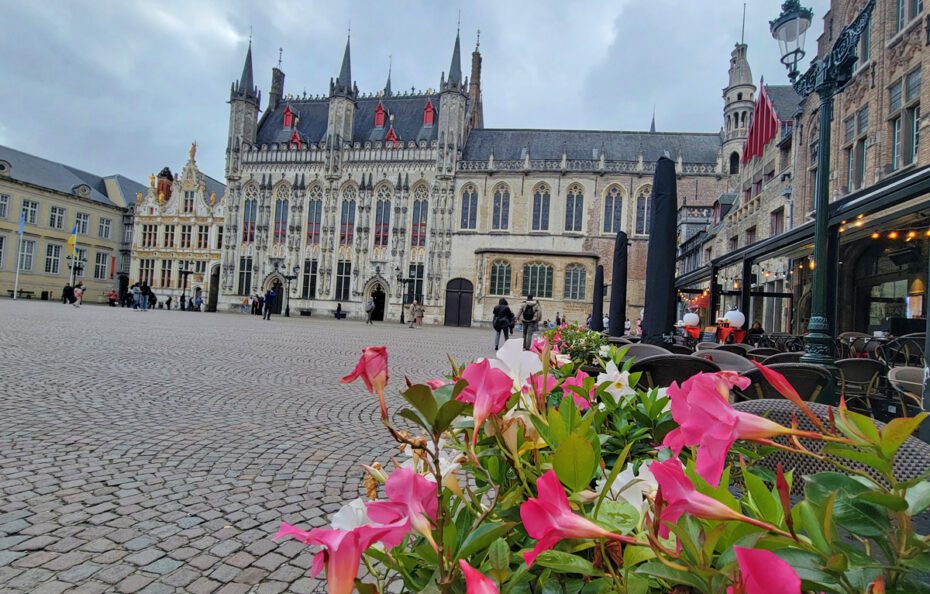
De Burg is situated in a historic square in Bruges that reflects centuries of civic and political power. The palace complex includes important buildings such as the Gothic Town Hall. Its highlight is the ornate architecture that tells the story of Bruges’ medieval prominence, making it a fascinating stop for history lovers.
Citadel of Dinant
(Dinant, Belgium)
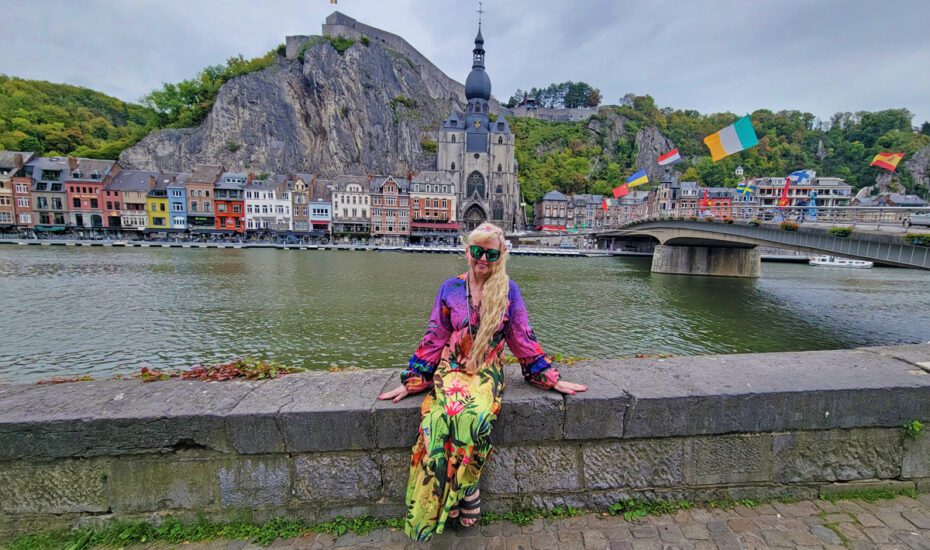
The Citadel of Dinant rises dramatically above the Meuse River, creating one of Belgium’s most striking views. Originally built in the Middle Ages and later rebuilt, it served as a key defensive stronghold. Visitors can reach it by cable car or stairs, with the highlight being the sweeping panoramic views over the river and town below.
Diocletian’s Palace
(Split, Croatia)
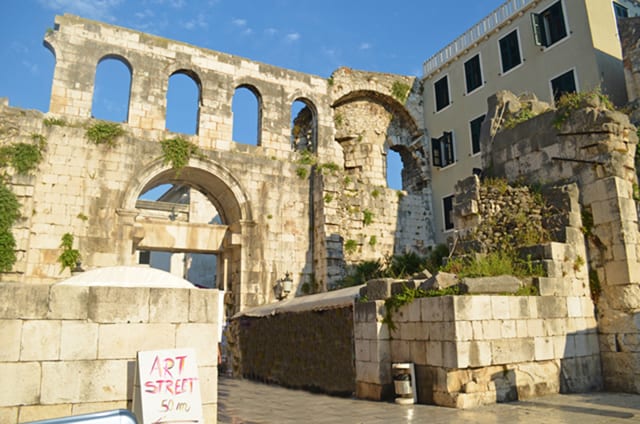
Constructed in the 4th century for the Roman Emperor Diocletian, this palace is more than a historic site—it forms the living heart of Split’s old town. Its blend of military fortress and imperial residence is unique. The highlight is walking through its preserved Roman streets, where ancient walls now house shops, cafes, and homes.
Doge’s Palace
(Venice, Italy)

Doge’s Palace is a masterpiece of Venetian Gothic architecture and a symbol of the city’s former power. Built in the 14th century, it served as both the residence of the Doge and the center of government. The highlight is the richly decorated chambers and the famous Bridge of Sighs, linking the palace to its historic prison.
Doria Castle
(Vernazza, Italy)
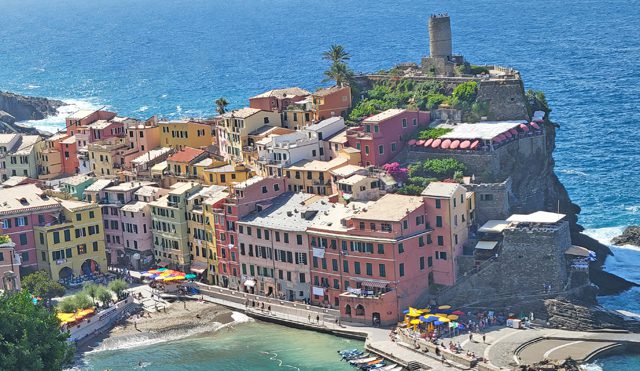
Doria Castle overlooks the colorful village of Vernazza in Italy’s Cinque Terre region. Built as a defensive structure against pirates, it occupies a strategic hilltop position. The highlight is the climb to its tower, where visitors are rewarded with breathtaking views of the coastline, vineyards, and the vibrant seaside village below.
Doune Castle
(Doune, Scotland)

The striking 14th-century castle is the filming location for the fictional home of Colum MacKenzie and his clan. But this isn’t the only time you’ve seen the medieval stronghold on screen. Much of the movie Monty Python and the Holy Grail was shot here, as were the Winterfell scenes from HBO’s Game of Thrones.
The castle is remarkably well-preserved, with towering walls, ancient halls, and slashed-marked walls, and a kitchen with a cavernous fireplace, transporting visitors straight into the 18th century. To add to the Outlander vibe, the audio tour is narrated by both Sam Heughan (Jamie Frazer) and Terry Jones (Monty Python fame), highlighting the castle’s history and its use as a film location.
Edinburgh Castle
(Edinburgh, Scotland)

Edinburgh Castle sits atop Castle Rock, an ancient volcanic formation, and dominates the city skyline. Its history spans centuries of battles, royal ceremonies, and national significance. The highlight is viewing the Scottish Crown Jewels and experiencing the One O’Clock Gun, a tradition that continues to this day.
Eilean Donan Castle
(Dornie, Scotland)

Eilean Donan Castle is one of Scotland’s most iconic landmarks, set where three lochs meet amid stunning Highland scenery. Originally built in the 13th century, it was later restored in the 20th century. The highlight is its picturesque setting, often reflected in calm waters, making it a favorite for photographers and visitors alike.
Fort Lovrijenac
(Dubrovnik, Croatia)
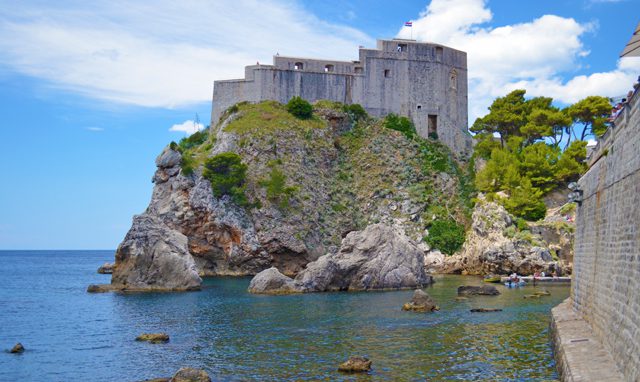
Often called Dubrovnik’s Gibraltar, Fort Lovrijenac stands just outside the city walls on a rocky cliff overlooking the sea. Built to defend against Venetian invasion, it has long symbolized resilience. The highlight is the dramatic view of the Adriatic and Dubrovnik’s old town, as well as its use as a filming location.
Fortezza of Rethymno
(Rethymno, Greece)
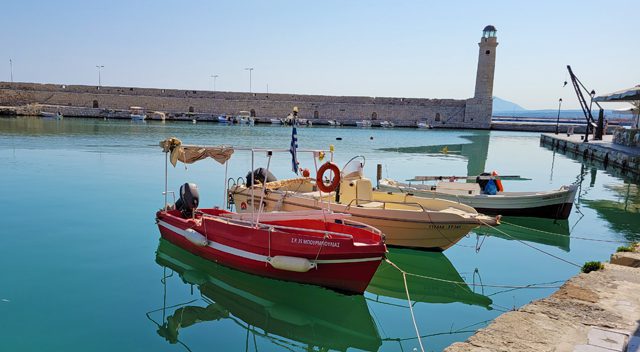
This large Venetian fortress was constructed in the 16th century to protect Crete from Ottoman attacks. Its strong bastions and wide layout reflect Renaissance military design. The highlight is walking along its walls at sunset, where visitors can enjoy sweeping views of the sea and the charming town of Rethymno below.
Gediminas Castle
(Vilnius, Lithuania)
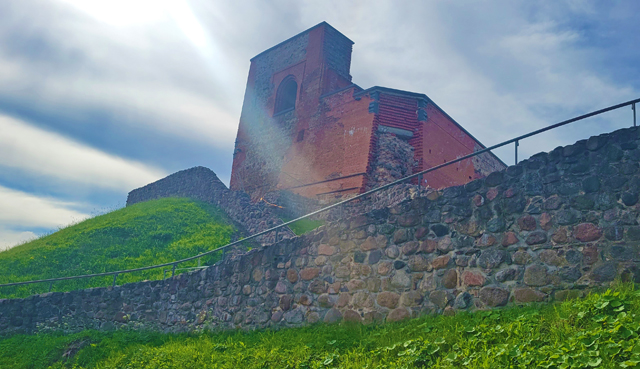
Gediminas Castle Tower crowns Vilnius like a stone storyteller, guarding legends from the Grand Duchy of Lithuania. Rising above the city on Castle Hill, it is the surviving sentinel of a medieval fortress linked to Grand Duke Gediminas.
According to legend, after a successful hunt, Gediminas dreamed of an iron wolf howling atop a hill. A pagan priest interpreted the vision as a sign to build a great city whose fame would echo across the world, leading to the founding of Vilnius. A winding climb rewards visitors with sweeping panoramas of red rooftops, church spires, and the Neris River.
Visit Gediminas Castle on Best of the Baltic Capitals Tour.
Gjirokaster Fortress
(Gjirokaster, Albania)
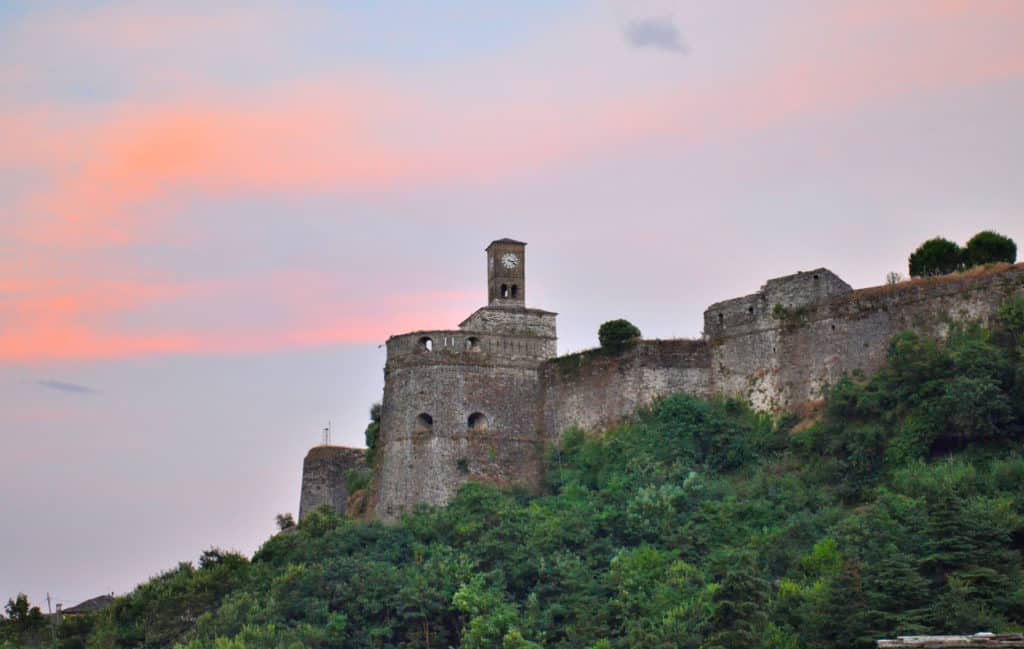
Overlooking a UNESCO-listed town, Gjirokaster Fortress has stood for centuries as a symbol of strength and control. It has served as a military base, prison, and cultural site. The highlight is its commanding view over the valley, along with its museum exhibits that reveal Albania’s complex and fascinating history.
Visit Gjirokaster Fortress on Uncover Albania Tour.
Grand Ducal Palace
(Luxembourg City, Luxembourg)
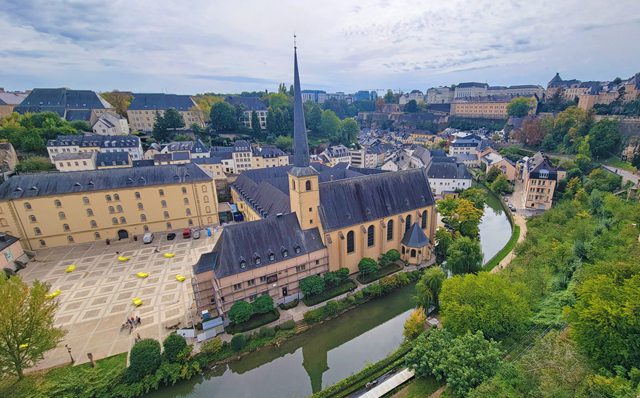
The Grand Ducal Palace is the official residence of Luxembourg’s monarch and an elegant example of Renaissance architecture. Located in the heart of the old city, it reflects the country’s heritage and tradition. The highlight is the seasonal guided tours, which allow visitors to explore its richly decorated interior rooms.
Gutenberg Castle
(Balzers, Liechtenstein)
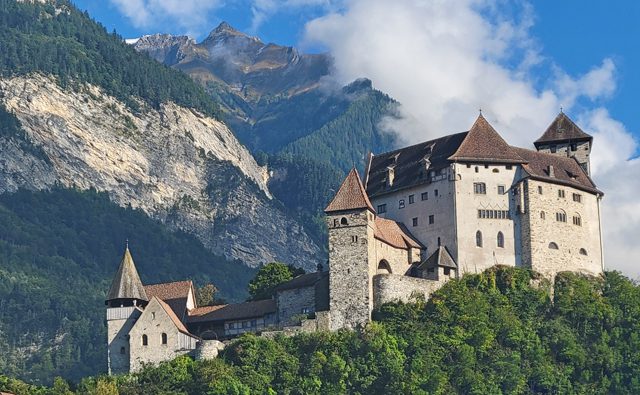
Gutenberg Castle stands proudly on a hill in the small principality of Liechtenstein. Dating back to the 12th century, it is one of the country’s best-preserved castles. While the interior is rarely open, the highlight is visiting the grounds and enjoying the scenic views of the Rhine Valley and surrounding mountains.
Hluboka Castle
(Hluboka nad Vltavou, Czech Republic)

Hluboka Castle is a stunning neo-Gothic palace inspired by England’s Windsor Castle. Rebuilt in the 19th century, it features ornate interiors filled with carvings, artwork, and luxurious furnishings. The highlight is its beautifully landscaped gardens and romantic design, making it one of the most visually striking castles in Central Europe.
Hofburg Castle
(Vienna, Austria)
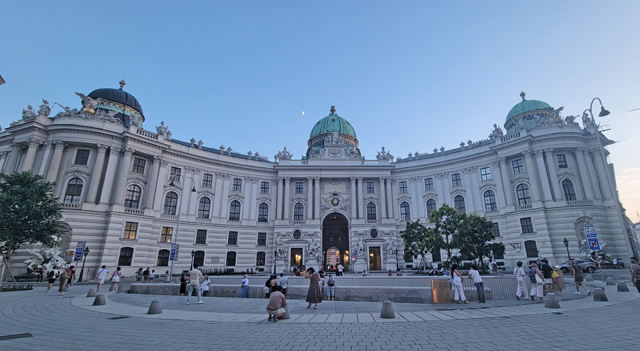
Hofburg Castle in Vienna pulses with centuries of imperial ambition. Once home to the Habsburg dynasty, its expanding wings reveal evolving power, from medieval fortifications to magnificent Baroque splendor, seamlessly. Courtyards echo with coronations, diplomacy, and unforgettable ceremonies.
Today, visitors wander through grand halls, elegant arcades, and ornate facades crowned by graceful domes. Museums showcase glittering treasures, while the Spanish Riding School celebrates equestrian mastery. Every stone, staircase, and sculpted detail invites imagination, transforming a historic residence into a vivid journey across Austria’s remarkable cultural legacy, inspiring curiosity with every step taken beneath majestic arches today, forever unforgettable indeed.
Hohensalzburg Fortress
(Salzburg, Austria)
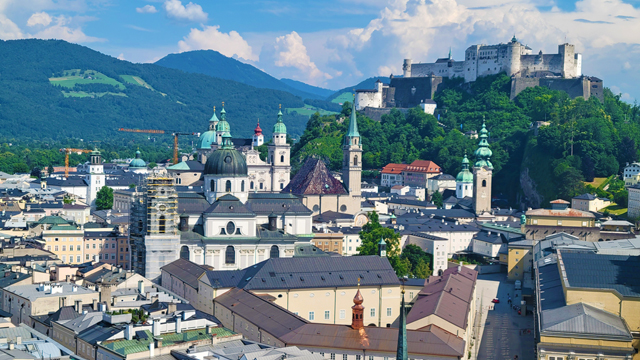
Fortress Hohenszalburg crowns Salzburg with commanding confidence, rising above winding streets since 1077. Built by archbishops, it grew into one of Europe’s largest preserved medieval castles, projecting strength through mighty walls, towers, and formidable gates.
Inside, richly decorated chambers, vaulted ceilings, and intricate Gothic details contrast with rugged defenses. Panoramic views sweep across the Alps and the Salzach River, while museums reveal weapons, instruments, and stories of sieges, resilience, and enduring ambition. Nearby, landscapes featured in The Sound of Music add cinematic magic, making every visit feel like stepping into a living, soaring chapter of Austrian history filled with wonder.
Holyroodhouse Palace
(Edinburgh, Scotland)

Palace of Holyroodhouse, located at the end of Edinburgh’s Royal Mile, is the official Scottish residence of the British monarch. Rich in history, it includes Mary, Queen of Scots’ apartments, grand state rooms, and beautiful gardens, serving today for ceremonies, events, and as a popular visitor attraction for tourists worldwide. For Game of Thrones fans, this is where Claire and Jamie stayed with Bonnie Prince Charlie in an effort to persuade him to abandon the fighting at Culloden (which led to his exile in real life).
Kadriorg Palace & Gardens
(Tallinn, Estonia)
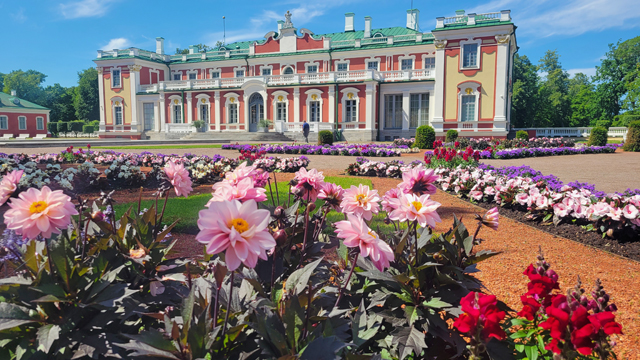
Kadriorg Palace looks as though it belongs in a royal painting rather than a Baltic capital. Commissioned by Peter the Great in 1718 for Catherine I, this elegant Baroque palace glows with soft pink tones, ornate halls, and lavish detailing that transport visitors into imperial luxury. Inside, the Kadriorg Art Museum displays European masterpieces beneath beautifully decorated ceilings and chandeliers. Outside, the carefully designed gardens feel equally enchanting.
Vilnius. A winding climb rewards visitors with sweeping panoramas of red rooftops, church spires, and the Neris River.
Visit Kadriorg Palace on Best of the Baltic Capitals Tour.
Kalmar Castle
(Kalmar, Sweden)

Kalmar Castle played a crucial role in Scandinavian history, particularly during the formation of the Kalmar Union. With medieval foundations and Renaissance updates, it is both beautiful and historically significant. The highlight is its well-preserved interiors, where visitors can explore royal chambers and learn about Nordic political history.
Kruje Fortress
(Kruje, Albania)

Kruje Fortress is closely associated with Albania’s national hero, Skanderbeg, who led resistance against the Ottoman Empire. The fortress now houses museums dedicated to this history. The highlight is its cultural importance, combined with scenic views of the surrounding mountains and valleys that once served as a battlefield.
Visit Kruje Fortress on Uncover Albania Tour.
Linderhof Palace
(Ettal, Germany)
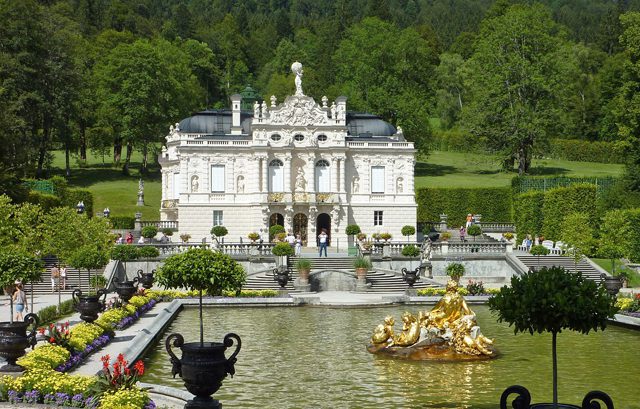
Linderhof Palace is one of the most intimate creations of King Ludwig II of Bavaria. Inspired by French royal architecture, it is richly decorated with gold accents and mirrors. The highlight is the Hall of Mirrors, along with the beautifully landscaped gardens and unique features like the artificial grotto.
Ljubljana Castle
(Ljubljana, Slovenia)
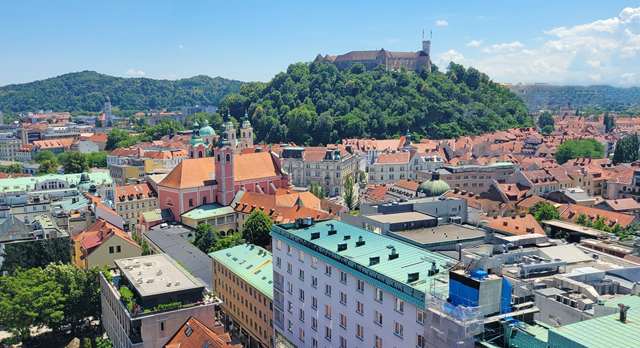
Perched high above Slovenia’s charming capital, Ljubljana Castle crowns Castle Hill with sweeping views and nearly 900 years of history. First mentioned in 1114 and rebuilt in the 15th century, this medieval stronghold has served as a fortress, noble residence, prison, and military outpost. Its dramatic setting and rich past make it one of Ljubljana’s most captivating landmarks.
Malbork Castle
(Malbork, Poland)

Malbork Castle is the largest brick castle in the world and a UNESCO World Heritage Site. Built by the Teutonic Knights in the 13th century, it served as a powerful military headquarters. The highlight is exploring its vast complex of halls, courtyards, and defensive walls that showcase medieval engineering at its finest.
Mont Saint Michel
(Normandy, France)

Mont Saint Michel is one of the most iconic landmarks in France, rising dramatically from tidal waters. Its origins date to the 8th century, and it has served as both a monastery and a fortress. The highlight is climbing to the abbey at the top, where visitors are rewarded with incredible views.
Montserrat Monastery
(Montserrat, Spain)
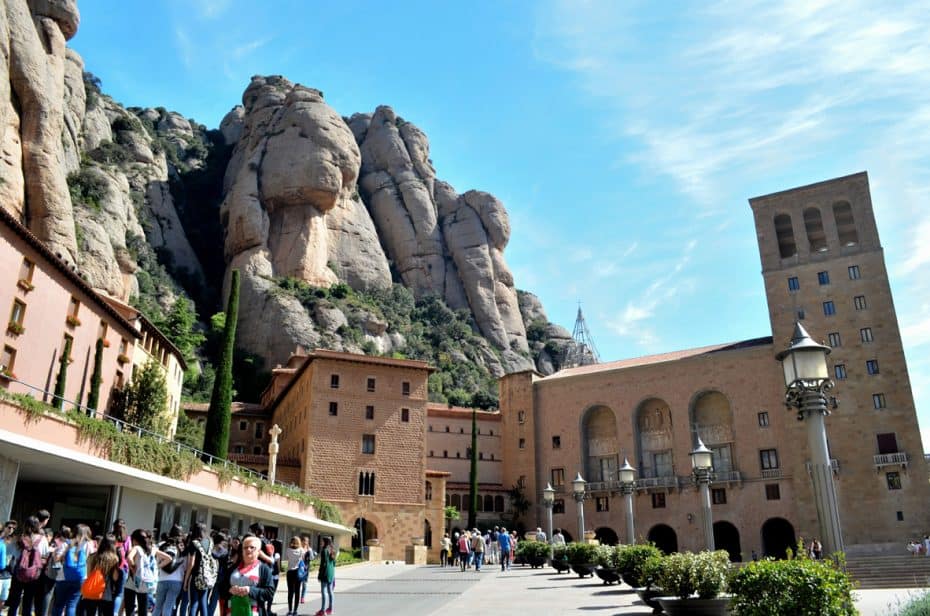
Nestled in a rugged mountain range, Montserrat Monastery is both a spiritual and natural wonder. It has been a pilgrimage site for centuries. The highlight is the revered Black Madonna statue, as well as the breathtaking mountain scenery that surrounds the monastery and enhances its sense of tranquility.
Mystras Palace
(Mystras, Greece)

Mystras is a fascinating Byzantine site that once served as a major cultural and political center. The palace complex sits on a hillside overlooking the plains of Sparta. The highlight is exploring its ruins, churches, and frescoes, which offer insight into Byzantine art and life during its final centuries.
Neuschwanstein Castle
(Bavaria, Germany)
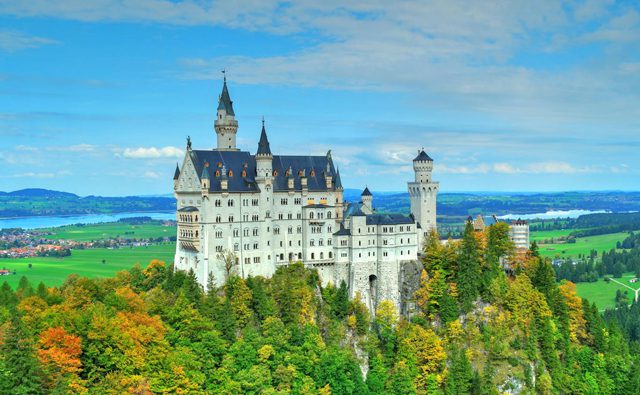
Neuschwanstein Castle is perhaps the most famous of all the beautiful castles in Europe, known for its fairytale appearance. Commissioned by King Ludwig II in the 19th century, it overlooks the Bavarian Alps. The highlight is its stunning exterior and panoramic mountain views that captivate visitors year-round. Note: It is said to be one of the castles that inspired the Disney Cinderella Castle.
Old Fortress of Corfu
(Corfu Island, Greece)

The Old Fortress of Corfu was built by the Venetians to defend the island from invasion. Its massive walls and strategic location reflect its military importance. The highlight is climbing to the top for sweeping views of Corfu town and the surrounding sea, offering both history and natural beauty.
Visit Corfu Fortress on Athens & Corfu Explorer Tour.
Olesko Castle
(Olesko, Ukraine)
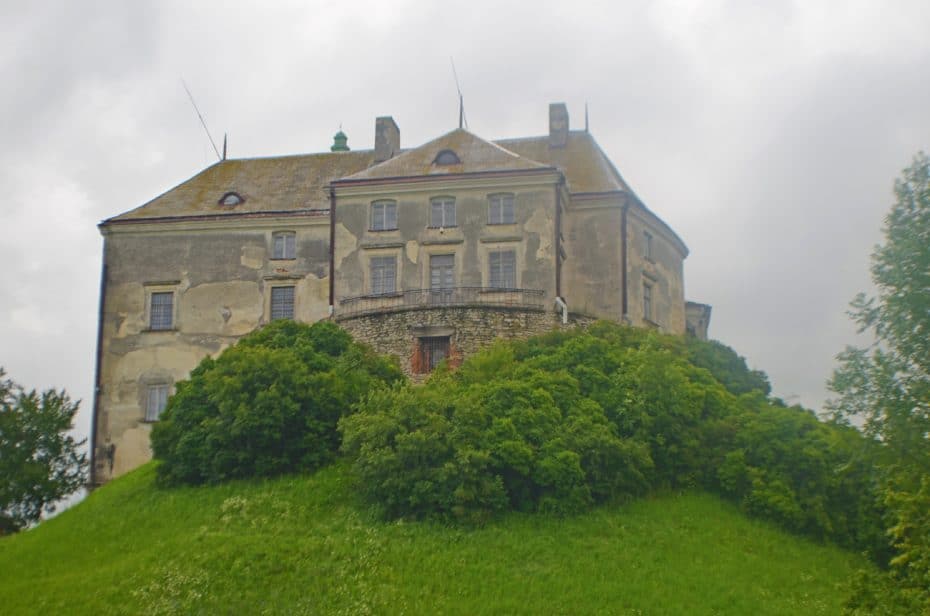
Olesko Castle is one of Ukraine’s oldest castles, dating back to the 14th century. It once served as a royal residence and has witnessed many historical events. The highlight is its collection of art and artifacts, as well as its peaceful hilltop setting surrounded by countryside.
Palais des Papes
(Avignon, France)
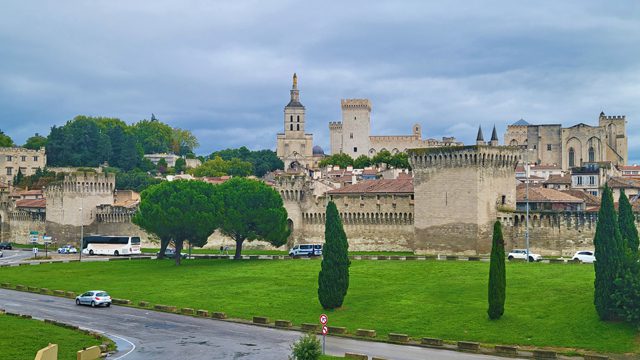
The Palais des Papes is one of the largest Gothic buildings in Europe and served as the residence of the popes during the 14th century. Its massive structure reflects immense religious power. The highlight is exploring its grand halls and chapels, which convey the scale and influence of the papacy.
Peles Castle
(Sinaia, Romania)

Peles Castle is a masterpiece of neo-Renaissance architecture, built as a summer residence for Romania’s royal family. Its interiors are richly decorated with wood carvings and ornate details. The highlight is its beautifully preserved rooms, which offer a glimpse into royal life in the 19th century.
Visit Peles Castle on Transylvania Tour.
Pena Palace
(Sintra, Portugal)
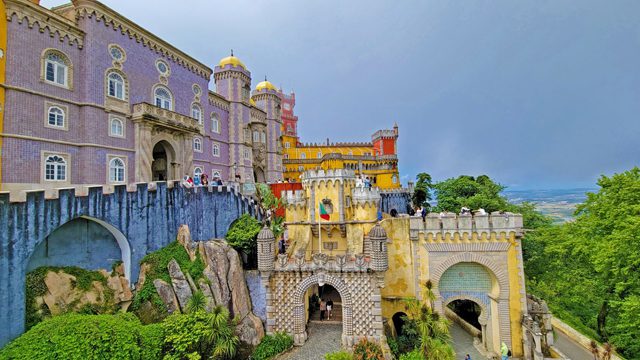
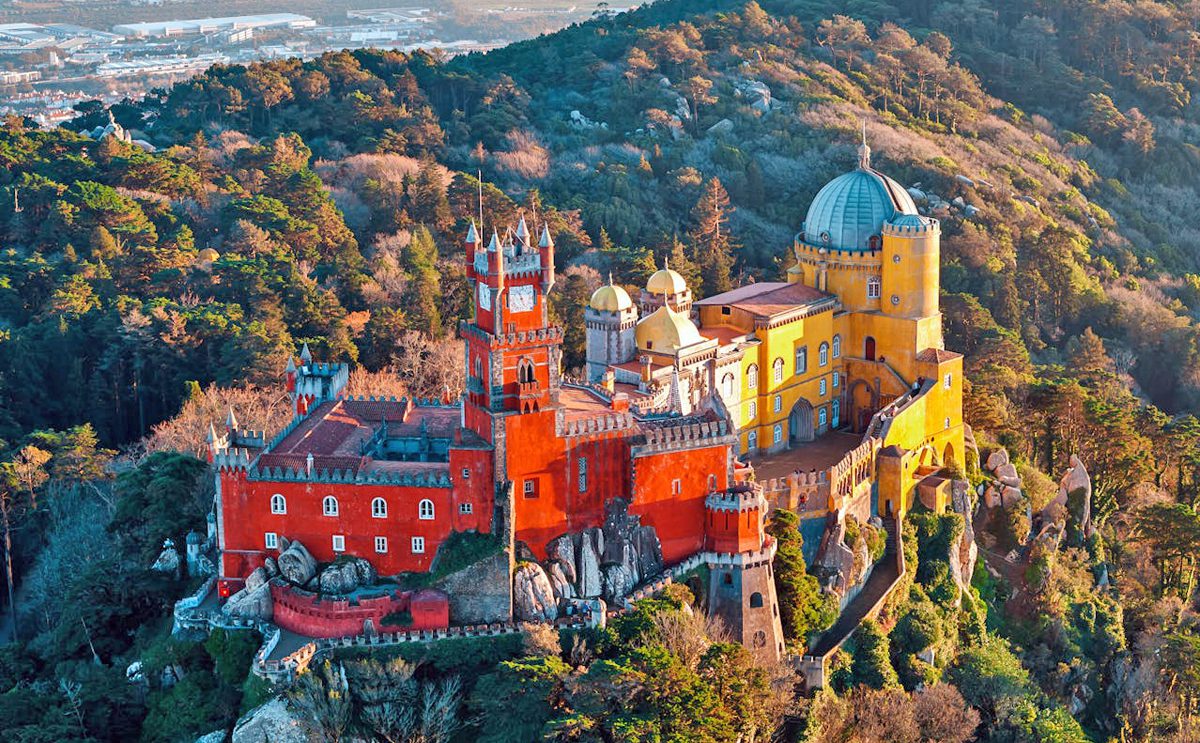
Pena Palace stands out with its vibrant colors and eclectic architectural style. Built in the 19th century, it combines Gothic, Moorish, and Renaissance elements. The highlight is its hilltop location, providing sweeping views of Sintra and the surrounding landscape, making it a favorite among travelers.
Pidhirtsi Castle
(Lviv Oblast, Ukraine)
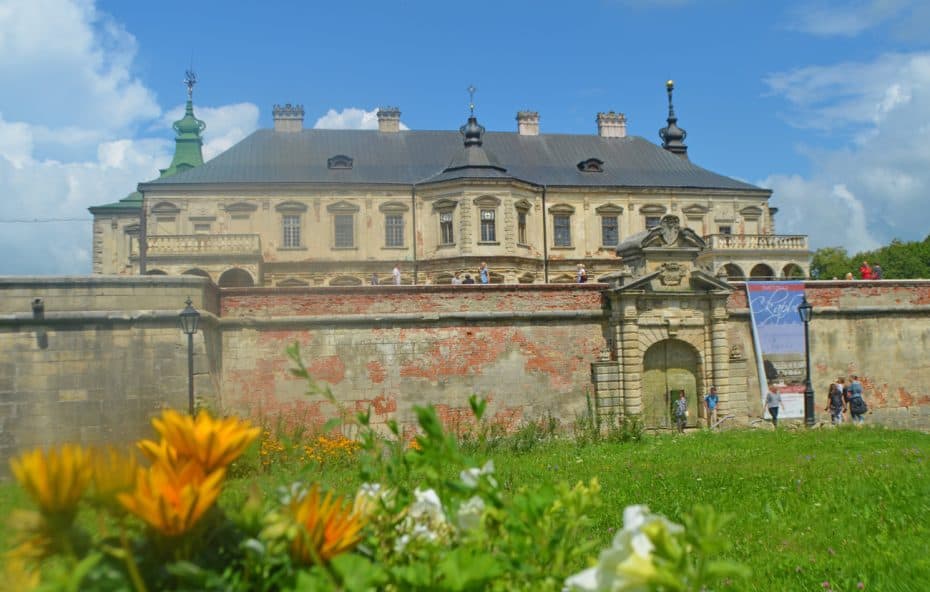
Pidhirtsi Castle is a Renaissance palace-fortress that combines elegance with defensive features. Built in the 17th century, it once hosted royalty and nobility. The highlight is its grand structure and the surrounding parkland, which together create a sense of faded grandeur and historical intrigue.
Prague Castle
(Prague, Czech Republic)

Prague Castle is one of the largest castle complexes in the world and has served as the seat of power for centuries. Its grounds include palaces, churches, and gardens. The highlight is St. Vitus Cathedral, a stunning example of Gothic architecture that dominates the skyline.
Visit Prague Castle on Central Europe’s Top Trio Tour.
Predjama Castle
(Predjama, Slovenia)
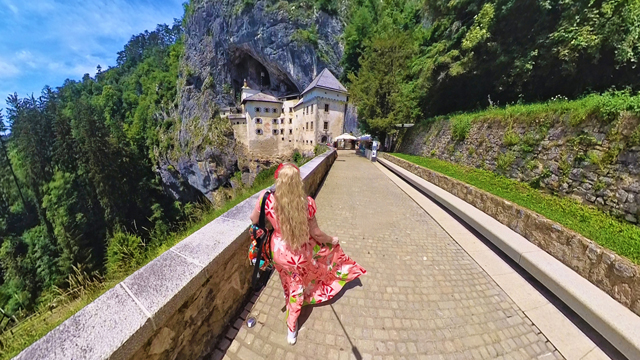
Built dramatically into the mouth of a towering 400-foot (123-meter) cliff, Predjama Castle is one of the world’s most extraordinary medieval fortresses. First mentioned in 1274, it is best known as the legendary home of the rebellious knight Erazem of Predjama, who reportedly used hidden cave passages to outwit his enemies during a year-long siege. The highlight is exploring the castle’s secret tunnels and cave system while marveling at its breathtaking location, seamlessly built into the living rock.
Primate’s Palace
(Bratislava, Slovakia)
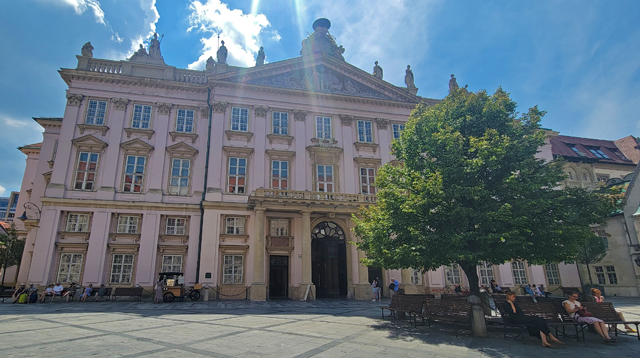
Located in the heart of Bratislava’s Old Town, Primate’s Palace is a magnificent Neoclassical landmark completed in 1781 as the residence of the Archbishop of Esztergom. The elegant pink palace is best known as the site where the Peace of Pressburg was signed in 1805 following Napoleon’s victory at the Battle of Austerlitz. The highlight is the dazzling Hall of Mirrors and its remarkable collection of rare 17th-century English tapestries, hidden behind the palace walls for centuries.
Quinta da Regaleira
(Sintra, Portugal)

Quinta de Regaleira is a unique estate known for its symbolic architecture and mysterious atmosphere. Built in the early 20th century, it features gardens, tunnels, and hidden structures. The highlight is the Initiation Well, a spiral staircase that descends underground and fascinates visitors.
Real Alcazar of Seville
(Seville, Spain)

The Real Alcazar of Seville is a stunning example of Mudejar architecture, blending Islamic and Christian influences. Still in use by Spanish royalty, it reflects centuries of cultural exchange. The highlight is its lush gardens, filled with fountains and greenery, providing a peaceful escape.
Riga Castle
(Riga, Latvia)
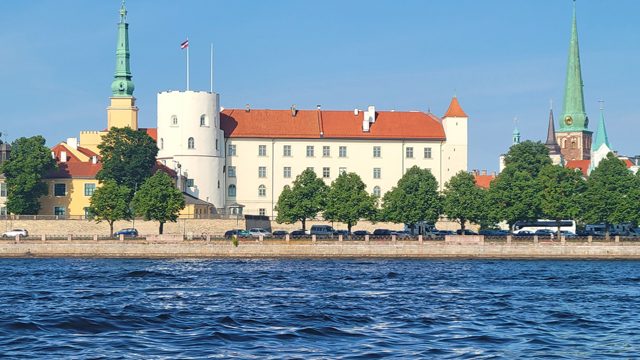
Standing proudly on the banks of the Daugava River, Riga Castle has served as a symbol of Latvian history for more than 700 years. Originally built by the Livonian Order in 1330, it has been rebuilt and expanded several times following wars and fires. Today, it serves as the official residence of the President of Latvia while also housing several museums. The highlight is its striking white façade overlooking the river, offering a beautiful contrast to the medieval charm of Riga’s Old Town.
Visit Riga Castle on Best of the Baltic Capitals Tour.
Rothenburg Castle
(Rothenburg ob der Tauber, Germany)
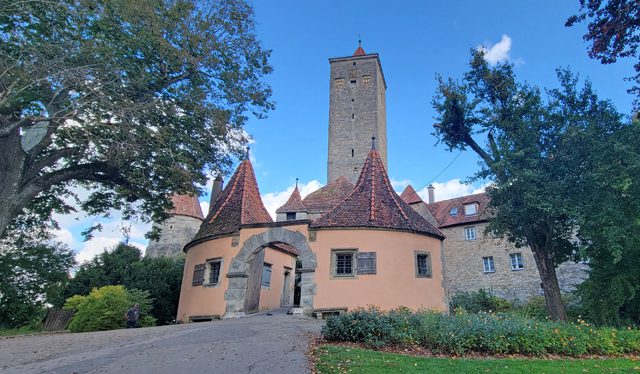
Although much of the original castle no longer stands, its gardens remain a beautiful and peaceful area. They offer sweeping views of the surrounding valley and countryside. The highlight is the tranquil atmosphere, allowing visitors to imagine the grandeur that once existed there.
Royal Palace of Madrid
(Madrid, Spain)

The Royal Palace of Madrid is the largest functioning royal palace in Europe, showcasing grandeur and elegance. Built in the 18th century, it contains richly decorated rooms and historic collections. The highlight is touring its lavish interiors, which reflect the power and prestige of Spain’s monarchy.
Rundale Palace
(Pilsrundāle, Latvia)
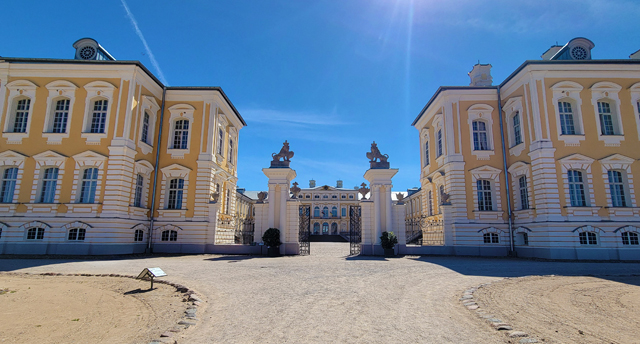
Rundāle Palace, Latvia’s grand Baroque masterpiece, dazzles visitors with its lavish halls, gilded details, and beautifully landscaped French gardens. Designed in the 18th century by renowned Italian architect Bartolomeo Rastrelli, it was built as the summer residence of the Duke of Courland, blending elegance, power, and artistic ambition into every ornate room. After surviving wars and changing rulers, the palace has been meticulously restored, allowing today’s visitors to experience one of Northern Europe’s finest Baroque and Rococo treasures in remarkable detail.
Visit Rundale Palace on Best of the Baltic Capitals Tour.
Sagadi Manor House
(Sagadi, Estonia)
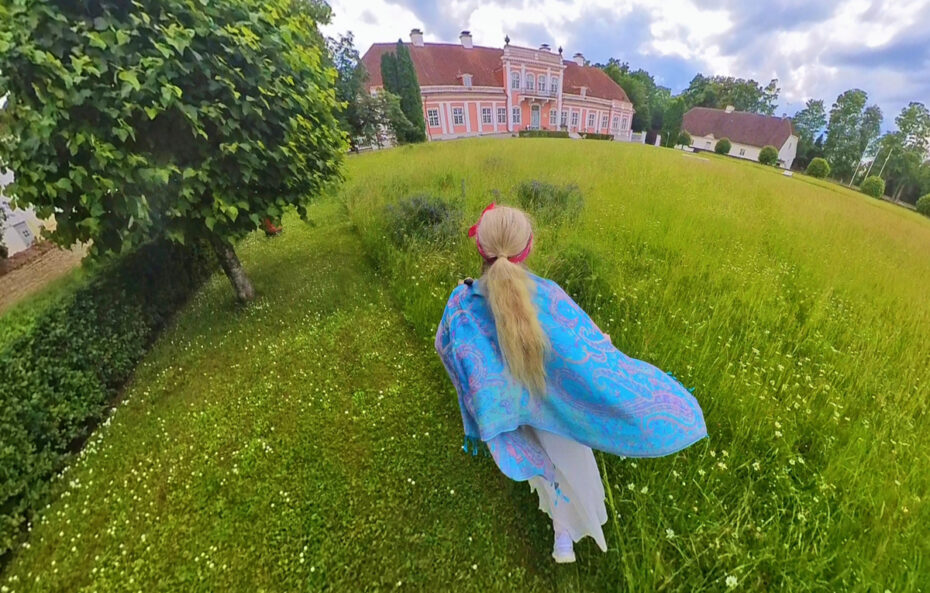
Nestled within Lahemaa National Park, Sagadi Manor House is one of Estonia’s finest preserved 18th-century manor estates. Originally built for the Baltic German nobility, its elegant Baroque architecture is surrounded by manicured gardens, peaceful ponds, and forest trails. Today, the manor houses a museum highlighting Estonia’s forestry heritage. The highlight is strolling through the beautifully restored estate before enjoying the tranquil natural setting that makes Sagadi a perfect escape from the city.
Visit Sagadi Manor House on Best of the Baltic Capitals Tour.
Schönbrunn Palace
(Vienna, Austria)
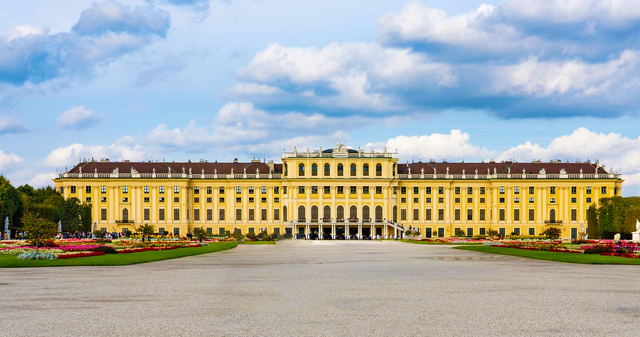
Schönbrunn Palace is one of Europe’s grandest royal residences and a masterpiece of Baroque architecture. Built in the late 17th century as the summer home of the Habsburg emperors, it became the beloved residence of Empress Maria Theresa and later Emperor Franz Joseph. Today, its lavish state rooms, beautifully landscaped gardens, and the magnificent Gloriette overlooking Vienna transport visitors into the splendor of imperial Austria. The highlight is touring the opulent palace interiors before strolling through the expansive gardens to enjoy panoramic views of the city.
Sigulda New Castle
(Sigulda, Latvia)
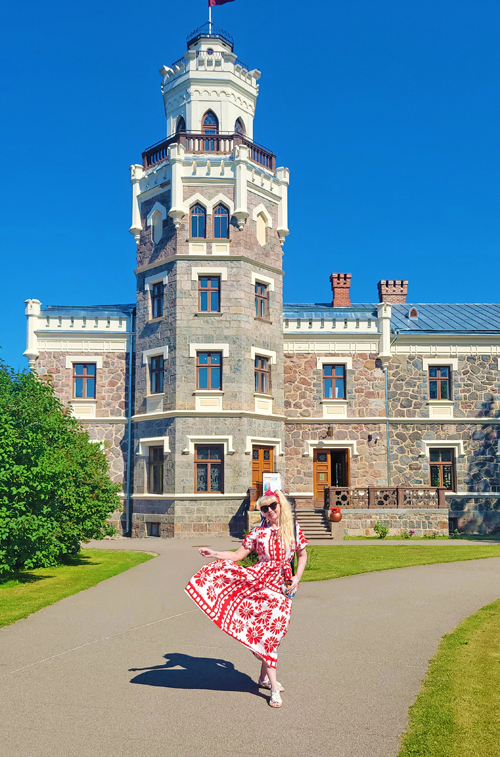
Perched above the Gauja Valley, Sigulda New Castle blends medieval charm with elegant 19th-century flair. This striking Neo-Gothic masterpiece, accented with graceful Neo-Renaissance touches, invites visitors to wander its grand halls, climb the tower for breathtaking views, and soak in centuries of Latvian history. Surrounded by forests and nearby castle ruins, it’s a storybook destination that invites exploration and wonder.
Visit Sigulda New Castle on Best of the Baltic Capitals Tour.
Stirling Castle
(Stirling, Scotland)

Stirling Castle has played a central role in Scottish history, serving as a royal residence and military stronghold. Its strategic location made it key in many battles. The highlight is the beautifully restored Great Hall and its connection to figures like Mary, Queen of Scots.
Toompea Castle
(Tallinn, Estonia)
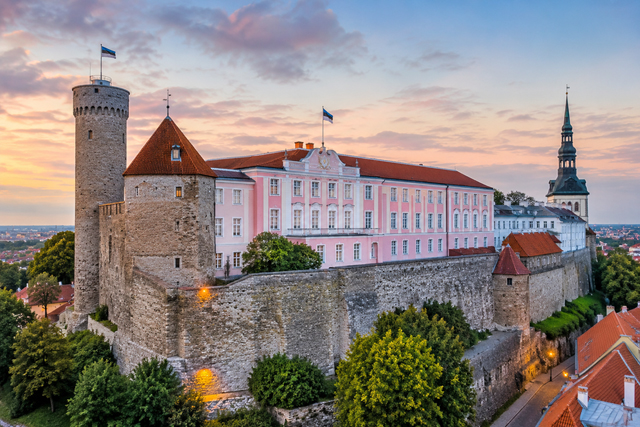
Perched atop Toompea Hill, Toompea Castle has stood at the heart of Estonian power for more than 800 years. Originally built as a medieval fortress in the 13th century by the Danish and later expanded by the Livonian Order, it now serves as the home of the Estonian Parliament. The castle showcases a fascinating blend of medieval fortifications, Baroque additions, and the distinctive pink parliamentary façade. The highlight is the commanding view from Toompea Hill, overlooking Tallinn’s red rooftops, church spires, and the sparkling Gulf of Finland.
Visit Toompea Castle on Best of the Baltic Capitals Tour.
Tossa de Mar Castle
(Costa Brava, Spain)
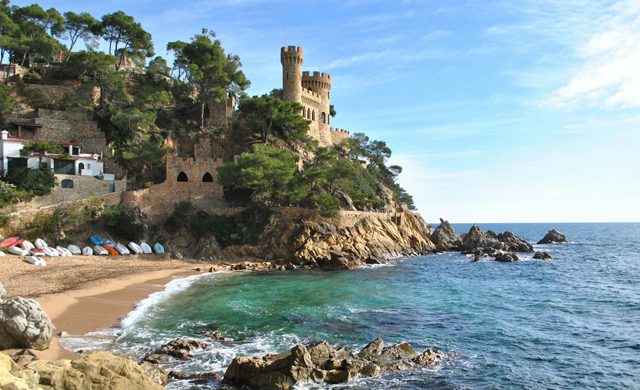
This coastal fortress in Catalonia dates back to the 12th century and was built to defend against pirates. Its walls still stand along the sea, creating a striking image. The highlight is walking along the ramparts while enjoying views of the Mediterranean and the charming town below.
Tower of London
(London, United Kingdom)
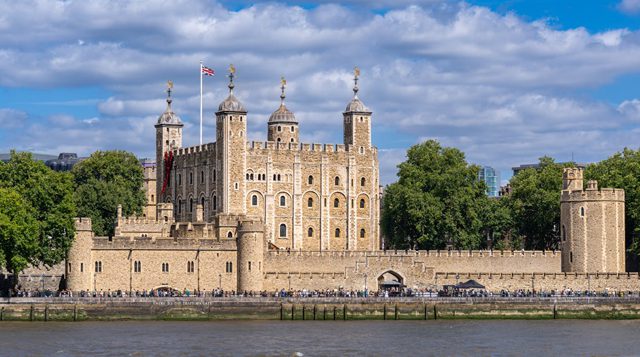
The Tower of London is a historic fortress that has served as a royal palace, prison, and treasury. Founded in the 11th century, it is steeped in stories of intrigue. The highlight is the Crown Jewels, which draw visitors from around the world.
Trakai Castle
(Trakai, Lithuania)
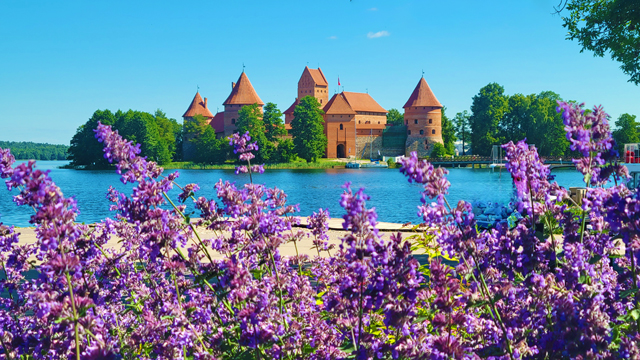
Trakai Castle rises dramatically from Lake Galvė, its red-brick towers reflecting across shimmering waters. Built in the fourteenth century, it served as a powerful residence for Lithuanian grand dukes, blending Gothic elegance with formidable defensive design. Its island setting transformed every approach into an unforgettable spectacle of strength and beauty.
Today, visitors cross wooden bridges into restored courtyards, vaulted halls, and engaging exhibitions. Every chamber echoes with tales of diplomacy, battles, and multicultural traditions, while panoramic lake views create unforgettable moments that celebrate Lithuania’s enduring heritage, resilience, craftsmanship, and adventurous spirit through every inspiring step, inviting curiosity again and always.
Note: You can fly in a hot air balloon over Trakai Castle with JayWay Travel!
Click here for 11 Lithuanian Castles That Will Amaze You.
Visit Trakai Castle on Best of the Baltic Capitals Tour.
Turaida Castle
(Sigulda, Latvia)
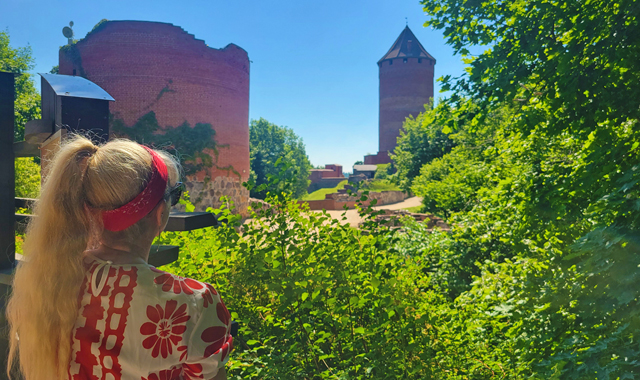
Rising proudly above the Gauja River, Turaida Castle is a magnificent red-brick medieval fortress built in 1214 by the Livonian Brothers of the Sword. Climb its soaring keep for sweeping valley views, explore centuries of captivating history, and discover why this iconic stronghold remains one of Latvia’s most treasured landmarks.
Visit Turaida Castle on Best of the Baltic Capitals Tour.
Urquhart Castle
(Loch Ness, Scotland)
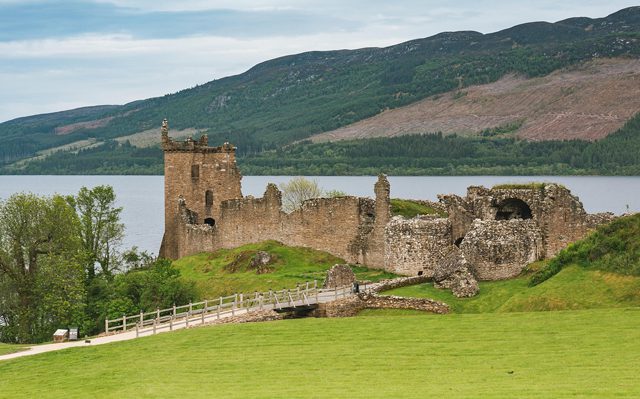
Urquhart Castle sits on the banks of Loch Ness and offers a dramatic setting rich in legend. Dating back to the 13th century, it played a role in Scotland’s conflicts. The highlight is its connection to the Loch Ness legend and the stunning views across the water.
Palace of Versailles
(Versailles, France)

The Palace of Versailles is a symbol of royal extravagance and power. Built in the 17th century, it features grand halls and expansive gardens. The highlight is the Hall of Mirrors, where historic events took place and where visitors can admire its dazzling design.
Wawel Castle
(Krakow, Poland)

Wawel Castle is a national symbol of Poland and a former royal residence. Its architecture reflects a mix of styles from different periods. The highlight is Wawel Cathedral, where many Polish kings are buried, making it a place of deep cultural significance.
Visit Wawel Castle on Poland’s Tantalizing Trio City Tour.
Warsaw Royal Castle
(Warsaw, Poland)
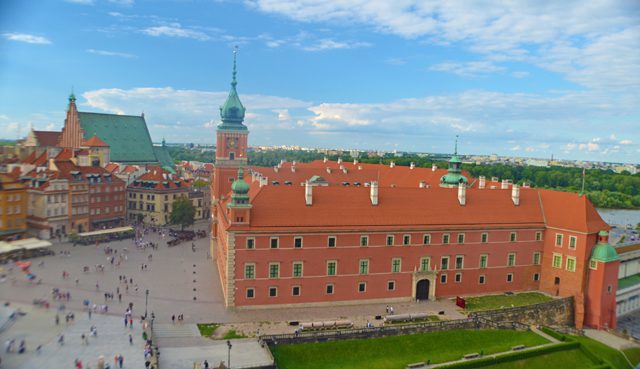
The Royal Castle in Warsaw was carefully reconstructed after World War II, symbolizing resilience and national pride. It now serves as a museum. The highlight is its restored interiors, which showcase art, history, and the spirit of the Polish people.
Visit Warsaw Castle on Poland’s Tantalizing Trio City Tour.
Zhovkva Castle
(Zhovkva, Ukraine)
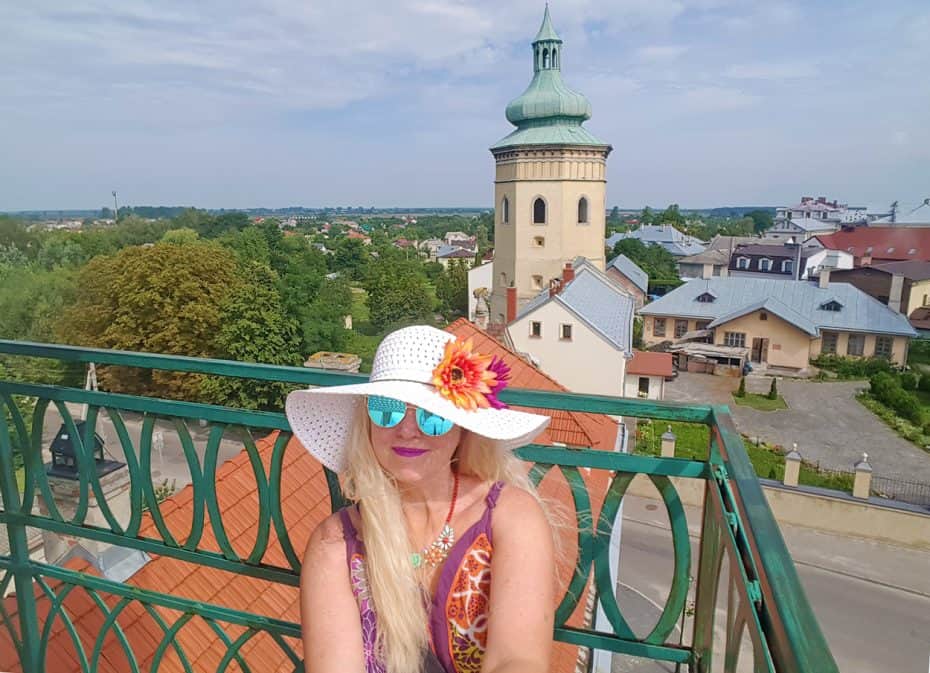
Zhovkva Castle dates to the 16th century and was once a royal residence. Though partially in ruins, it remains an important historical landmark. The highlight is its role in regional history and its connection to the development of the surrounding planned town.
Exploring the beautiful castles in Europe reveals a continent shaped by imagination, ambition, and resilience. From mountaintop fortresses to coastal strongholds, each destination offers a unique window into history. Visiting the beautiful castles in Europe is not just sightseeing, but an unforgettable journey through culture, heritage, and timeless beauty.
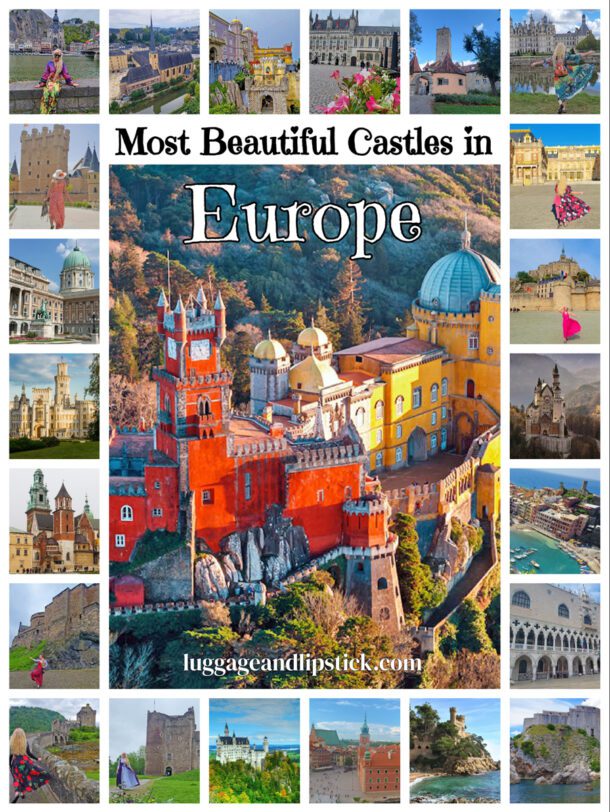
Click below to PIN so you can find these castles in Europe again:
This article may contain affiliate/compensated links. For full information, please see our disclaimer.
About the Author
Patti Morrow is a travel influencer and founder of the award-winning international blog Luggage and Lipstick. TripAdvisor called her one of the “20 Baby Boomer Travel Bloggers Having More Fun Than Millennials,” and she was named one of the “Top 35 Travel Blogs” in the world.
She is also the star of the upcoming TV series “Destination Takeover,” which is scheduled to premiere in the near future.
Patti is the author of the book “Girls Go Solo: Tips for Women Traveling Alone,” and has over 150 bylines in 40 print and online publications, including The Huffington Post, International Living Magazine, Washington Post Sunday Travel, Travel Girl, Travel Play Live Magazine, and Ladies Home Journal. She has traveled extensively through six continents looking for fabulous destinations, exotic beaches, and adventure activities for her Baby Boomer tribe.

Leave a reply