
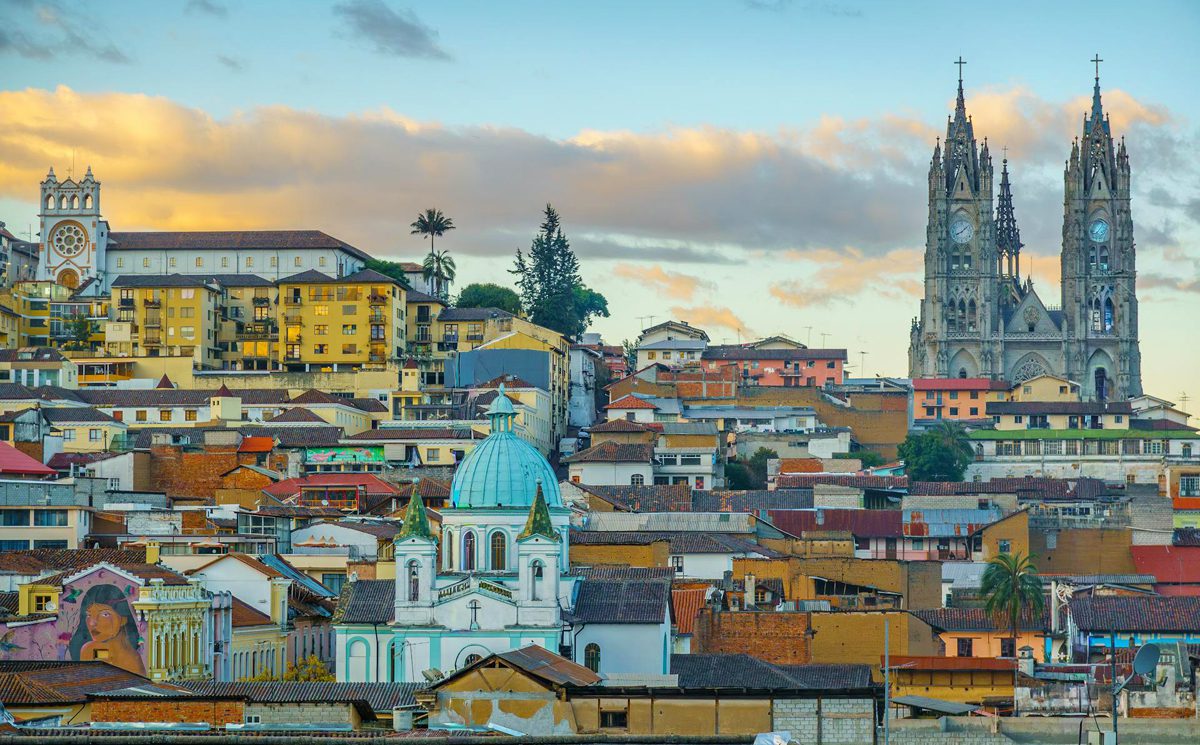
Perched high in the Andes, Quito is a city that blends colonial beauty, dramatic mountain scenery, and vibrant culture. Rising at about 9,350 feet above sea level, it’s one of the highest capital cities in the world. Its historic center has the distinction of being the first UNESCO World Heritage Site (1978), as well as the best-preserved old town in the Americas.
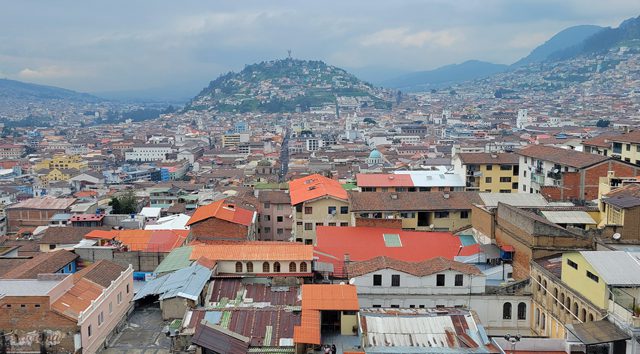
Travelers often arrive expecting a quick stopover and leave wishing they had stayed longer. From historic churches covered in gold to markets bursting with color and mountain viewpoints that feel like the edge of the world, the city delivers unforgettable moments at every turn.
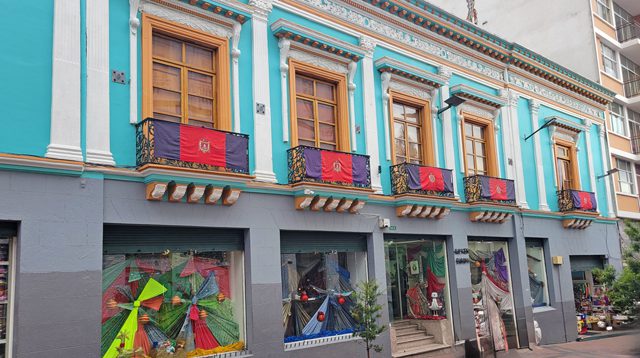
If you’re searching for unforgettable things to do in Quito, this guide highlights the places that make the capital one of South America’s most fascinating destinations.
10 Francisco Church
San Francisco Church and its sprawling plaza are among the most historic landmarks in Quito. Construction began in the 16th century, making it one of the oldest religious complexes in South America. The church stands over Plaza de San Francisco, where stone steps lead up to impressive white towers and an ornate interior.
Inside, visitors will find centuries-old artwork, intricate carvings, and stunning religious sculptures that reveal the fusion of Spanish and Indigenous artistic traditions. The monastery complex also includes peaceful courtyards and museums. Spending time here offers a deeper understanding of Quito’s colonial history and the cultural influences that shaped the city.
9 Palacio Arzobispal
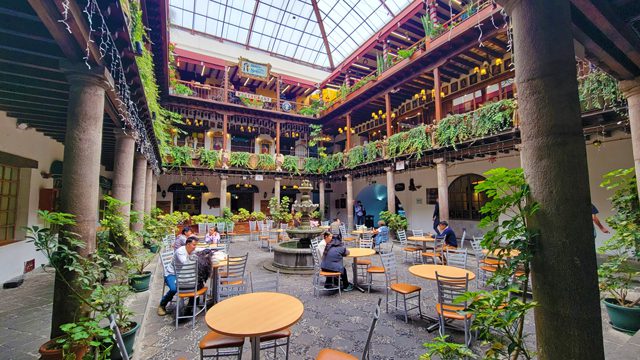
The Palacio Arzobispal is a historic building located on Plaza de la Independencia in Quito, Ecuador. Built during the colonial period and later remodeled, it serves as the residence and administrative center of the Roman Catholic Archdiocese of Quito. The palace features traditional Spanish colonial architecture, with white arcades, carved wooden balconies, and a central courtyard. Today, parts of the building are open to the public and house small restaurants, cafés, and artisan shops beneath its arches. Its location beside the Metropolitan Cathedral highlights its long religious importance and its role in Quito’s cultural and architectural heritage today as well.
Make sure you try the mistelas, traditional, small, sugar-coated candies, featuring a sneak-up-on-you liquid liquor center.
8 Plaza Grande
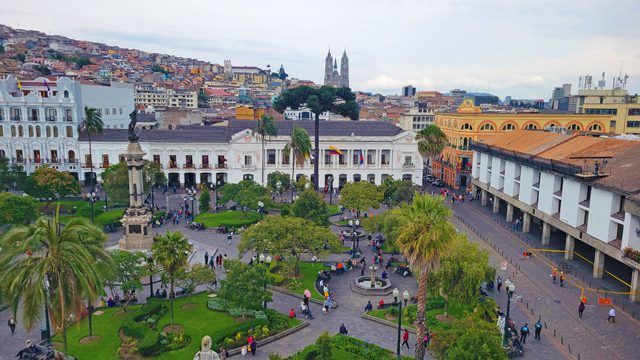
Plaza Grande, also known as Independence Square, sits at the heart of Quito’s historic center. Surrounded by the Presidential Palace, the Metropolitan Cathedral, and other important buildings, the square serves as a lively gathering place for locals and visitors alike. Palm trees, manicured gardens, and shaded benches create a relaxing space to pause between sightseeing stops. Street performers, photographers, and families often fill the plaza throughout the day. It’s also a great location for people-watching while absorbing the rhythms of daily life in Quito. From here, many of the Old Town’s major attractions are only a short walk away.
7 Calle de La Ronda
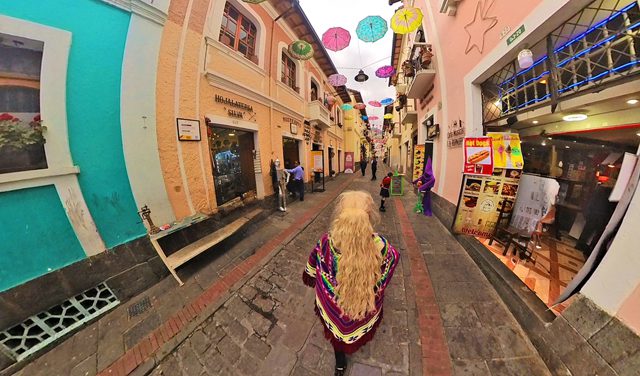
Calle de La Ronda is one of Quito’s most charming streets, especially in the evening when lanterns glow and music spills from small cafés and restaurants. This narrow cobblestone lane dates back to colonial times and has been beautifully restored to highlight its historic character. Artisans work in tiny workshops along the street, crafting traditional toys, sweets, and musical instruments.
Visitors can watch demonstrations, taste local treats like canelazo, or simply enjoy the lively atmosphere. Musicians often perform in the doorways, adding to the romantic ambiance. A walk down La Ronda offers a glimpse into Quito’s artistic spirit and old-world charm.
6 Iglesia de La Compania de Jesus
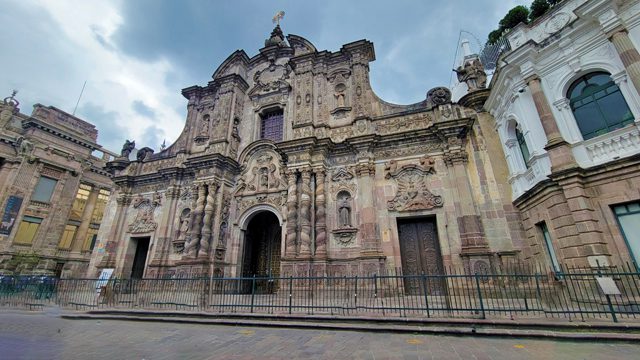
Often described as the most beautiful church in Ecuador, Iglesia de La Compañía de Jesús is famous for its astonishing interior covered almost entirely in gold leaf. The church took more than 160 years to complete and represents one of the finest examples of Spanish Baroque architecture in South America. Every surface seems filled with elaborate carvings, sculptures, and decorative details.
Visitors frequently pause in silence when they first step inside, overwhelmed by the sheer level of craftsmanship. Beyond its visual splendor, the church also tells the story of Quito’s colonial religious history and the artistic collaboration between Spanish and Indigenous builders.
5 Intiñan Equator Museum
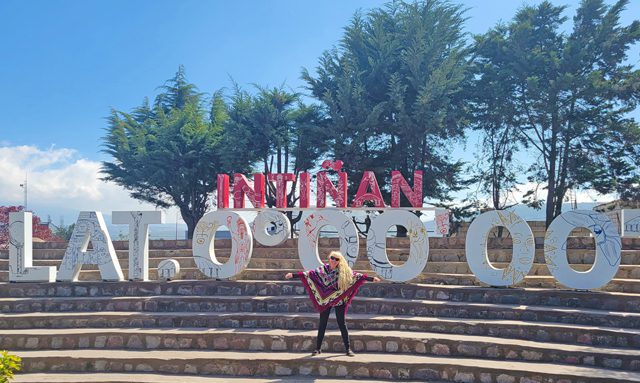
The museum sits directly on the equator, its location confirmed by modern GPS, 300 meters from the previously believed equator at Mitad del Mundo. The Museum offers a playful and educational experience exploring science and Indigenous culture. Founded in 1968, the exhibits include a replica of an indigenous thatched-roof house and another eerie shrunken head exhibit.
This interactive museum celebrates indigenous knowledge and the Earth’s mysteries long before modern science. Visitors can try their hand at mind-bending experiments: balance an egg on a nail (I failed miserably), see water swirl differently in each hemisphere, and feel the unusual forces at play.
The museum also includes recreated traditional homes and displays about Ecuador’s diverse Indigenous communities.
4 Mitad del Mundo
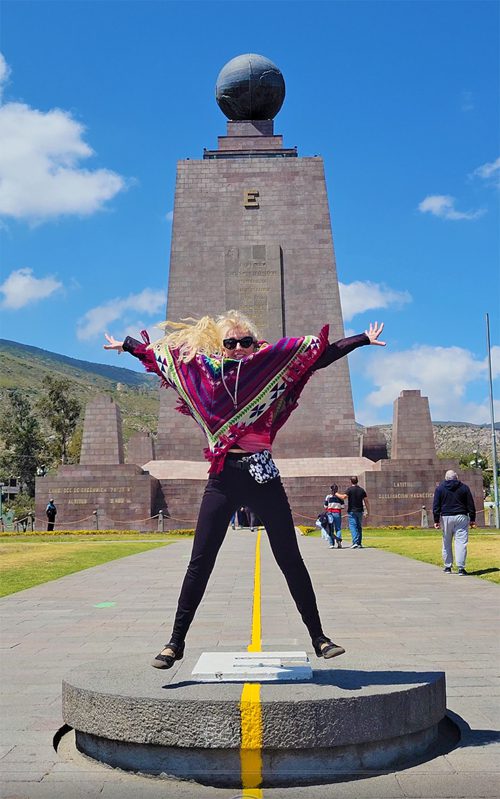
Standing at Mitad del Mundo in Quito is a reminder of how geography connects us all. This iconic monument marks the equator, where you can literally place one foot in the Northern Hemisphere and the other in the Southern.
The location was identified in the 18th century by the French Geodesic Mission, a scientific expedition sent to measure the shape of the Earth. Using astronomical observations and triangulation, they calculated the equatorial line and placed markers accordingly, based on the best technology of their time. Modern GPS measurements later revealed that the true equator lies slightly north of the monument.
Surrounded by museums, culture, and mountain views, the site blends science, history, and fun in one visit. Whether you are learning about indigenous knowledge, taking photos, or enjoying local food, the experience feels both educational and joyful. Because I love coffee,
3 Columpio en las Nubes
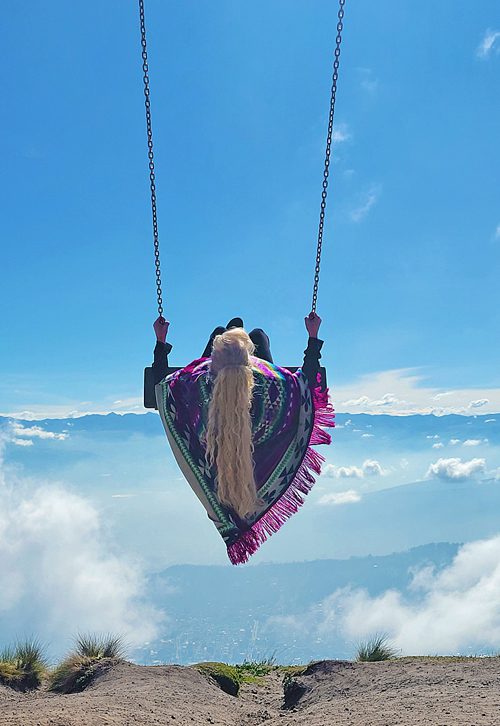
One of the most thrilling viewpoints in Quito is Columpio en las Nubes, the Swing in the Clouds, located high on the slopes of Pichincha Volcano. Visitors reach it by riding the TelefériQo cable car, which climbs dramatically from the city up to more than 13,500 feet above sea level. The ride alone offers breathtaking views as Quito stretches out below and surrounding volcanoes appear on the horizon.
Near the top, the large swing allows visitors to soar outward toward the mountains, creating the feeling of flying above the Andes. The dramatic scenery and high altitude make this one of the most unforgettable things to do in Quito Ecuador.
A word of caution…after stepping out of the cable car, it was about a 15-minute “walk” uphill to the swing. At that high altitude, I walked for around one minute and already encountered the feeling that I could not get enough oxygen into my lungs – and that’s even with having taken altitude medication for a week! The walk was more like a hike, and took about twice as long with all the stops.
2 Metropolitan Cathedral
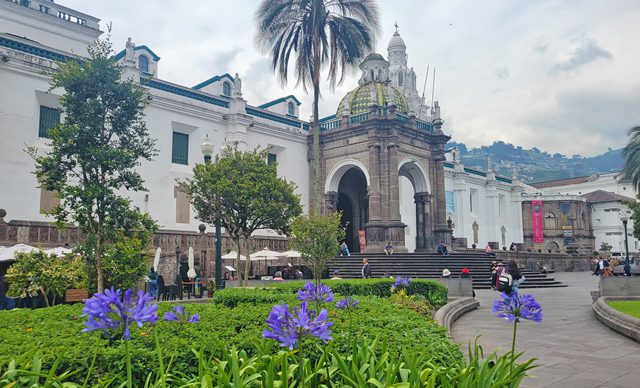
The Metropolitan Cathedral of Quito anchors the Plaza Grande with a powerful mix of architectural styles shaped over centuries. Construction began in the 1500s, making it one of Quito’s earliest colonial buildings. Its stone exterior blends Gothic-Mudejar, Renaissance, and Baroque influences, with clock towers and distinctive green-tiled domes defining the skyline of the historic center.
Inside, visitors will find ornate chapels, religious paintings, and the tombs of prominent Ecuadorian figures. The cathedral’s architecture blends Gothic, Moorish, and Baroque influences, reflecting centuries of artistic evolution. For history lovers exploring things to do in Quito, the cathedral offers insight into the city’s political and religious past while showcasing some of the finest colonial craftsmanship in the region.
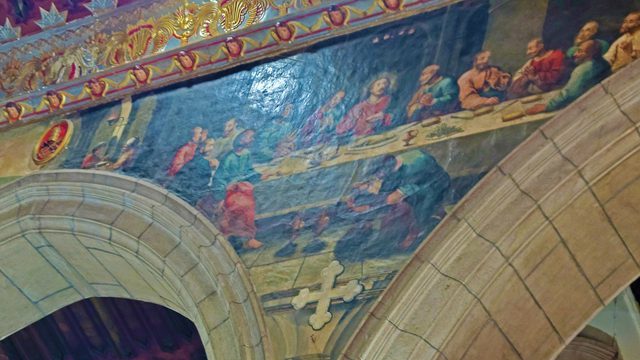
One of its most famous artworks is the Last Supper painting by Bernardo de Legarda’s school, where Christ and the apostles share a traditional Andean guinea pig instead of lamb, subtly weaving local culture into a classic biblical scene and making the interior both sacred and distinctly Ecuadorian.
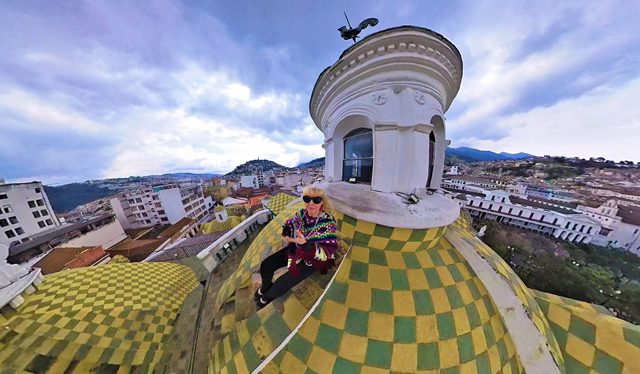
Climbing to the cathedral’s domes is a memorable experience that feels almost medieval. The route follows a narrow rock staircase, steep and enclosed, with uneven steps polished smooth by centuries of use. As you ascend, the space tightens and the silence deepens, broken only by echoes of your movement. Small openings reveal brief views of rooftops and streets below, heightening the sense of anticipation.
At the top, the reward is spectacular: the emerald-green tiled domes up close and sweeping views of Quito’s historic center, framed by dramatic mountains and ever-shifting clouds. Two of the domes have a subtle, almost hidden staircase that visitors can climb for a unique photo op. The stairs are only about 12” wide and extremely slippery, so extreme care should be taken.
1 Basílica del Voto Nacional Plaza Independencia
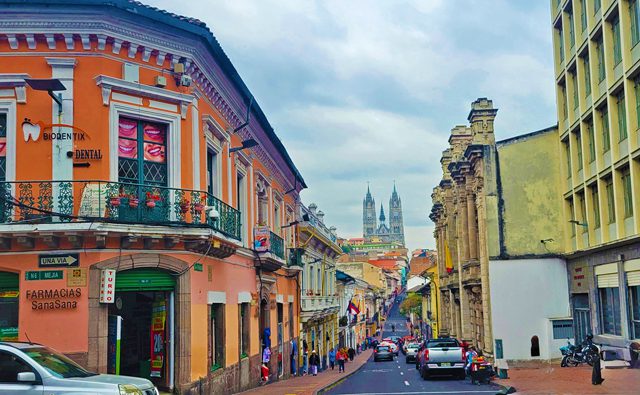
Basilica del Voto Nacional is one of Quito’s most iconic landmarks and the largest neo-Gothic church in the Americas. Its towering spires rise dramatically above the historic center, offering some of the best panoramic views in the city. Its flying buttresses, pointed arches, and towering spires dominate the historic center skyline.
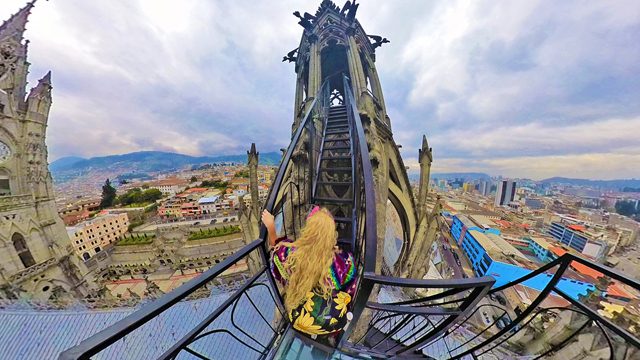
Climbing to the top of Basilica del Voto Nacional is an unforgettable experience for adventurous visitors. The ascent is not for the faint-hearted, about the same as a 12-story building, including narrow staircases, steep ladders, and walkways high above the nave, offering dramatic perspectives of the architecture.
As you rise, the sounds of the city fade, and the scale of Quito reveals itself. From the towers, panoramic views stretch across the historic center, surrounding hills, and distant volcanoes. The altitude and wind add excitement, but reaching the summit rewards climbers with breathtaking scenery and a deeper appreciation of the basilica’s ambition.
Conclusion
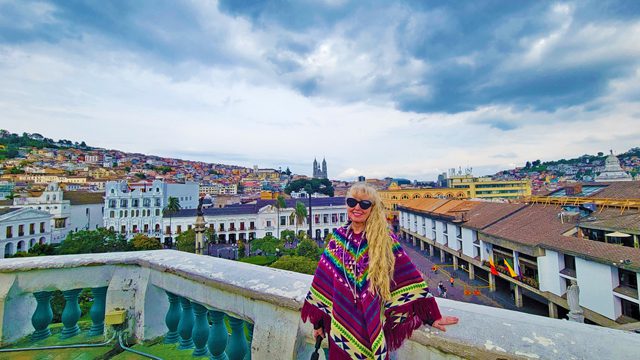
Quito combines breathtaking mountain scenery with centuries of history and culture. From golden churches and lively plazas to standing on the equator itself, the city offers experiences found nowhere else. Whether exploring markets, historic streets, or dramatic viewpoints, travelers quickly discover why Quito remains one of South America’s most captivating destinations.
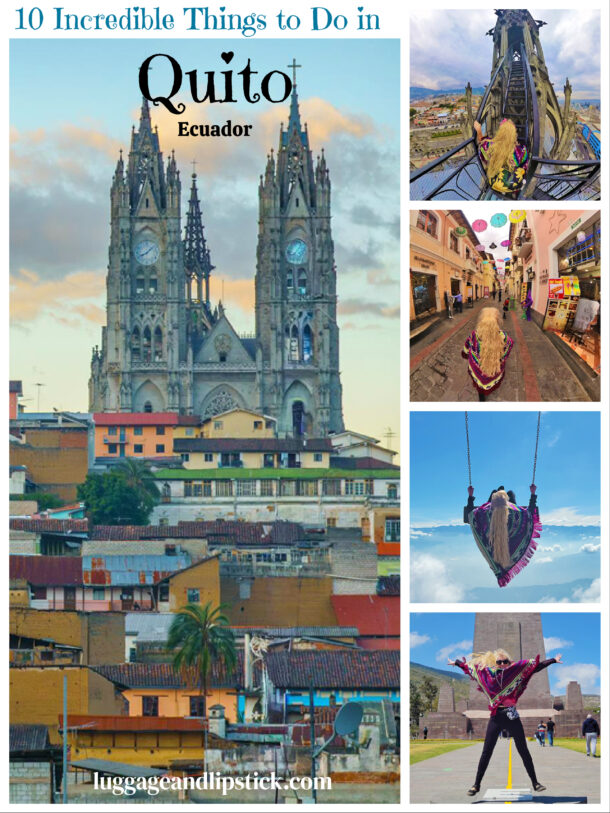
Click below to PIN so you can find things to do in Quito again:
This article may contain affiliate/compensated links. For full information, please see our disclaimer.
About the Author
Patti Morrow is a travel influencer and founder of the award-winning international blog Luggage and Lipstick. TripAdvisor called her one of the “20 Baby Boomer Travel Bloggers Having More Fun Than Millennials” and she was named one of the “Top 35 Travel Blogs” in the world.
She is also the star of the upcoming TV series “Destination Takeover” which is scheduled to premiere in the near future.
Patti is the author of the book “Girls Go Solo: Tips for Women Traveling Alone,” and has over 150 bylines in 40 print and online publications, including The Huffington Post, International Living Magazine, Washington Post Sunday Travel, Travel Girl, Travel Play Live Magazine, and Ladies Home Journal. She has traveled extensively through six continents looking for fabulous destinations, exotic beaches, and adventure activities for her Baby Boomer tribe.

1 comment
Comment by Marysa
Marysa September 26, 2026 at 10:39 am
I went to Quito about 25 years ago before going to the Galapagos Islands. I remember it being cloudy out but we got a bad sunburn! It was a neat city to explore, and I would love to go back and see more.