
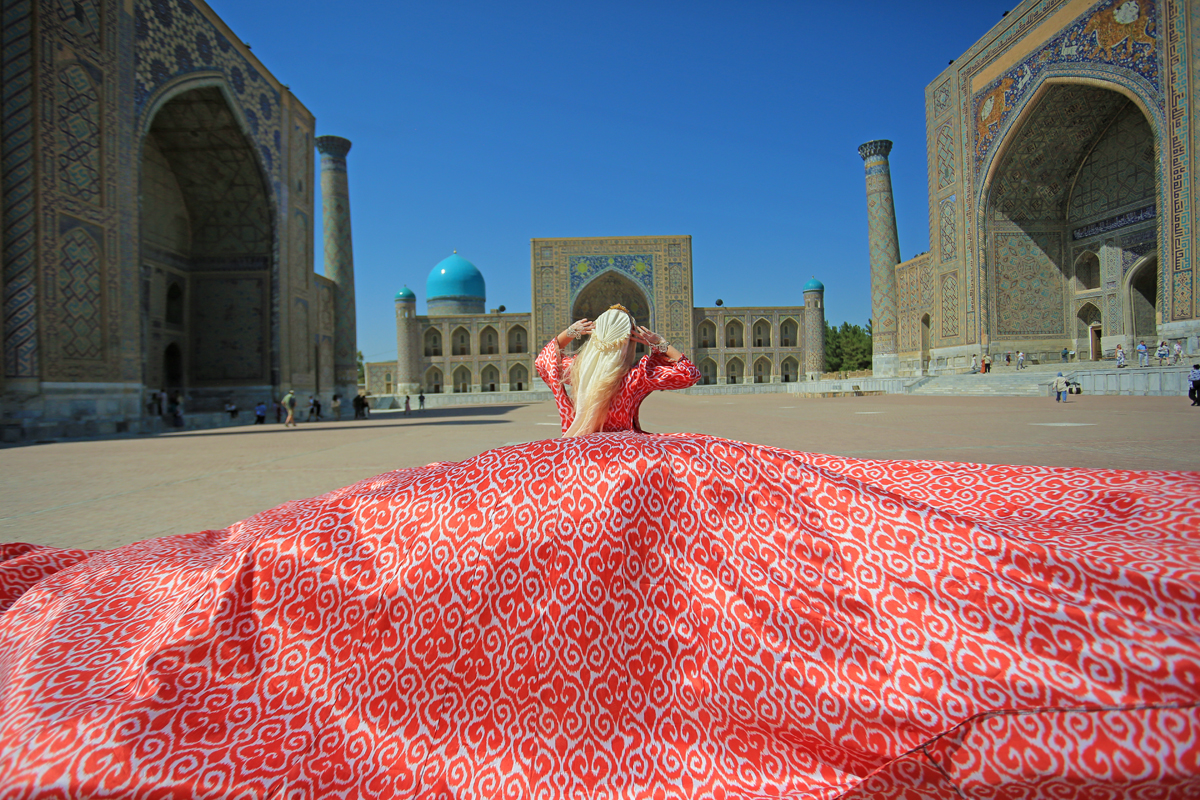
Samarkand, Uzbekistan, is one of Central Asia’s great historic cities, with roots stretching back more than 2,500 years. If you plan to visit Samarkand in one day, for example, from Tashkent, prepare yourself to be dazzled beyond belief. Indeed, it is one of the most jaw-dropping places to visit once in a lifetime!
Known in antiquity as Maracanda, it was conquered by Alexander the Great in 329 BC, who admired its beauty and strategic importance. Centuries later, the city became a major Silk Road center and reached its greatest prominence under Timur, who made Samarkand the capital of his vast empire in the late 14th century. His grandson, Ulugbek, transformed it into a center of scholarship, astronomy, and learning. Today, the city’s monumental mosques, madrasas, mausoleums, and observatory preserve the extraordinary legacy of these ambitious rulers.
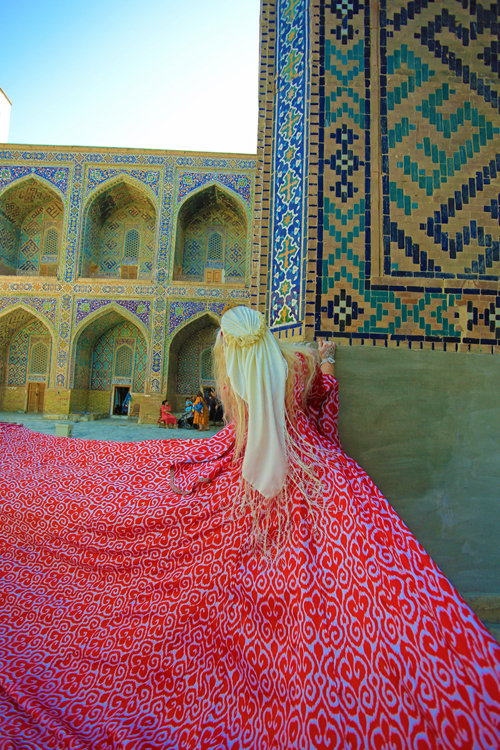
Walking through Samarkand feels like moving between chapters of a long and colorful history. Ancient ruins stand alongside monumental Timurid architecture, where soaring portals, turquoise domes, intricate mosaics, and geometric tilework create an astonishing visual landscape. The city also reflects the influence of Persian, Central Asian, and Islamic artistic traditions, making its streets and historic monuments a fascinating record of centuries of cultural exchange.
Here are the best places to visit in Samarkand in one day:
8 Ulugbek Observatory
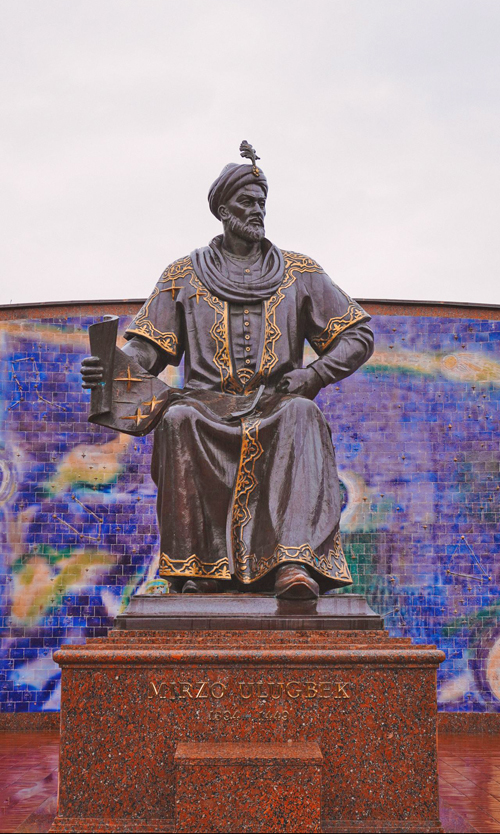
Built in the 1420s by the astronomer-ruler Ulugbek, this observatory was one of the medieval world’s most important centers for astronomical study. Its enormous stone sextant helped scholars calculate the positions of stars with remarkable accuracy. Today, the remaining foundations and museum reveal the scientific sophistication of Timurid Samarkand.
7 Siab Bazaar
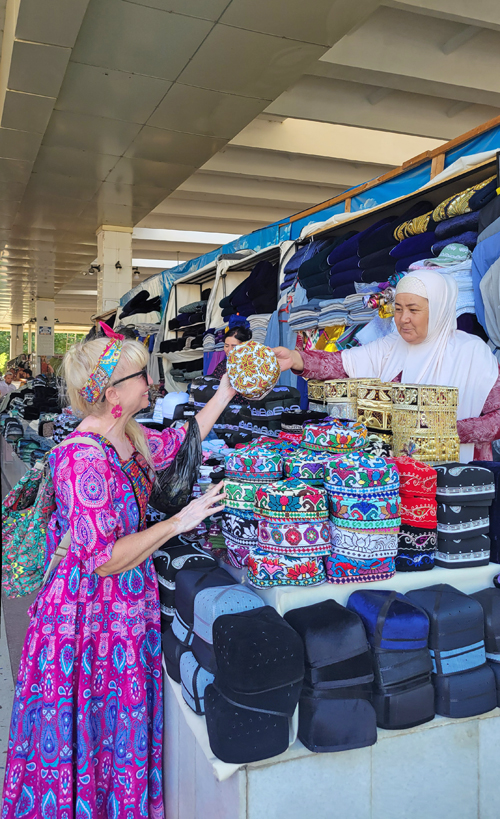
Near Bibi Khanum Mosque, Siab Bazaar has been a lively center of commerce for generations. Its covered stalls overflow with dried fruits, nuts, spices, breads, sweets, and other Uzbek specialties, filling the air with enticing aromas. The bustling market offers a glimpse into Samarkand’s everyday life and its enduring tradition of trade.
6 Plov
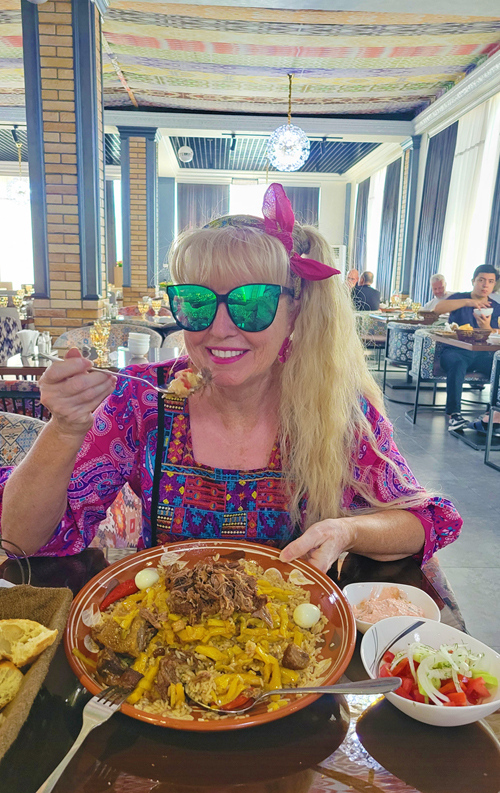
A visit to Samarkand is incomplete without tasting plov, Uzbekistan’s beloved rice dish. Traditionally cooked in a large kazan, plov combines rice with carrots, onions, and tender meat, often topped with raisins or chickpeas. In Samarkand, the dish has its own regional style, making a steaming plate part of the city’s culinary experience.
5 Gur-Emir Mausoleum
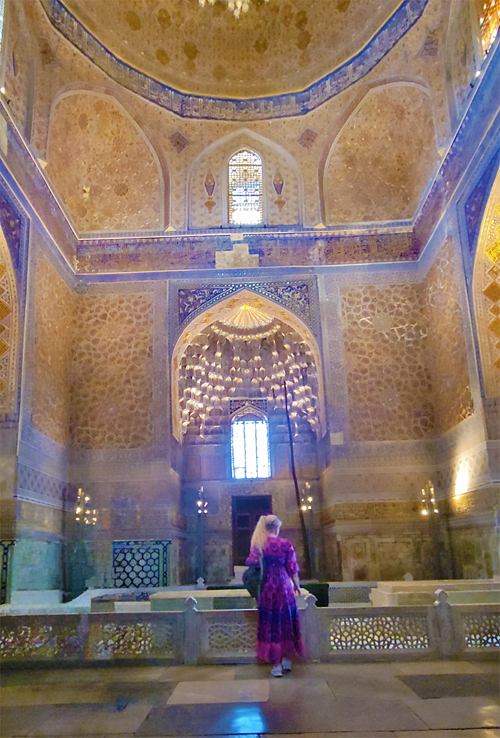
Built in the early 15th century, Gur-Emir is the final resting place of Timur and several members of his family. Its ribbed turquoise dome rises above a richly decorated exterior, while the interior glows with intricate tilework, gilded details, and carved marble. The mausoleum became an important architectural model for later Islamic buildings.
4 Bibi Khanum Mosque
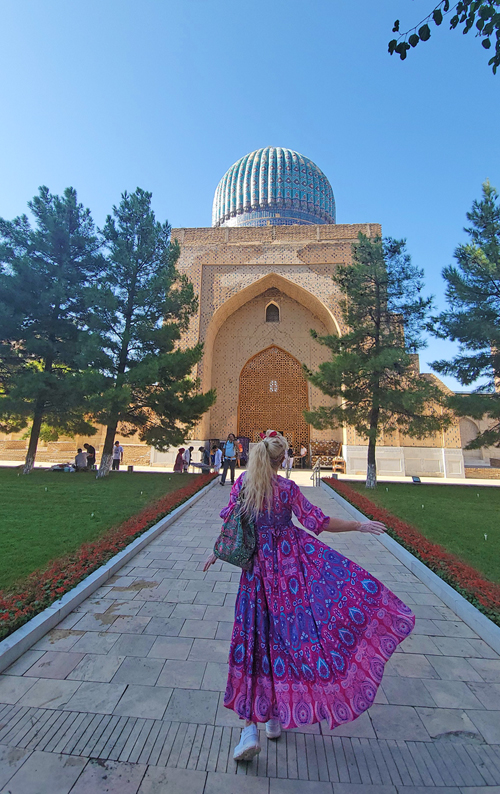
Constructed in the early 15th century during Timur’s reign, Bibi Khanum was once among the largest mosques in the Islamic world. Its enormous blue-tiled portal, towering domes, and monumental scale reflect Timur’s ambition.
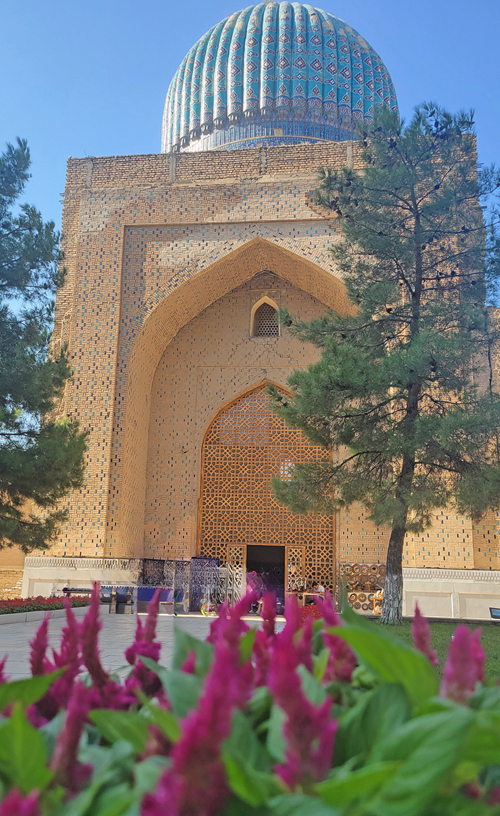
Though damaged by earthquakes and time, the restored complex still conveys the grandeur of Timurid architecture.
3 Shah-i-Zinda Necropolis
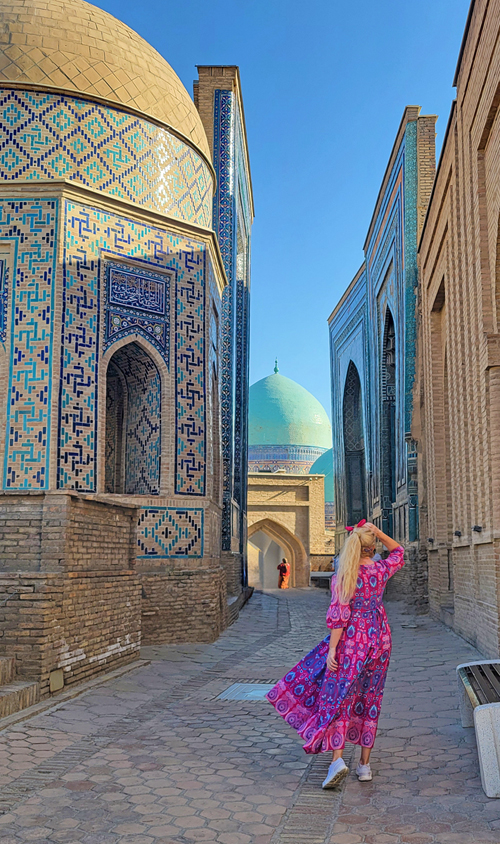
Shah-i-Zinda is one of Samarkand’s most atmospheric historic sites, a remarkable avenue of mausoleums climbing the slopes of the ancient city. The name means “Living King,” referring to the legend of Kusam ibn Abbas, a cousin of the Prophet Muhammad, who is traditionally believed to have been buried here. The earliest structures date to the 11th century, while many of the surviving mausoleums were built between the 14th and 15th centuries under the Timurids.
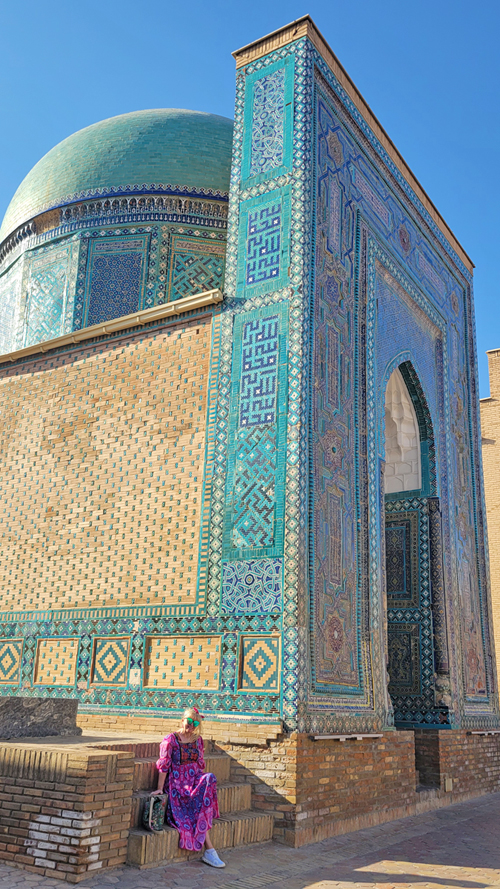
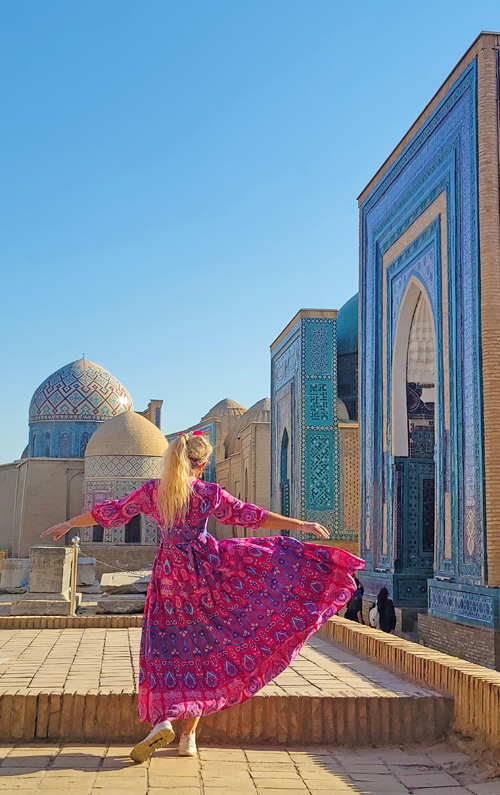
Walking through the narrow passage feels like entering a jeweled corridor. Turquoise and cobalt tiles cover domes, facades, and intricate geometric patterns, while carved terracotta and glazed mosaics add layers of texture.
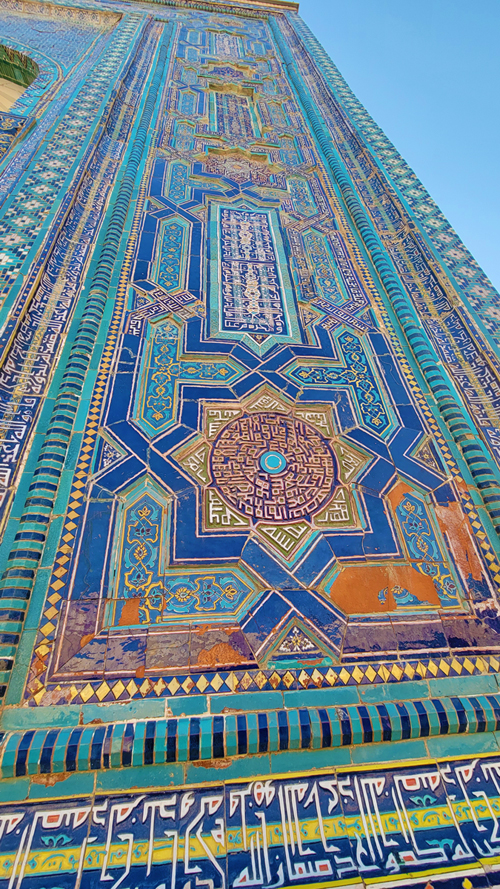
Many tombs were built for members of Timur’s family and court, creating an extraordinary collection of Timurid funerary architecture. The shifting colors and elaborate details make every doorway worth examining closely.
2 Kuylak Photoshoot
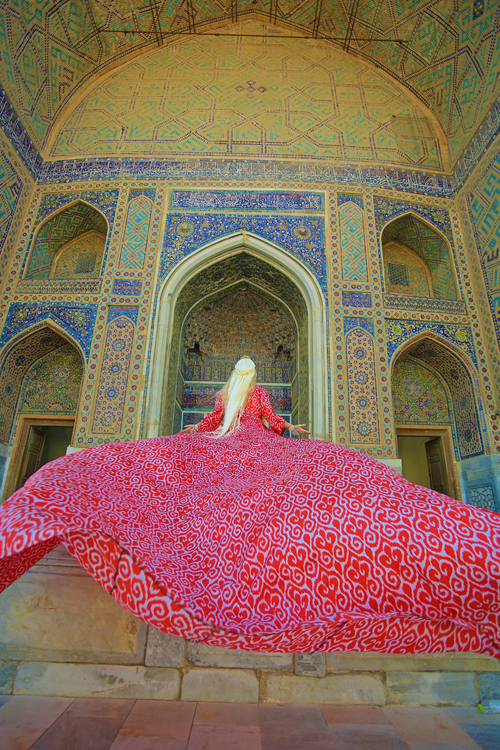
The traditional Uzbek women’s dress, known as a kuylak, is a long, loose-fitting garment celebrated for its graceful silhouette and vibrant fabrics. Typically reaching the ankles, it features a high neckline, long sleeves, and a flowing shape designed for comfort and modesty.
Silk, cotton, and colorful ikat fabrics have traditionally been used, often adorned with bold stripes, intricate patterns, and jewel-like colors. Decorative embroidery may embellish the neckline, cuffs, or hem, adding an artistic touch.
Women traditionally paired the kuylak with loose trousers called lozim, while scarves, embroidered caps, jewelry, and ornate belts completed the ensemble for festive occasions and celebrations.
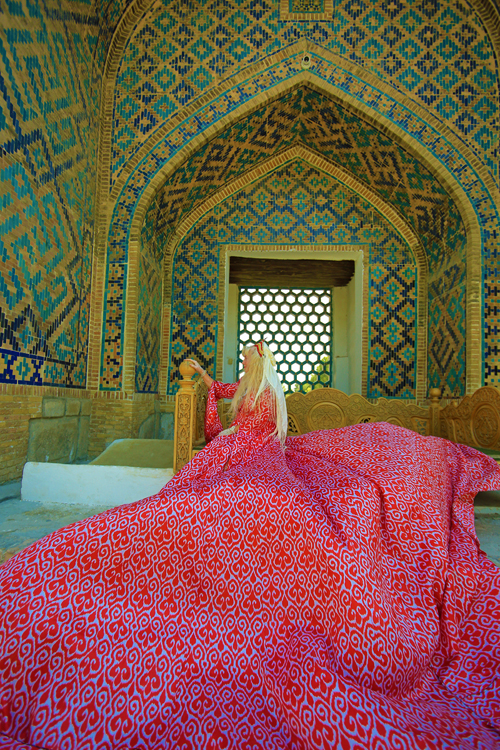
There are professional photographers in gorgeous Registan Square who include rental of a kuylak in their prices, with many colors and patterns to choose from. You can book online with access to the square before it opens, but be prepared for high prices. I was approached by a photographer when I entered the square and offered a price of $75, which I jumped at.
1 Registan Square
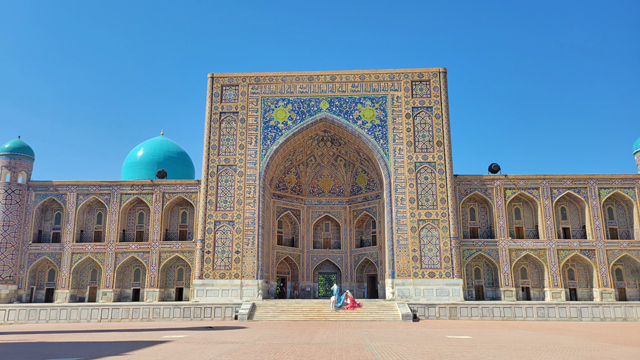
Registan Square is the dazzling heart of Samarkand, surrounded by three magnificent madrasas built between the 15th and 17th centuries. Ulugbek, Sher-Dor, and Tilla-Kari showcase soaring portals, turquoise domes, elaborate mosaics, and dazzling geometric tilework. The madrasas frame a vast public plaza with an almost theatrical sense of scale.
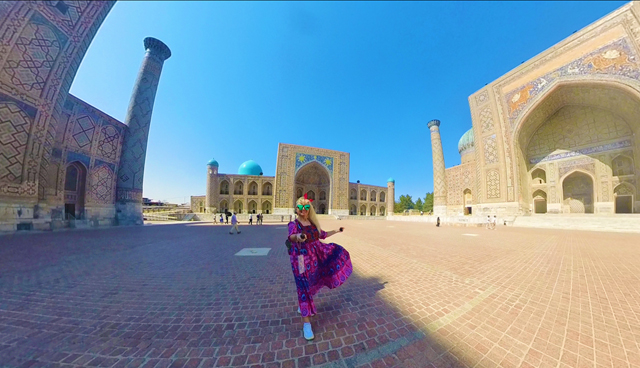
The ensemble took shape between the 15th and 17th centuries, during the Timurid and later Shaybanid periods. Their towering portals, turquoise domes, slender minarets, and intricate blue-and-gold tilework showcase the brilliance of Central Asian Islamic architecture.
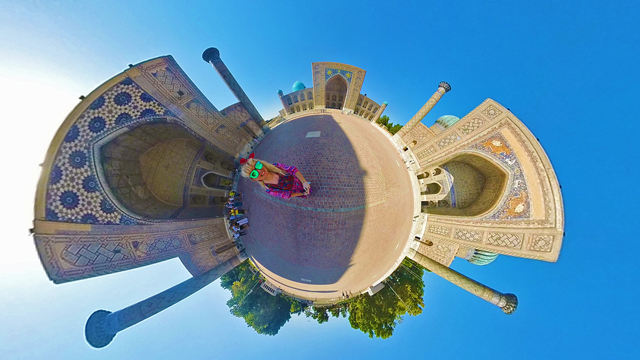
Ulugbek Madrasa, built in the 15th century, reflects the scholarly spirit of the Timurid age, while Sher-Dor and Tilla-Kari Madrasas were added later. Look closely at the mosaics and geometric patterns: every surface seems to shimmer with color, turning the square into a magnificent open-air gallery of history and craftsmanship.
Once a center of learning and public life, the square remains one of Central Asia’s most striking historic spaces.
Conclusion
Visiting Samarkand is a journey through centuries of ambition, scholarship, faith, and artistry. From Timur’s grand monuments to Ulugbek’s astronomical achievements, the city’s history is written across its dazzling architecture. Add bustling bazaars and fragrant plates of plov, and Samarkand becomes more than a historic destination. It becomes a vivid experience.
While planning to visit Samarkand in one day can be a challenge, it is entirely worthwhile and highly recommended. I did this one-day trip to Samarkand.
Click below to PIN so you can find how to visit Samarkand in one day again:
This article may contain affiliate/compensated links. For full information, please see our disclaimer.
About the Author
Patti Morrow is a travel influencer and founder of the award-winning international blog Luggage and Lipstick. TripAdvisor called her one of the “20 Baby Boomer Travel Bloggers Having More Fun Than Millennials,” and she was named one of the “Top 35 Travel Blogs” in the world.
She is also the star of the upcoming TV series “Destination Takeover,” which is scheduled to premiere in the near future.
Patti is the author of the book “Girls Go Solo: Tips for Women Traveling Alone,” and has over 150 bylines in 40 print and online publications, including The Huffington Post, International Living Magazine, Washington Post Sunday Travel, Travel Girl, Travel Play Live Magazine, and Ladies Home Journal. Her blog articles are consistently featured on Google’s AI search, as well as appearing on page one of Google search for specific keywords.
She has traveled extensively through six continents and more than 100 countries and island territories – putting her in an elite club of having traveled more than 99.99% of people! She is always looking for fabulous destinations, exotic beaches, and adventure activities for her Baby Boomer tribe.

Leave a reply