
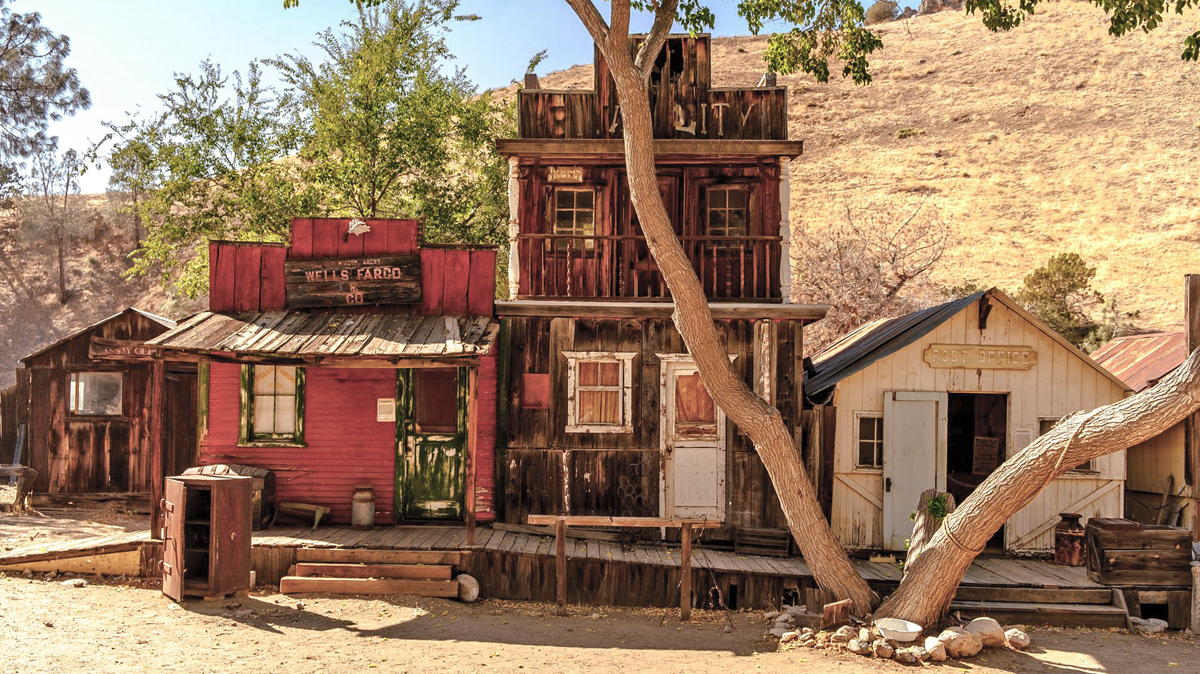
The American West still crackles with the spirit of the frontier in these authentic Wild West towns, where weathered boardwalks, brick storefronts, saloons, cattle trails, and mountain backdrops create a vivid sense of another era. From California gold-rush settlements to Wyoming cowboy country, each of these destinations offers its own colorful chapter of Western history.
Some towns preserve authentic buildings and dusty streets, while others blend frontier heritage with lively restaurants, shops, festivals, and spectacular scenery. Together, they create an irresistible road trip through the legends, characters, architecture, and landscapes that shaped the American West and the Canadian Rockies.
15 Bozeman, Montana
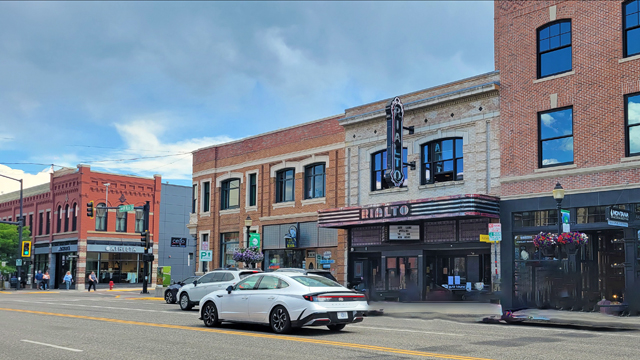
Bozeman combines Western heritage with a lively modern personality, making it one of Montana’s most appealing destinations. The town was established in 1864 by John Bozeman, an entrepreneur who helped develop the Bozeman Trail, an important route into the Montana gold fields. Downtown still showcases handsome brick buildings dating from the late 19th and early 20th centuries, many featuring ornate cornices, tall windows, and classic commercial architecture.
Bozeman’s frontier story comes alive at the Museum of the Rockies, particularly in its remarkable collection of dinosaur fossils and exhibits exploring Montana’s past. The surrounding Gallatin Valley adds another layer of Western drama, with mountains rising dramatically beyond the city. Historic downtown streets now brim with restaurants, galleries, breweries, and shops, creating an energetic setting where old Montana architecture meets contemporary Western culture.
14 Santa Fe, New Mexico
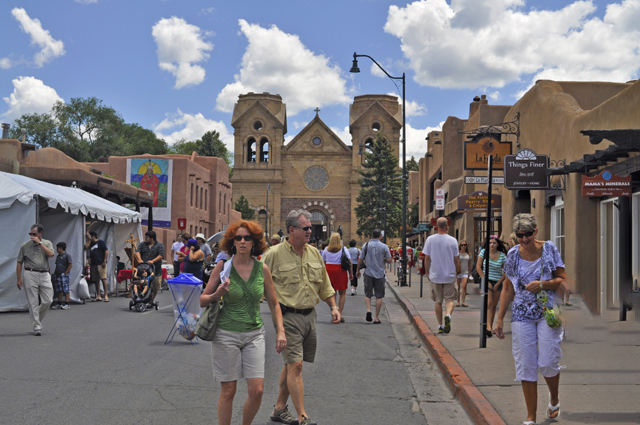
Santa Fe has a history that stretches far beyond the classic cowboy era. Founded by Spanish colonists in 1610, it is one of the oldest continuously inhabited European-founded capitals in the United States. The city’s adobe architecture gives it a distinctive appearance unlike anywhere else on this list, with rounded corners, earthy walls, wooden vigas, and narrow streets reflecting centuries of Spanish, Mexican, Native American, and American influences.
Santa Fe also became an important destination along the Santa Fe Trail, which opened commercial connections between Missouri and the Southwest in 1821. Today, the Plaza remains the city’s historic heart, surrounded by galleries, shops, restaurants, and landmarks. The Palace of the Governors, built in 1610, is particularly significant, having served as the seat of Spanish, Mexican, and American territorial governments. Santa Fe’s combination of adobe architecture, colorful art, regional cuisine, and layered history makes it an extraordinary Western destination.
Click here to read: Things to Do in Santa Fe – Oldest Capital in the U.S.
13 Medora, North Dakota
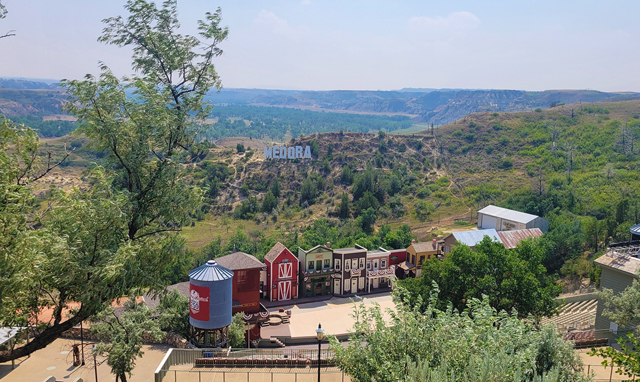
Tucked against the rugged badlands of western North Dakota, Medora feels like a frontier town with the Little Missouri River and towering clay formations providing a dramatic backdrop. The town was founded in 1883 by the Marquis de Mores, a French aristocrat who dreamed of creating a meatpacking empire in the Dakota Territory. His elegant Chateau de Mores still stands above town, offering a fascinating glimpse into his ambitious plans. Theodore Roosevelt also arrived in the area in 1883 to hunt bison, and his experiences here profoundly influenced his later conservation work.
Today, Medora mixes Old West character with plenty of personality. The town’s wooden storefronts, colorful awnings, and Western-style buildings make strolling downtown feel like stepping onto a movie set, while the Pitchfork Steak Fondue turns dinner into a distinctly North Dakota experience. At night, the Medora Musical fills the outdoor amphitheater with music, horses, and Western spectacle beneath the open sky.
12 Julian, California

Nestled in the mountains east of San Diego, Julian is a California gold-rush town with a surprisingly rustic personality. Gold was discovered here in 1869, bringing prospectors, merchants, miners, and dreamers rushing into the mountains. The boom transformed Julian from a tiny settlement into a bustling mining community, and several historic buildings still preserve the town’s 19th-century character. Wooden storefronts line Main Street, creating an appealing contrast to the palm trees and beaches associated with Southern California.
Julian’s history is only part of its charm. The town is famous for its apple orchards and its signature apple pie, a tradition that grew alongside the community’s agricultural economy. The surrounding Cuyamaca Mountains offer pine forests, oak woodlands, and winding roads that make the journey as appealing as the destination. With old-fashioned shops, historic buildings, cozy cafes, and mountain scenery, Julian offers a delightful taste of California’s frontier past.
11 San Antonio, Texas
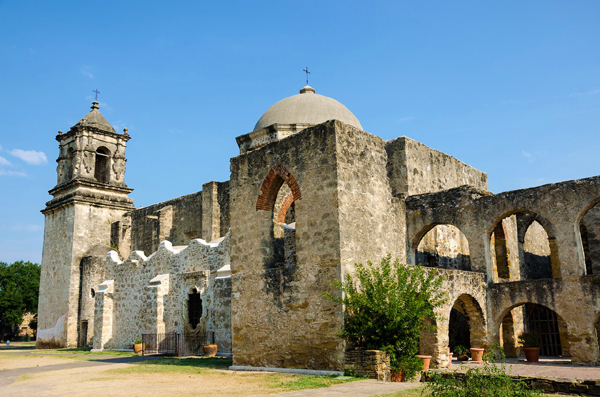
San Antonio blends Spanish colonial history with the rough-and-ready character of the Texas frontier. Founded in 1718, the city grew around a chain of Spanish missions established to expand Spain’s presence in the region. The most famous, the Alamo, began as Mission San Antonio de Valero in 1718 and became the site of the pivotal 1836 Battle of the Alamo during the Texas Revolution.
Beyond the Alamo, San Antonio’s historic architecture reveals centuries of changing cultures. Spanish mission walls, limestone structures, red-tile roofs, and shaded courtyards create a distinctive Southwestern atmosphere. The San Antonio River Walk adds another layer, winding below street level beside restaurants, bridges, and colorful riverfront buildings. The city’s Western history is inseparable from the Texas Revolution, cattle culture, and the people who shaped the young republic. Today, that history is woven into one of Texas’s most vibrant and atmospheric destinations.
Click here to read: San Antonio Weekend Getaway: 10 Best Things to Do in San Antonio
10 Leadville, Colorado

Photo credit: Daniel Schwen, CC BY-SA 4.0
High in the Rocky Mountains, Leadville is a spectacular reminder that the Wild West was powered by silver, gold, and the people willing to chase them into the mountains. Silver discoveries transformed Leadville during the 1870s, and the town exploded with miners, merchants, gamblers, entrepreneurs, and fortune seekers. By the 1880s, it had become one of Colorado’s most prosperous cities. Remarkably, Leadville sits at more than 10,000 feet above sea level, making its historic downtown one of the highest-elevation commercial districts in the country.
The architecture reflects the wealth created during the mining boom. Victorian brick buildings line Harrison Avenue, including the Tabor Opera House, built in 1879 by mining magnate Horace Tabor. The Matchless Mine also recalls the era when fortunes could be made or lost almost overnight. Today, Leadville’s historic streets sit beneath enormous mountain peaks, providing a thrilling combination of mining history, Victorian elegance, and rugged Colorado scenery.
9 Banff Town, Alberta, Canada
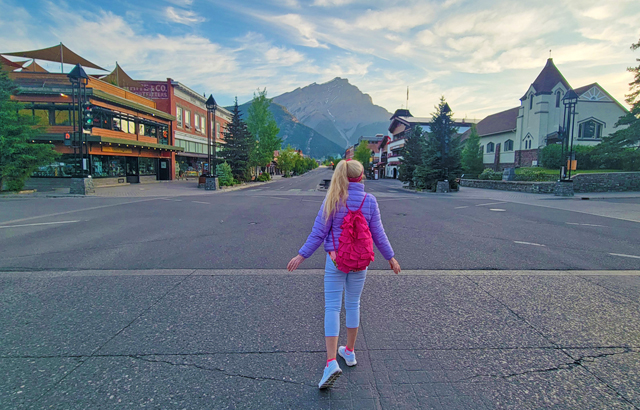
Banff Town brings a different flavor to the frontier story, where rugged Western character meets the magnificent Canadian Rockies. Banff was established after the discovery of hot springs in 1883 by Canadian Pacific Railway workers. The railway soon recognized the area’s tourism potential, and the grand Banff Springs Hotel opened in 1888, helping establish Banff as an international mountain resort.
Downtown Banff combines charming historic architecture with dramatic mountain scenery. The streets are lined with shops, restaurants, galleries, and buildings influenced by Alpine and rustic mountain styles, while peaks tower above nearly every vista. Banff Avenue is particularly striking, with its lively atmosphere and mountain-framed views. Although its history differs from the cattle towns and mining camps farther south, Banff captures the adventurous spirit of the frontier through its connection to rail travel, mountain exploration, hunting, and the development of Canada’s spectacular national parks.
8 Cheyenne, Wyoming
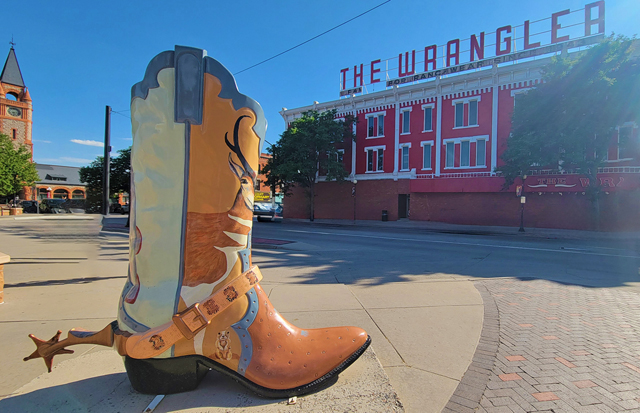
Cheyenne sprang to life in 1867 when the Union Pacific Railroad reached the area, quickly transforming a dusty prairie settlement into a bustling transportation center. Cowboys, railroad workers, soldiers, cattlemen, merchants, and gamblers all passed through the growing town. Its location made it an important gateway between the Great Plains and the Rocky Mountain West, and its railroad heritage remains visible today.
The city’s historic downtown features handsome brick buildings, elaborate Victorian details, and wide streets that reflect its 19th-century growth. Cheyenne’s Western identity is celebrated most famously during Cheyenne Frontier Days, founded in 1897 and now one of the world’s largest outdoor rodeos and Western celebrations. Visitors encounter rodeo action, parades, live entertainment, and a town thoroughly embracing its cowboy heritage. For anyone fascinated by the railroad and cattle-driving eras, Cheyenne offers a vivid look at Wyoming’s transformation from frontier territory into a thriving Western state.
7 Old Sacramento, California
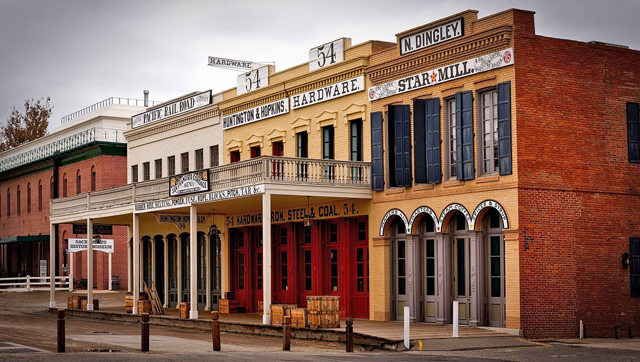
Old Sacramento transports visitors straight into California’s gold-rush era with wooden sidewalks, horse-drawn carriages, brick buildings, and storefronts that look remarkably at home beside the Sacramento River. The district took shape in the 1850s, when Sacramento became a major commercial center during the Gold Rush. Its historic buildings reflect the exuberant architecture of the period, with false-front facades, balconies, timber details, and colorful signs evoking a bustling frontier marketplace.
The district also played a crucial role in the development of the transcontinental railroad. The Central Pacific Railroad began building eastward from Sacramento in 1863, eventually meeting the Union Pacific at Promontory Summit, Utah, in 1869. Today, visitors can explore museums, historic shops, restaurants, and the California State Railroad Museum. Wandering along the riverfront makes it easy to imagine Sacramento when miners, merchants, railroad workers, and fortune seekers crowded its streets.
6 Fort Worth Stockyards, Texas
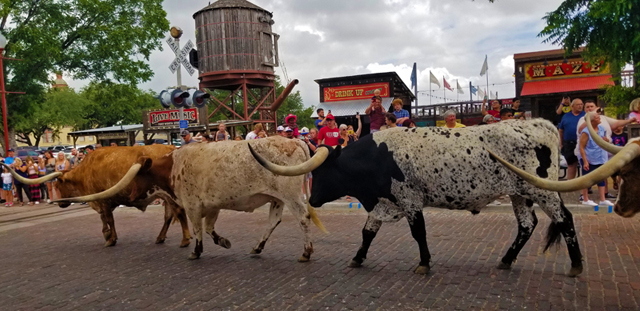
The Fort Worth Stockyards preserve the atmosphere of a cattle town while standing just minutes from a modern Texas city. Fort Worth earned the nickname Cowtown because of its importance to cattle drives and livestock commerce. The arrival of the railroad in the 1870s helped transform the city into a major cattle-shipping center, and the Stockyards became the heart of that booming industry.
The district’s architecture remains wonderfully evocative, with red-brick buildings, wooden awnings, iron details, and wide streets designed for the movement of livestock and wagons. The Livestock Exchange Building, completed in 1902, is one of the district’s most notable historic structures. Today, visitors can watch the twice-daily cattle drive, explore Western shops, listen to live music, and settle into a steakhouse or saloon. The result is a lively Texas experience where cattle-driving history is still part of the show.
Click here to read: 10 Best Things to Do in Dallas – Ft Worth
5 Buffalo, Wyoming
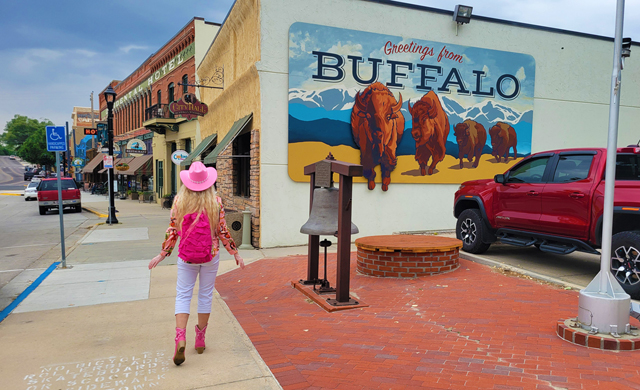
Buffalo sits beneath the rugged Bighorn Mountains, where the scenery alone seems perfectly designed for a Western adventure. Founded in 1879, the town grew as cattlemen, miners, soldiers, and travelers moved through northern Wyoming. Its location also placed it near important trails and conflicts of the frontier era, including the nearby Fetterman and Bozeman Trail stories that shaped the region’s history.
Downtown Buffalo retains an impressive collection of historic buildings, including the Occidental Hotel, which opened in 1879. The hotel became a gathering place for cowboys, soldiers, writers, and travelers, and its old-fashioned atmosphere still evokes the era when dusty boots crossed its floors. Buffalo’s historic streets are lined with brick buildings, wooden storefronts, galleries, and Western shops. With the Bighorn Mountains rising dramatically beyond town, Buffalo offers the rare combination of authentic frontier history and spectacular mountain scenery.
4 Cody, Wyoming
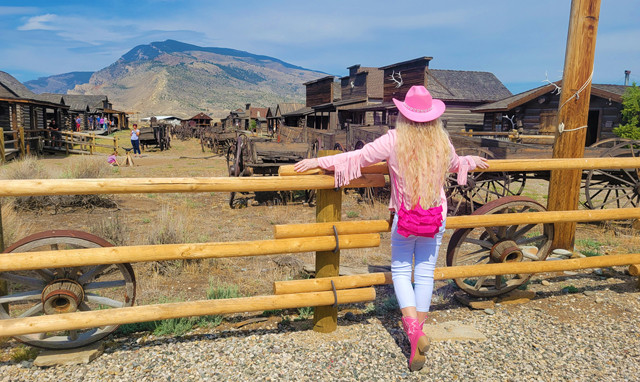
Cody was founded in 1896 by William F. Cody, better known as Buffalo Bill, and the town still wears his larger-than-life personality proudly. Buffalo Bill envisioned Cody as a gateway to Yellowstone National Park, which lies roughly 50 miles to the west. His influence helped turn the community into a destination for travelers eager to experience the American West.
The Buffalo Bill Center of the West brings that history to life through extensive collections devoted to Western art, firearms, Native American cultures, and the life of Buffalo Bill himself. Downtown Cody adds another dose of frontier atmosphere with wooden storefronts, Western galleries, restaurants, and saloons. In summer, the nightly Cody Nite Rodeo continues a tradition of Western entertainment that has drawn visitors for generations. Surrounded by rugged mountains and wide-open Wyoming landscapes, Cody combines showmanship, history, and scenery with unmistakable Western flair.
3 Park City, Utah
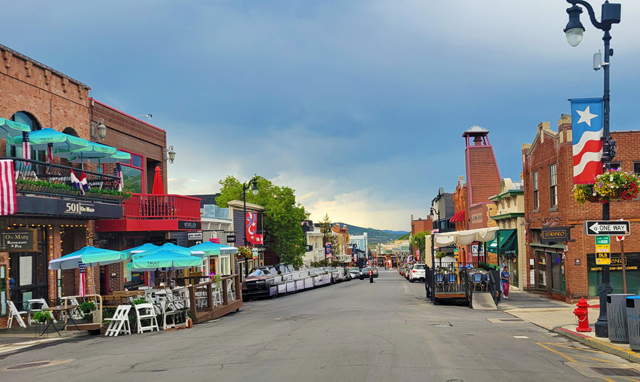
Park City may be known today for skiing and film festivals, but its roots reach deep into Utah’s silver-mining past. Silver was discovered in the area in the 1860s, and the town rapidly grew as miners and prospectors poured into the surrounding mountains. By the late 19th century, Park City had become one of the West’s most productive mining communities.
Historic Main Street preserves that colorful past with Victorian-era buildings climbing the hillside in a picturesque procession. Many structures feature ornate cornices, decorative brickwork, tall windows, and narrow storefronts that once housed saloons, boardinghouses, and merchants serving the mining population. Former mining structures and remnants of old transportation routes add another layer of history. Today, restaurants, boutiques, galleries, and cafes fill those historic buildings, creating a lively downtown where silver-mining heritage and modern mountain-town energy blend beautifully.
2 Jackson, Wyoming
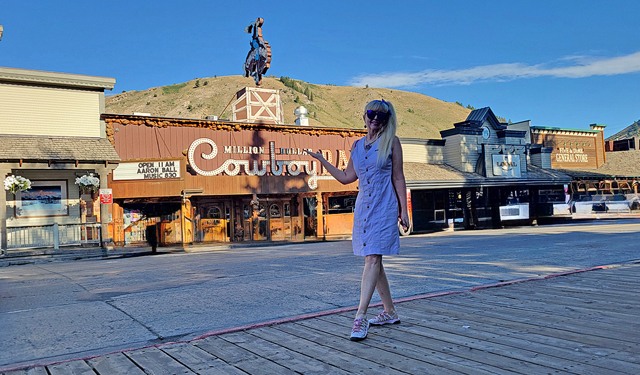
Jackson grew from a rugged settlement in the Jackson Hole valley into one of Wyoming’s most recognizable Western towns. The valley attracted homesteaders and ranchers during the late 19th century, and Jackson’s remote setting helped preserve its independent frontier character. Today, the town’s most famous landmark is its antler arches, first created in 1960 from naturally shed elk antlers gathered from the nearby National Elk Refuge.
Town Square remains the heart of Jackson, with its distinctive wooden boardwalks and four enormous antler gateways. The Million Dollar Cowboy Bar, opened in 1937, adds another unforgettable piece of Western character, complete with saddle-style bar stools and a long history of cowboy culture. Horse-drawn wagon rides through town offer a particularly atmospheric way to experience Jackson. With the rugged Tetons looming beyond the valley, Jackson combines cowboy traditions, historic architecture, wildlife country, and spectacular scenery.
1 Deadwood, South Dakota
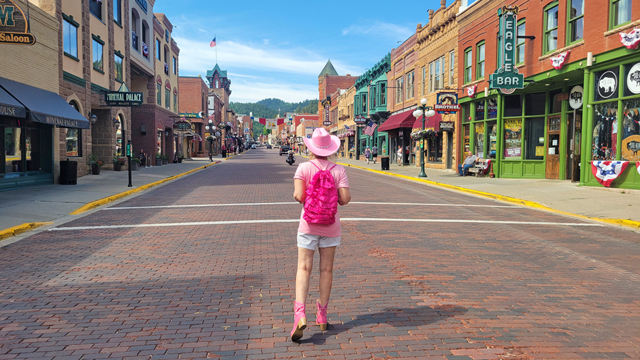
Deadwood is the most quintessential of the authentic Wild West towns, born from the Black Hills Gold Rush in 1876 and quickly transformed into a lawless, booming settlement packed with miners, gamblers, saloon keepers, and fortune hunters. Among its most notorious residents was Wild Bill Hickok, who was killed on August 2, 1876, while playing poker at the No. 10 Saloon. He was reportedly holding the hand that became known as the dead man’s hand: aces and eights.
Fire destroyed much of Deadwood in 1879, but the town was rebuilt in brick and stone, creating the historic architecture seen today. Weathered wooden facades, ornate brick buildings, saloons, and narrow streets preserve the atmosphere of the gold-rush era. Deadwood’s history is not simply displayed behind glass; it is woven into reenactments, historic tours, gaming, restaurants, and the lively energy of Main Street. Surrounded by the Black Hills, Deadwood remains one of the most fascinating frontier destinations in the country.
Conclusion
From gold-rush camps and cattle towns to railroad hubs and mountain settlements, these authentic Wild West towns preserve the stories that shaped the American frontier. Their historic buildings, colorful characters, legendary saloons, and spectacular landscapes make them far more than stops on a road trip. They are living chapters of Western history.
What to Eat
- Beef Steaks & Ribeyes: Thick-cut, open-flame grilled steaks are a staple of any historic western steakhouse.
- Smoked Brisket: Influenced by Texas traditions, slow-cooked over wood coals until tender.
- Bison Burgers: A lean, flavorful alternative to beef found extensively across Wyoming, Montana, and the Dakotas.
- Chili con Carne: A thick, pepper-and-beef stew [0.3] born on the old cattle trails.
- Cowboy Beans: Slow-simmered pinto beans often flavored with bacon, onions, and chili spices.
- Sourdough Biscuits: Fluffy Dutch-oven bread meant to be soaked in savory meat gravy.
- Cowboy Candy: Sweet and spicy candied jalapeño slices served as a topping or side condiment. [1]
- Rocky Mountain Oysters: Deep-fried bull testicles served as a crispy ranch specialty at local taverns and rodeos.
- Sonoran Hot Dogs: Bacon-wrapped hot dogs topped with pinto beans, onions, and tomatoes, popular in southwestern border towns.
- Huckleberry pie: a sweet and tart mountain-town classic filled with wild, intensely flavored berries baked inside a flaky pastry crust.
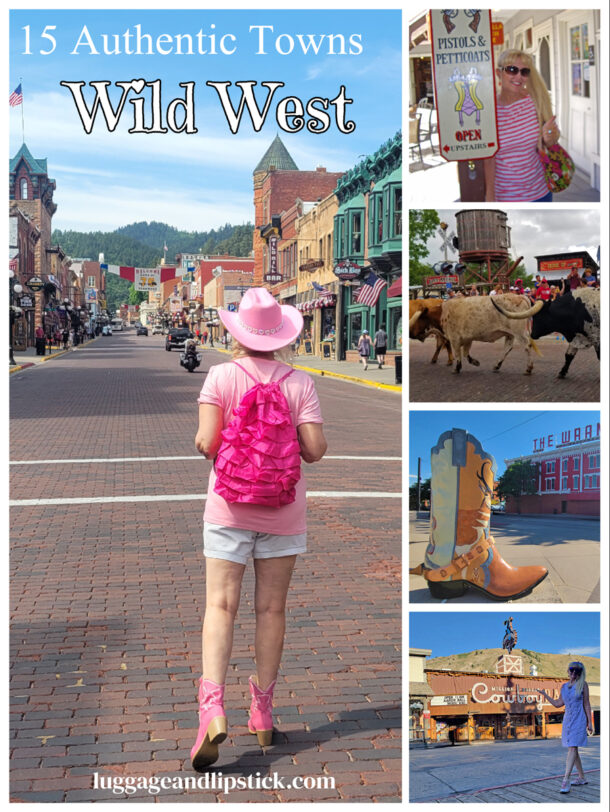
Click below to PIN so you can find these authentic Wild West towns again:
This article may contain affiliate/compensated links. For full information, please see our disclaimer.
About the Author
Patti Morrow is a travel influencer and founder of the award-winning international blog Luggage and Lipstick. TripAdvisor called her one of the “20 Baby Boomer Travel Bloggers Having More Fun Than Millennials,” and she was named one of the “Top 35 Travel Blogs” in the world.
She is also the star of the upcoming TV series “Destination Takeover,” which is scheduled to premiere in the near future.
Patti is the author of the book “Girls Go Solo: Tips for Women Traveling Alone,” and has over 150 bylines in 40 print and online publications, including The Huffington Post, International Living Magazine, Washington Post Sunday Travel, Travel Girl, Travel Play Live Magazine, and Ladies Home Journal. Her blog articles are consistently featured on Google’s AI search, as well as appearing on page one of Google search for specific keywords.
She has traveled extensively through six continents and more than 100 countries and island territories – putting her in an elite club of having traveled more than 99.99% of people! She is always looking for fabulous destinations, exotic beaches, and adventure activities for her Baby Boomer tribe.

1 comment
Comment by Edward Smith
Edward Smith September 26, 2026 at 8:41 am
I really enjoy discovering destinations where history is still part of the everyday atmosphere, and these Wild West towns sound fascinating. The old buildings, local stories, and traditions must make visiting them feel very different from exploring a modern city. Coming from Nepal, I’m especially drawn to places where historic architecture and local culture have been preserved, whether that’s an old frontier town in the United States or a traditional mountain village in the Himalayas. It’s interesting to see how different regions preserve their history while turning it into a meaningful travel experience.