
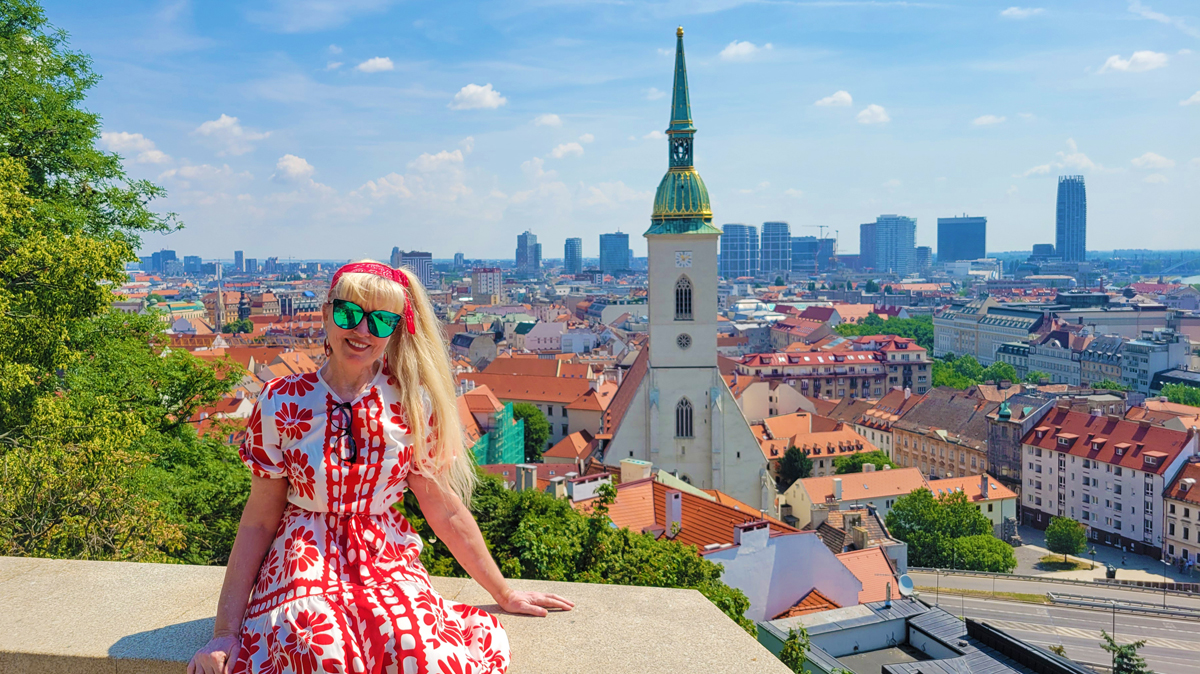
A Bratislava day trip from Vienna feels like slipping across a quiet border into a different rhythm of Europe, where imperial elegance gives way to something more playful, compact, and full of texture.
In under an hour, the scenery shifts from Vienna’s grand boulevards to a city of pastel facades, crooked cobbled lanes, and a castle that watches everything from its hilltop perch above the Danube.
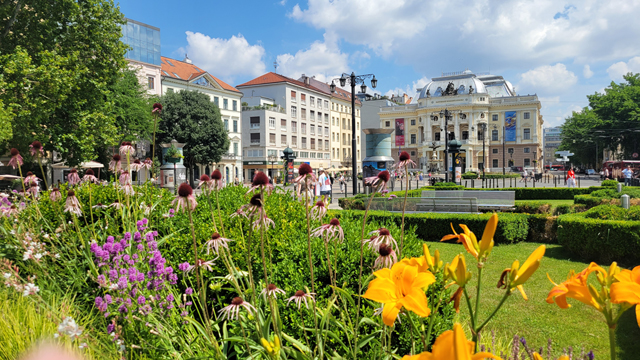
What makes the city so compelling is its density of character. Nothing feels wasted or overly polished. Instead, history sits directly beside everyday life, often on the same street. You can move from a Gothic cathedral shadow into a sunlit square filled with chatter in minutes, then climb toward a fortress that seems to hover above it all.
TIP: You can take a train directly to Bratislava, but I opted to take this Get Your Guide Bratislava Day Tour, which also visited other places along the way.
Bratislava Castle
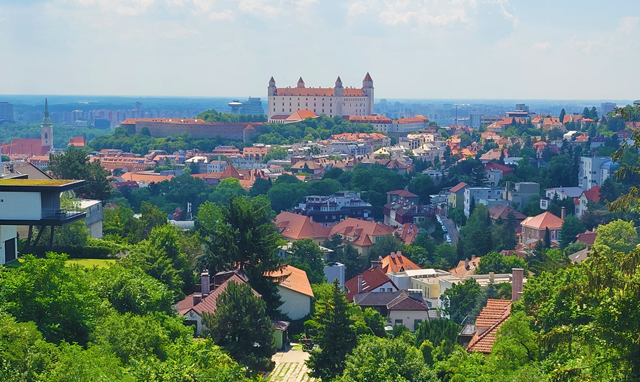
Bratislava Castle looks almost like a drawn outline placed deliberately on a hill, its crisp white walls and four watchful towers visible from nearly anywhere in the city. The walk upward is part pilgrimage, part slow reveal, as streets tighten, then open, then suddenly drop the entire cityscape into view behind you. The higher you climb, the more the Danube stops being a map line and starts becoming a living, moving ribbon through the landscape.
At the top, the castle feels less like a single structure and more like a stage set for panoramic drama. Broad terraces spill toward the edges, where wind carries the city’s sound upward in faint fragments. The Old Town sits compact below, almost toy-like from this height, while bridges and modern districts stretch outward into the distance. A Bratislava day trip finds its defining moment here, where everything you wandered suddenly makes visual sense in one sweeping glance.
Hlavne Namestie
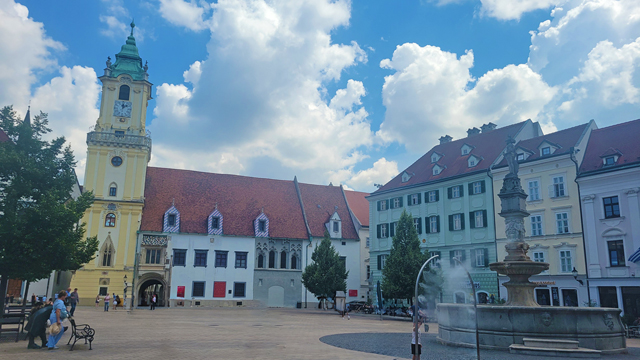
Hlavne Namestie is not just a square; it is the city’s living room, constantly shifting between calm and performance. Facades painted in butter yellow, faded rose, and soft cream lean into the space like attentive spectators. Cafés stretch outward, claiming cobblestones with tables and espresso cups, while footsteps echo lightly between fountains and statues.
The square never settles into one mood for long. A busker might tune a guitar in one corner while a tour group dissolves near a fountain, and locals cut through diagonally as if the square were a shortcut rather than a destination. The Roland Fountain anchors everything with quiet confidence, standing there as if it has seen every version of the city pass by. It is not a place you simply look at, but one you drift through until you realize you have stayed longer than planned.
Primate’s Palace
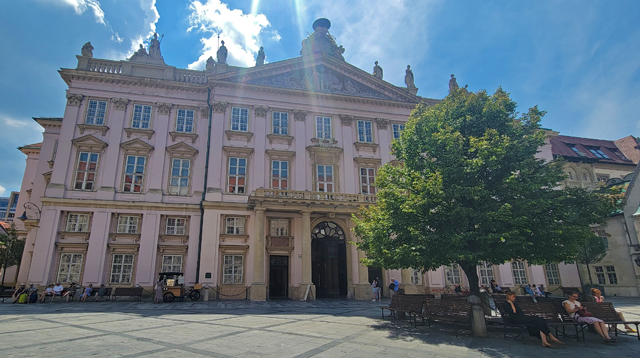
From the outside, Primate’s Palace looks almost restrained, a soft pink facade that hides its theatrical interior with polite understatement. Step through the entrance and the tone changes immediately, as if the building exhales into chandeliers, polished stone, and carefully balanced symmetry. Light behaves differently here, bouncing off mirrors and gilded frames in a way that feels deliberately composed.
The Hall of Mirrors is the showpiece, but not in an overwhelming sense. Instead, it feels like a space designed to multiply elegance rather than shout it. Reflections stretch into reflections, creating a quiet visual echo that makes the room feel larger and more ceremonious than it should be. Outside, the courtyard resets everything, returning you to calm air and simple geometry. It is a building that understands contrast and uses it with precision rather than excess.
Old Town Hall
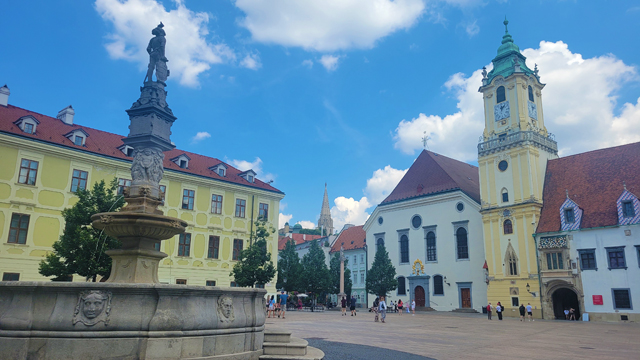
The Old Town Hall feels like it was assembled over time rather than designed in one moment, and that is exactly its charm. Its uneven rooflines, softened colors, and layered additions create a visual rhythm that refuses symmetry in favor of personality. It sits in the square like a historical collage, each section belonging to a different era but still speaking the same architectural language.
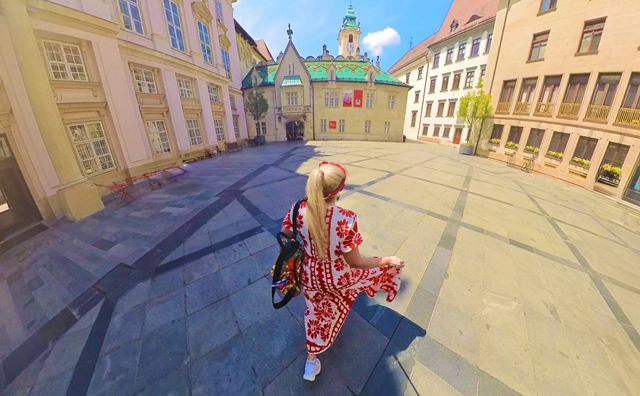
Inside, narrow corridors and staircases lead through rooms that feel like compartments of memory. The museum spaces are intimate rather than grand, and the real reward comes when you reach the tower. From there, the Old Town compresses into a dense tapestry of rooftops, alleys, and hidden courtyards. The view does not just show you the city; it explains how it folds in on itself, compact and intricate, like a story written in stone.
Michael’s Gate
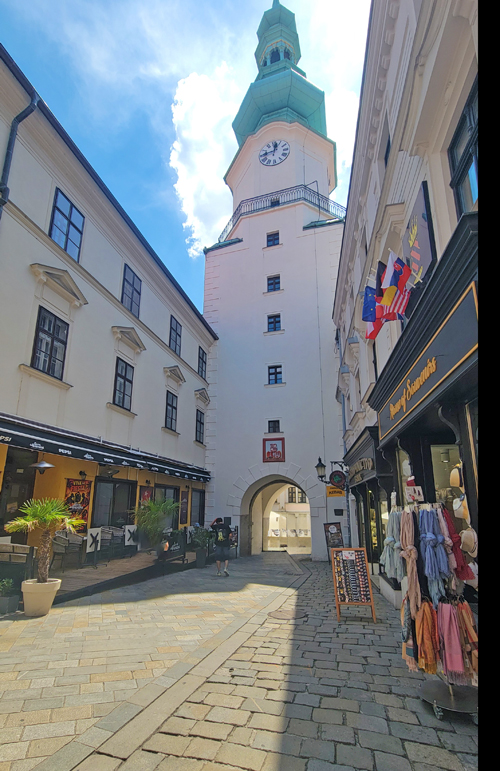
Michael’s Gate is Bratislava’s last surviving medieval gateway, rising above Michalska Street, its historic tower marking an atmospheric entrance into the Old Town’s winding cobblestone lanes and colorful architecture.
Michalska Street
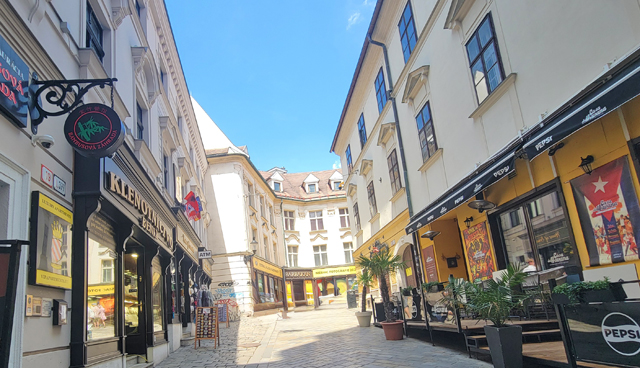
Michalska Street feels like the city narrowing itself into a single, winding thought. Entering through Michael’s Gate, the tone shifts immediately from open square to enclosed passage, where pastel buildings lean closer, and cobblestones guide your steps forward almost instinctively. The street curves slightly, as if it prefers not to reveal everything at once.
Every few meters, something catches the eye: a carved doorway, a hanging sign, a café tucked into a shallow archway, a glimpse of another courtyard beyond a passage. It is a street built for wandering rather than rushing, where direction matters less than attention. Even with steady foot traffic, it retains a sense of intimacy, as though the city has folded itself inward just enough to create a corridor of discovery.
Kapitulska
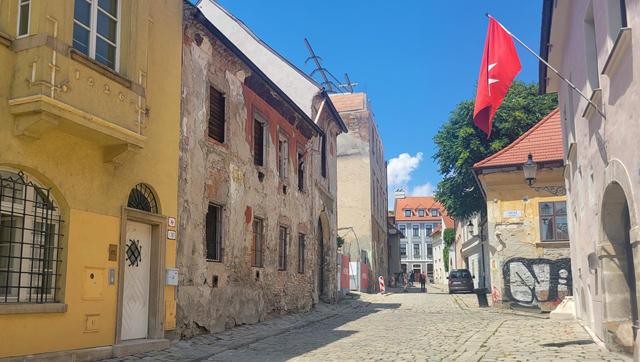
Kapitulska feels like Bratislava lowering its voice. The energy shifts immediately as you enter, replaced by aged stone walls, worn facades, and a silence that feels almost architectural in itself. The street does not perform for visitors; it simply exists, carrying the weight of centuries without embellishment.
Light behaves differently here, too, slipping between buildings in thin, controlled angles that emphasize texture over color. Everything feels slightly softened by time, edges rounded, surfaces muted, as if the street has been slowly sanded by history. Walking through it is less about sightseeing and more about sensing continuity, the feeling that daily life has been unfolding here in nearly the same rhythm for generations.
St. Martin’s Cathedral
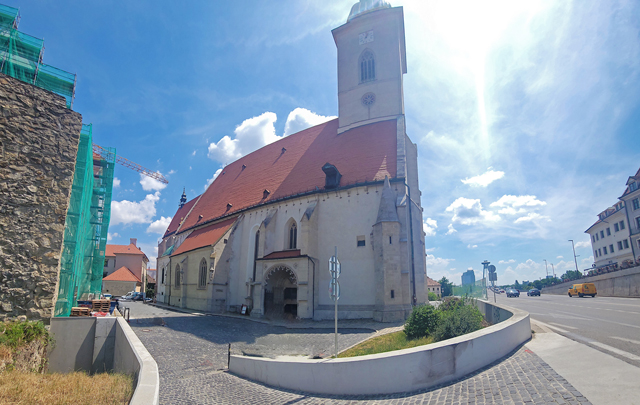
St. Martin’s Cathedral rises with quiet authority, not through decoration but through proportion and height. Its Gothic tower is sharp and purposeful, pulling the eye upward before the rest of the building settles into stone gravity below. It sits firmly within the Old Town, but also feels slightly apart, like a landmark that anchors more than just its immediate surroundings.
Inside, the atmosphere shifts into stillness. Vaulted ceilings stretch upward in clean arcs, and stained glass filters daylight into soft fragments of color that drift across stone floors. The sound changes too, footsteps becoming more deliberate, conversations naturally quieter. There is a sense that the building is not just visited but entered with awareness. It holds memory in its structure, especially given its history as a coronation site, and that weight is felt even without explanation.
The Blue Church
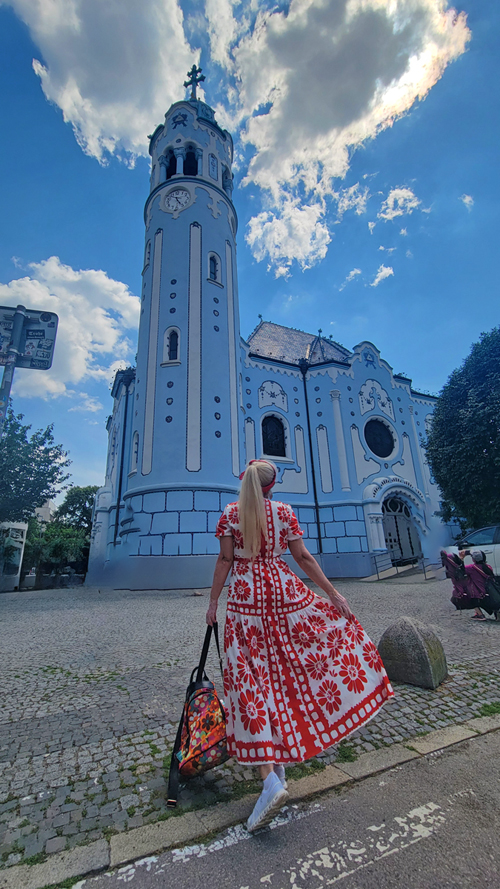
The Blue Church feels like it belongs to a different architectural imagination altogether. Its pale blue exterior, rounded forms, and decorative flourishes give it an almost storybook quality, as if it were designed to soften the city around it rather than blend in. Even from a distance, it stands out with an almost surreal clarity.
Inside, the color does not disappear but deepens into a calmer version of itself. The space feels unified, almost monochromatic, yet surprisingly gentle rather than overwhelming. Light filters through in a way that reinforces the softness of the design. It is one of those rare buildings that feels both visually striking and unexpectedly peaceful at the same time, like a pause made physical.
Devin Castle
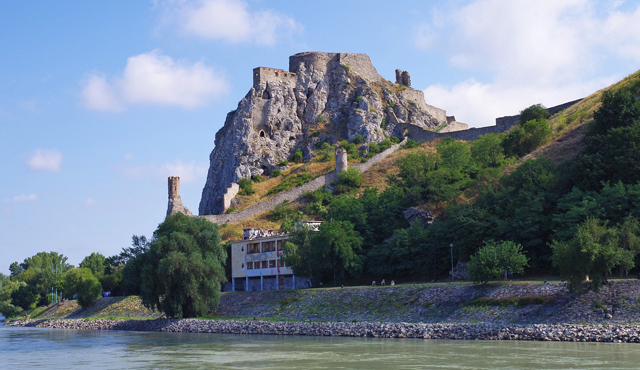
Just outside of Bratislava, Devin Castle, by contrast, is all drama and wind. Perched above the meeting point of two rivers, its ruins stretch across cliffs that seem designed for wide horizons. The landscape dominates everything here, with stone fragments acting as reminders of what once stood rather than what remains. It adds a raw, open counterpoint to Bratislava’s compact density.
Conclusion
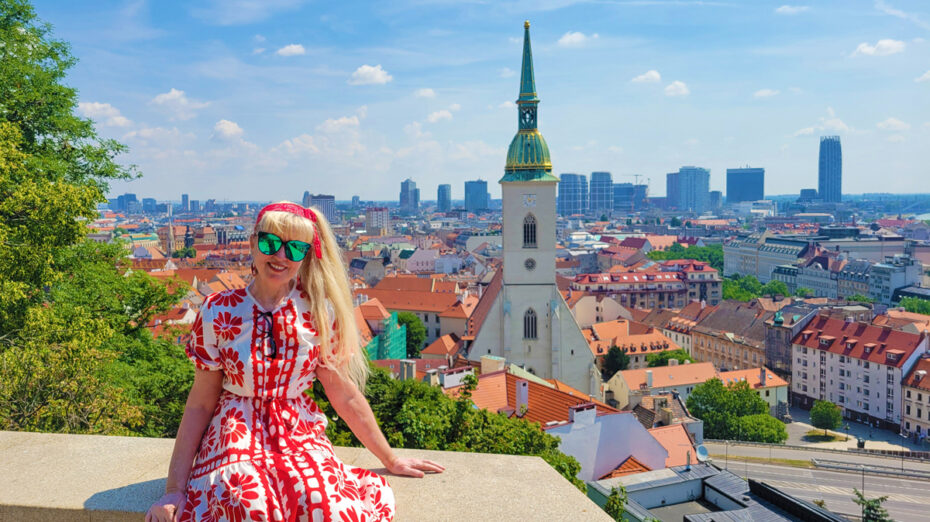
Bratislava is not a city that overwhelms with size or spectacle, but one that wins through layering. Streets compress and open, history appears suddenly and then recedes, and viewpoints keep recontextualizing what you have already seen.
A Bratislava day trip leaves you with the impression of a place that is smaller on the map than it feels in memory, shaped not by scale but by density, texture, and quiet surprises that reveal themselves one street at a time.
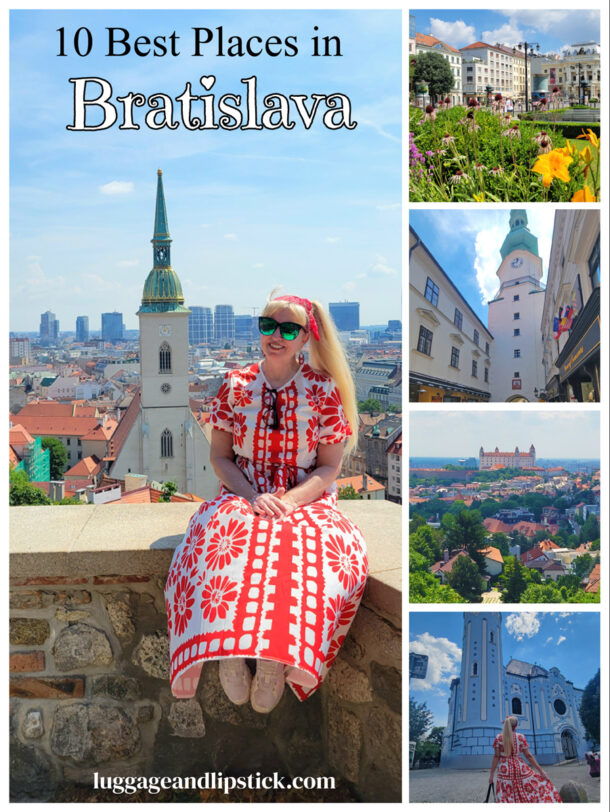
Click below to PIN so you can find this Bratislava day trip itinerary again:
This article may contain affiliate/compensated links. For full information, please see our disclaimer.
About the Author
Patti Morrow is a travel influencer and founder of the award-winning international blog Luggage and Lipstick. TripAdvisor called her one of the “20 Baby Boomer Travel Bloggers Having More Fun Than Millennials,” and she was named one of the “Top 35 Travel Blogs” in the world.
She is also the star of the upcoming TV series “Destination Takeover,” which is scheduled to premiere in the near future.
Patti is the author of the book “Girls Go Solo: Tips for Women Traveling Alone,” and has over 150 bylines in 40 print and online publications, including The Huffington Post, International Living Magazine, Washington Post Sunday Travel, Travel Girl, Travel Play Live Magazine, and Ladies Home Journal. Her blog articles are consistently featured on Google’s AI search, as well as appearing on page one of Google search for specific keywords.
She has traveled extensively through six continents and more than 100 countries and island territories – putting her in an elite club of having traveled more than 99.99% of people! She is always looking for fabulous destinations, exotic beaches, and adventure activities for her Baby Boomer tribe.

Leave a reply