
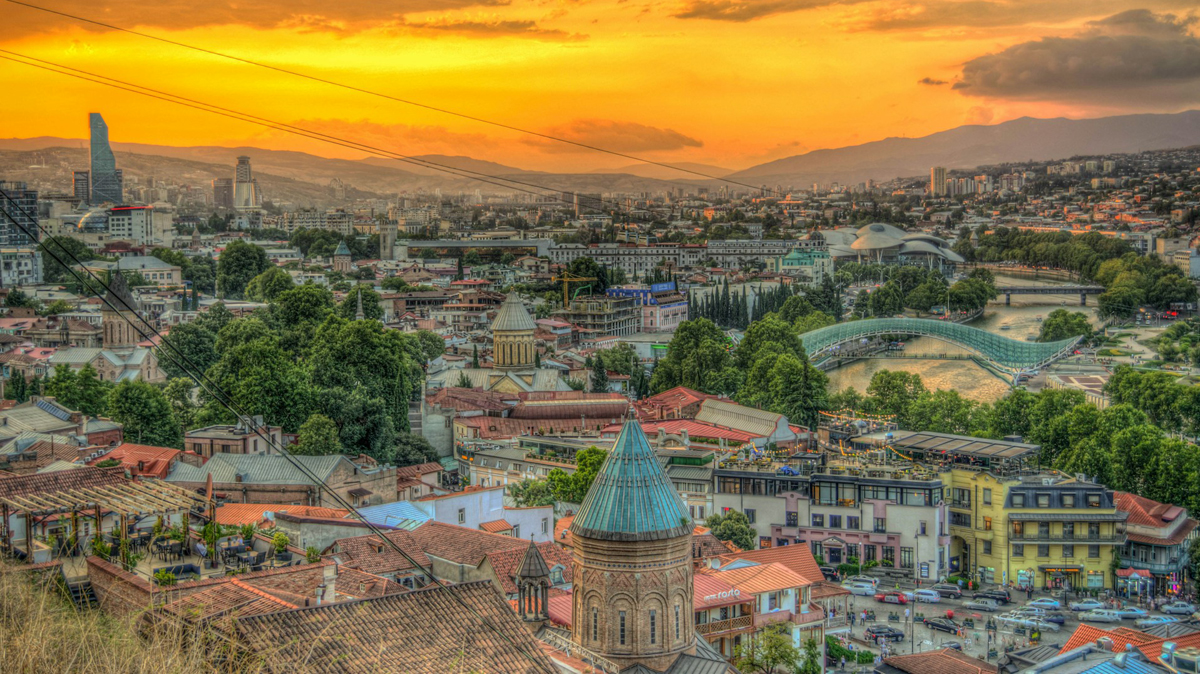
Tbilisi is a city of dramatic hills, ancient fortresses, domed bathhouses, elegant theaters, and colorful neighborhoods stretching along the Mtkvari River. For travelers who only have one day in Tbilisi, the city offers a fascinating mixture of Georgian traditions and architectural influences shaped by centuries of Persian, Russian, European, and Middle Eastern connections.
Founded in the fifth century, Tbilisi grew from a settlement around its natural sulfur springs into an important Silk Road crossroads. Today, historic churches stand near contemporary architecture, leafy hills rise behind busy streets, and old wooden balconies overlook lively neighborhoods. Exploring the city reveals layers of history around nearly every corner.
Brief History
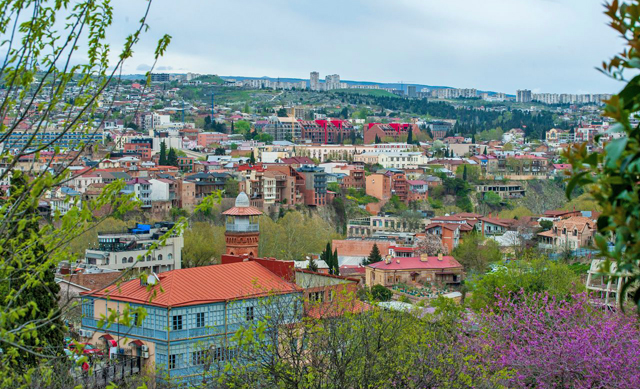
Tbilisi was founded in the fifth century by King Vakhtang Gorgasali after the discovery of its sulfur springs. Its strategic location made it a coveted prize, and the city endured repeated invasions, occupations, destruction, and rebuilding while remaining the political and cultural heart of Georgia.
- Fifth century: King Vakhtang Gorgasali established Tbilisi after discovering its hot sulfur springs.
- 1122: King David the Builder captured Tbilisi and made it the capital of the unified Georgian Kingdom.
- 1795: Persian forces under Agha Mohammad Khan devastated Tbilisi, destroying much of the city.
- 1801: Georgia was annexed by the Russian Empire, beginning a new period of political and architectural transformation.
13 Ancient Walls
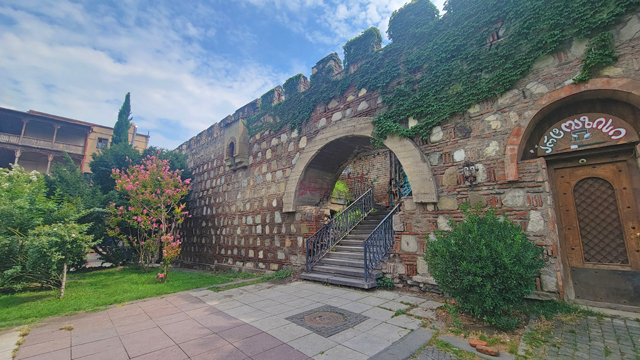
Ancient defensive walls once surrounded much of Tbilisi, protecting the growing settlement from armies seeking control of this strategically important crossroads. Built and expanded over centuries, the fortifications followed the city’s hills and valleys, with gates controlling movement into the settlement. Although large portions have disappeared beneath later development, surviving sections provide a tangible connection to Tbilisi’s medieval past.
The remaining walls are especially interesting because they appear alongside ordinary streets and newer buildings rather than existing as an isolated monument. Weathered stones reveal the defensive importance of the city, while nearby rooftops, balconies, and narrow lanes show how Tbilisi expanded beyond its original fortified boundaries. Looking at these fragments makes it easier to imagine a city where walls, gates, towers, and steep hills once formed its first line of defense.
12 Liberty Square
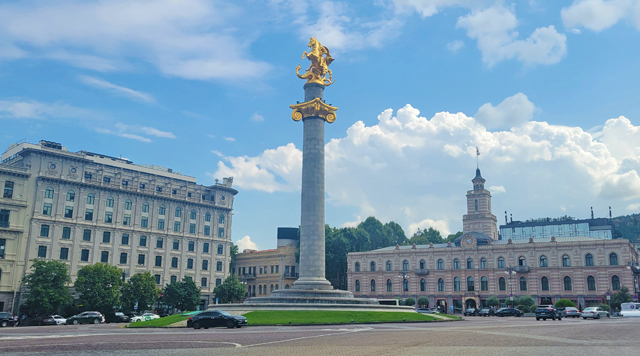
Liberty Square is one of Tbilisi’s most important public spaces and a natural meeting point between the historic center and the city’s newer neighborhoods. The plaza has carried several names throughout its history, reflecting Georgia’s changing political circumstances. During the Russian imperial period, it became part of Tbilisi’s expanding European-style urban landscape and developed into an important civic gathering place.
Today, the broad square is surrounded by grand buildings, busy streets, hotels, shops, and restaurants. At its center stands a tall column topped by a gilded statue of Saint George, created by Georgian sculptor Zurab Tsereteli and installed in 2006. From Liberty Square, streets radiate into several different parts of the city, making it an excellent place to appreciate Tbilisi’s transition from historic neighborhoods to its modern urban center.
11 Gabriadze Clock Tower
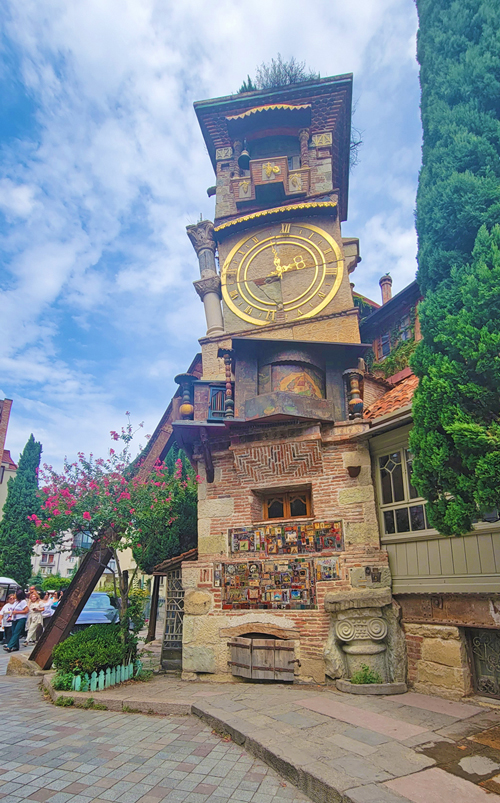
The Gabriadze Clock Tower is one of Tbilisi’s most whimsical architectural landmarks. Its crooked wooden structure, exposed brick, uneven angles, and oversized clock face give it the appearance of an eccentric building assembled from pieces of several different structures. Built beside the Gabriadze Theatre in 2010, the tower adds a playful touch to a city otherwise filled with centuries-old churches, fortresses, and grand civic buildings.
The tower was designed by Rezo Gabriadze, the celebrated Georgian artist, writer, puppeteer, and theater director. Every hour, a small puppet emerges as part of a charming mechanical performance. At noon and 7 in the evening, an additional puppet show tells a brief story about the cycle of life. The combination of theater, art, and architecture makes the tower one of Tbilisi’s most unusual sights and a delightful contrast to the city’s more solemn historic landmarks.
10 Opera and Ballet Theatre
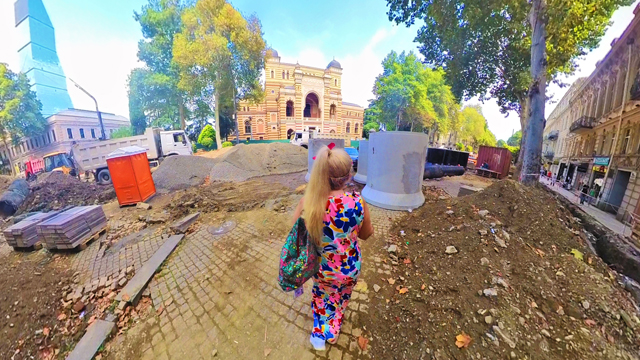
Tbilisi’s Opera and Ballet Theatre brings an elegant European character to the city, with its elaborate architecture and long artistic tradition. The first opera house opened in Tbilisi in 1851, reflecting the city’s growing importance as a cosmopolitan center. The present building opened in 1896 and was designed by architect Viktor Schroeter, whose design incorporated richly ornamented details and a horseshoe-shaped auditorium.
The theater has survived fires, political upheaval, and dramatic changes in Georgia’s history while remaining an important cultural institution. Its ornate facade creates a striking contrast with the more rustic architecture found elsewhere in Tbilisi. Inside, decorative details and the grand auditorium create an atmosphere of another era. Performances of opera and ballet continue to connect contemporary Tbilisi with a theatrical tradition that has entertained audiences for generations.
Note: The building is gorgeous and would have had a more prominent place on the list; however, the entire street was a dangerous mess of construction at the time I visited.
9 Statue of King Vakhtang Gorgasali
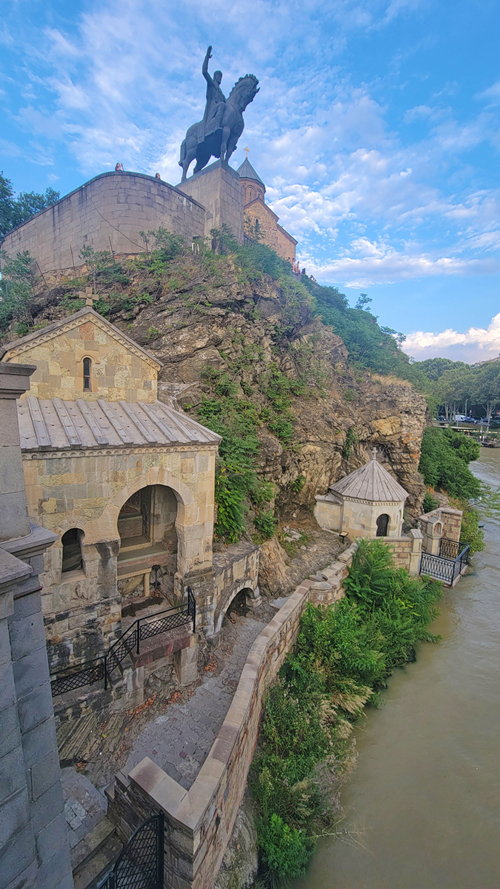
The imposing equestrian statue of King Vakhtang Gorgasali stands dramatically above the Mtkvari River near Metekhi Church. The fifth-century ruler occupies a central place in Tbilisi’s history because Georgian tradition credits him with establishing the city after discovering its natural sulfur springs. His elevated position allows him to look across the river toward the historic heart of Tbilisi.
Created by Georgian sculptor Elguja Amashukeli, the bronze monument was unveiled in 1967. Vakhtang sits firmly upon his horse, his figure conveying strength and authority. The setting makes the statue particularly striking, with the river flowing below, historic buildings rising across the water, and wooded hills forming the backdrop. It is an evocative place to consider the origins of Tbilisi and the ruler traditionally regarded as the city’s founder.
8 Bridge of Peace
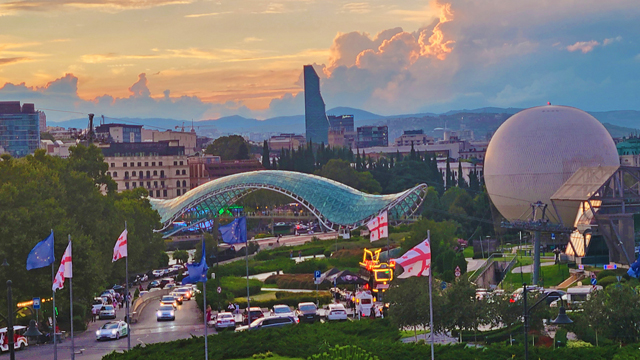
The Bridge of Peace stretches across the Mtkvari River in a graceful sweep of steel and glass, creating a striking modern counterpoint to Tbilisi’s ancient architecture. Opened in 2010, the pedestrian bridge was designed by Italian architect Michele De Lucchi. Its curved canopy consists of thousands of glass panels, producing a shimmering appearance that changes with the daylight and surrounding cityscape.
The bridge connects Rike Park with the historic center and offers constantly changing views along the river. Looking toward the hills, you can see churches, fortress walls, rooftops, and balconies layered across the landscape. After dark, the bridge’s lighting turns it into a glowing ribbon above the water. Its modern design may contrast with Tbilisi’s older architecture, but that contrast is part of what makes the cityscape so visually fascinating.
7 Holy Trinity Cathedral
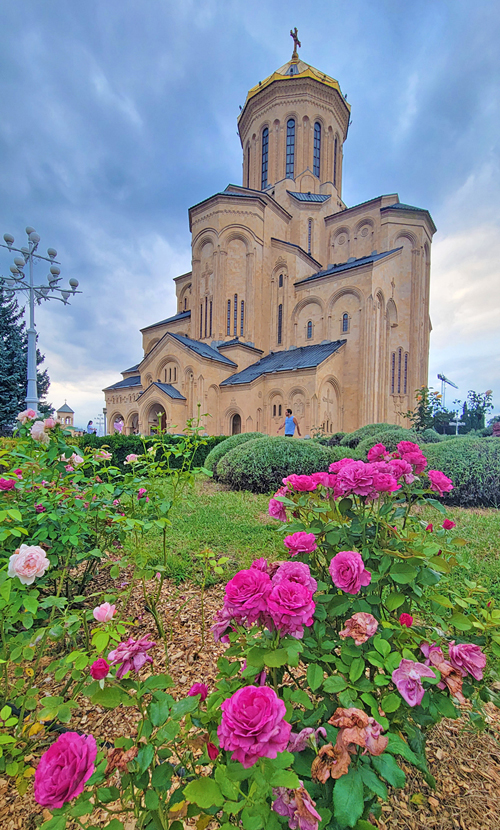
The Holy Trinity Cathedral, commonly called Sameba, rises prominently above Tbilisi from Saint Elijah Hill. Its enormous golden dome and monumental stone construction dominate the skyline, making it visible from many parts of the city. Completed in 2004, the cathedral is remarkably young compared with Georgia’s medieval churches, yet its design draws heavily from traditional Georgian architectural forms.
The cathedral complex spreads across extensive landscaped grounds containing gardens, courtyards, and additional religious buildings. Inside, soaring spaces create an impressive sense of scale, while religious artwork and decorative details add warmth to the vast interior. Sameba was constructed during the revival of Georgian religious and national identity following independence from the Soviet Union. From the surrounding grounds, broad views extend across Tbilisi toward the Mtkvari River, historic neighborhoods, and distant hills.
6 Wander the Side Streets
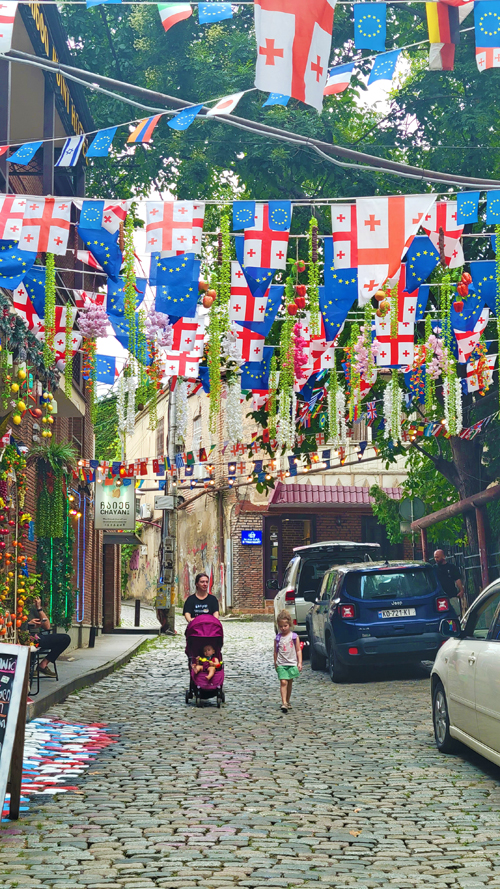
Tbilisi becomes especially fascinating when you leave the main avenues and wander through its quieter side streets. Narrow lanes twist up and down the hills, while colorful facades, aging masonry, iron balconies, wooden galleries, and weathered doors reveal the city’s distinctive architectural character. Some buildings appear carefully restored, while others retain peeling paint and wonderfully imperfect details that reflect decades of use.
Look upward as you explore, because many of Tbilisi’s most interesting architectural features are above street level. Wooden balconies project from older houses, plants spill from courtyards, and unexpected views open between buildings toward distant hills and fortress walls. Some streets climb steeply, while others suddenly widen into small squares. Walking without a strict route allows the city’s layers to emerge naturally, from centuries-old structures to lively cafes and contemporary galleries.
5 Erekle II Pedestrian Street
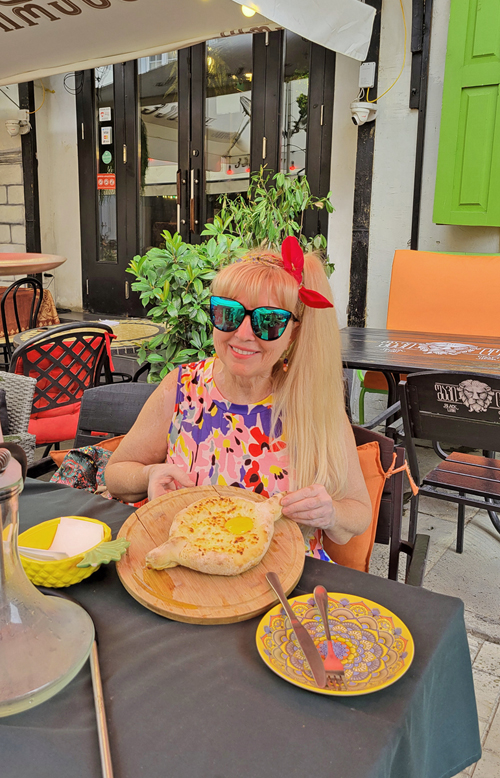
Erekle II Pedestrian Street is a lively thoroughfare where historic Tbilisi meets contemporary city life. The pedestrian street is lined with colorful buildings, traditional wooden balconies, cafes, restaurants, galleries, and small shops. Its architecture reflects the layered character of the city, with older structures standing alongside restored facades and modern businesses.
The street is particularly atmospheric later in the day, when outdoor tables fill, and the surrounding buildings take on a warm glow. Rather than being defined by a single monument, Erekle II Street offers an opportunity to experience the rhythm of Tbilisi itself. Architectural details appear at every turn, while conversations, music, and the clatter of cafe life create a lively backdrop. It is a small but colorful part of the city that shows how historic buildings continue to serve everyday life.
Don’t forget to try Georgia’s #1 traditional dish: adjarian khachapuri, a boat-shaped bread filled with molten cheese and topped with an egg and butter.
4 Abanotubani Sulfur Baths
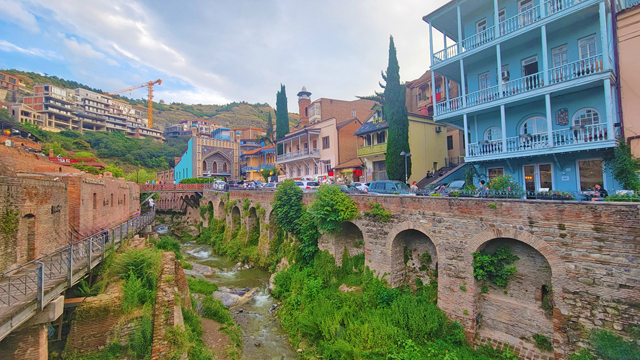
Abanotubani is the historic bath district where Tbilisi’s famous sulfur springs rise naturally from beneath the city. Distinctive brick domes cover the bathhouses, creating an unusual architectural landscape of rounded roofs and warm-colored masonry. These natural springs are closely connected to the traditional story of Tbilisi’s founding, and the city’s name itself is associated with the Georgian word for warm.
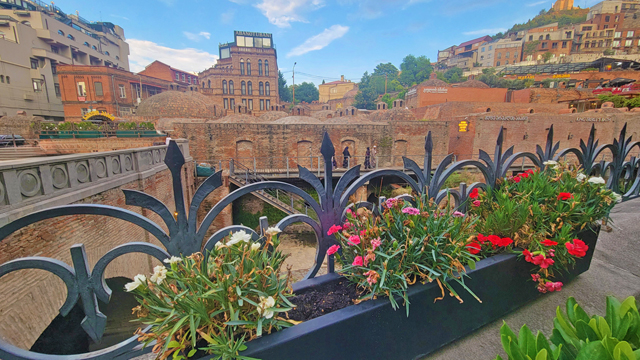
The bathhouses have welcomed visitors for centuries, including rulers, merchants, and travelers passing through the city. Inside, tiled rooms and private bathing chambers provide a very different atmosphere from the busy streets outside.
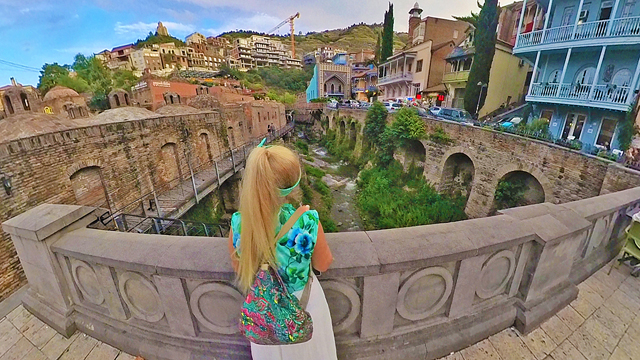
The surrounding area is also worth exploring, with narrow lanes and the small waterfall in nearby Legvtakhevi Gorge. A visit to Abanotubani connects directly with the natural feature that helped determine the location and early development of Tbilisi.
3 Cable Car to Narikala Fortress
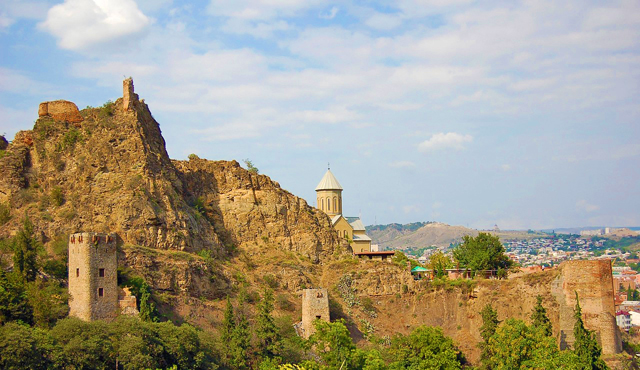
The cable car from Rike Park climbs above the Mtkvari River toward Narikala Fortress, transforming the journey into one of Tbilisi’s most enjoyable sightseeing experiences. As the cabin rises, the city opens beneath the windows in layers of red rooftops, church domes, balconies, winding streets, and green hills.
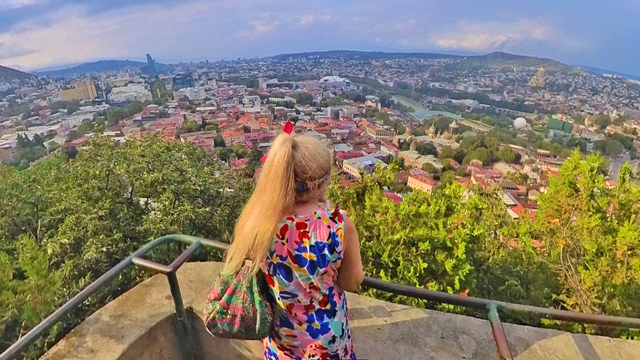
The changing perspective reveals how dramatically Tbilisi is shaped by its river valley and surrounding mountains.
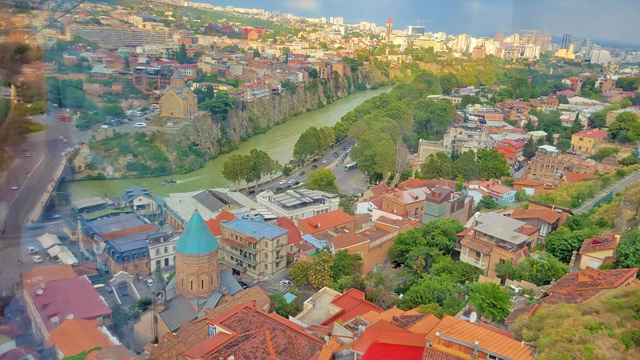
Narikala’s origins stretch back to the fourth century, when the fortress was established as a strategic stronghold above the settlement. Its walls were expanded and rebuilt during later Georgian, Arab, and other periods of Tbilisi’s history. Today, the weathered stone ruins follow the contours of the hillside. From the fortress, panoramic views stretch across the city, with the Mtkvari River below and the Mother of Georgia standing prominently on the nearby ridge.
2 Mother of Georgia
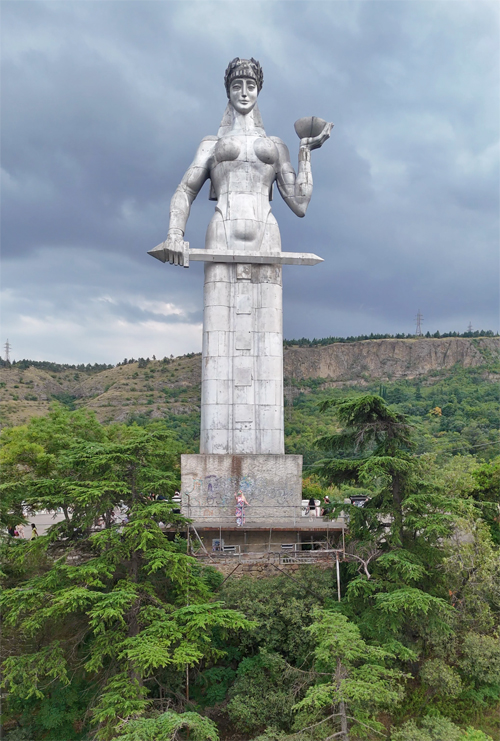
The Mother of Georgia stands high above Tbilisi on Sololaki Hill, overlooking the city from her elevated position. Created by Georgian sculptor Elguja Amashukeli, the original aluminum statue was erected in 1958 to mark Tbilisi’s 1,500th anniversary. The monumental figure wears traditional Georgian dress and holds a sword in one hand and a bowl of wine in the other.
The symbolism reflects two sides of Georgian character. The sword represents readiness to defend the country, while the wine represents hospitality toward friends and guests. Her position on the hillside makes the statue visible from many parts of Tbilisi, while the surrounding slopes provide expansive views across the city and river valley. With Narikala Fortress nearby and rooftops stretching below, the monument occupies one of the most dramatic vantage points in Tbilisi.
1 Metekhi Church at Sunset
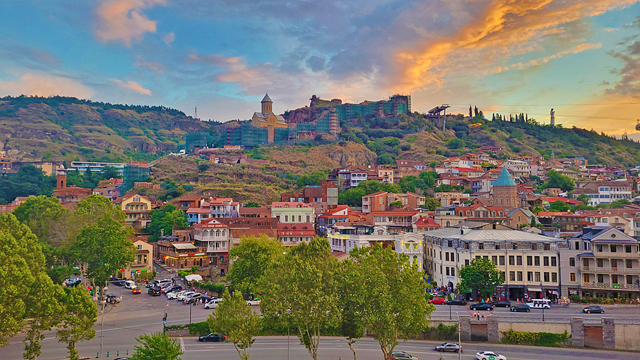
The terrace beside Metekhi Church offers one of the finest vantage points for seeing Tbilisi’s historic center at sunset. Perched high above the Mtkvari River, the terrace looks across a remarkable jumble of red rooftops, wooden balconies, church domes, and hillside buildings, with Narikala Fortress rising in the distance. The church itself dates largely to the thirteenth century and stands on a site closely connected with the city’s royal history and its legendary founder, King Vakhtang Gorgasali.
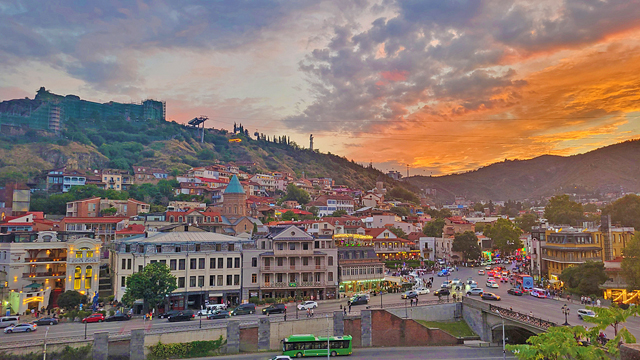
As the sun sinks toward the horizon, the Old Town becomes increasingly atmospheric. Warm light spreads across the rooftops and weathered stone, while the river below catches ribbons of gold and copper. Narikala’s rugged silhouette darkens against the glowing sky, creating a dramatic backdrop. From the church terrace, the layers of Tbilisi unfold from the river to the hills, making this an especially beautiful place to watch the city transition from afternoon into evening.
Conclusion
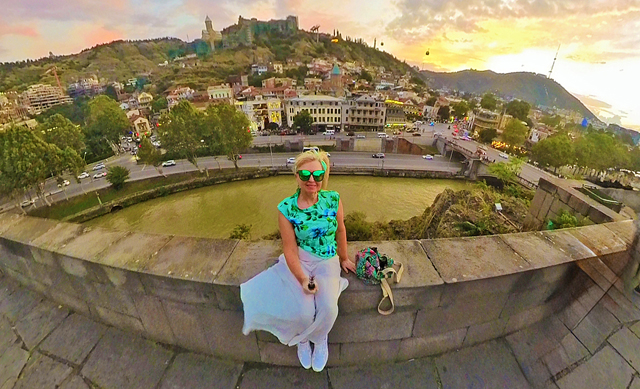
Tbilisi combines ancient fortifications, grand theaters, domed sulfur baths, soaring churches, contemporary architecture, and dramatic hillside views in one fascinating city. From Narikala Fortress to Metekhi Church at sunset, one day in Tbilisi reveals layers of Georgian history, culture, architecture, and daily life that make the capital endlessly interesting to explore.
If you have more than one day in Tbilisi, you can consider visiting The Chronicles of Tbilisi and Fabrika.
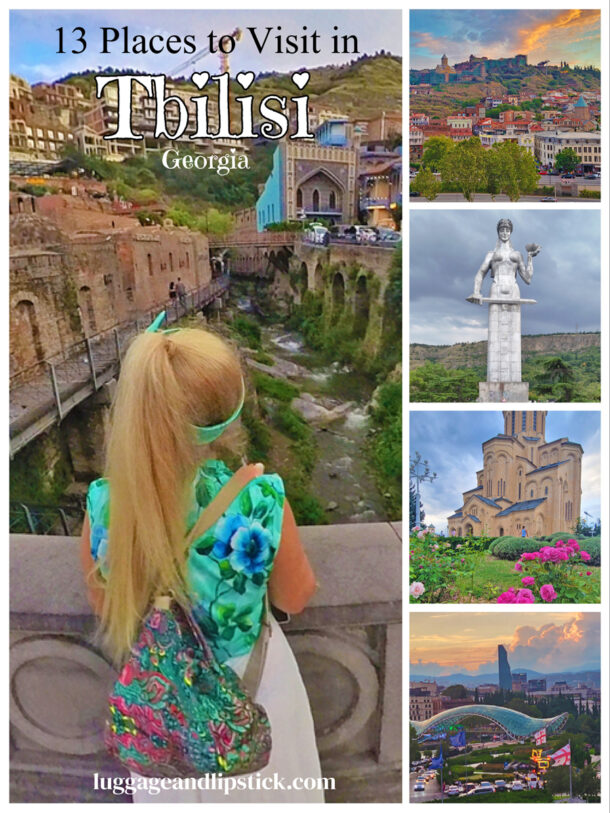
Click below to PIN so you can find one day in Tbilisi again:
This article may contain affiliate/compensated links. For full information, please see our disclaimer.
About the Author
Patti Morrow is a travel influencer and founder of the award-winning international blog Luggage and Lipstick. TripAdvisor called her one of the “20 Baby Boomer Travel Bloggers Having More Fun Than Millennials,” and she was named one of the “Top 35 Travel Blogs” in the world.
She is also the star of the upcoming TV series “Destination Takeover,” which is scheduled to premiere in the near future.
Patti is the author of the book “Girls Go Solo: Tips for Women Traveling Alone,” and has over 150 bylines in 40 print and online publications, including The Huffington Post, International Living Magazine, Washington Post Sunday Travel, Travel Girl, Travel Play Live Magazine, and Ladies Home Journal. Her blog articles are consistently featured on Google’s AI search, as well as appearing on page one of Google search for specific keywords.
She has traveled extensively through six continents and more than 100 countries and island territories – putting her in an elite club of having traveled more than 99.99% of people! She is always looking for fabulous destinations, exotic beaches, and adventure activities for her Baby Boomer tribe.

Leave a reply